

Ukraine changed the question
Britain does not need to imagine whether small uncrewed aircraft can create effects far beyond their size and cost. The war in Ukraine has demonstrated that repeatedly.
The central question for the UK is preparedness. Can police, Defence and operators of critical sites detect, assess and respond to a hostile drone quickly enough as the technology changes?
Britain has specialist counter-drone capabilities. That should not be confused with evidence of universal readiness. Public information cannot tell us how every airport, prison, military base or other sensitive site would perform against one hostile drone, several at once, or a newer system designed to resist established countermeasures.
RAF Fairford belongs in that risk assessment because it is a strategically important airbase capable of hosting high-value aircraft. No speculative account of a particular plot is needed to make that point. The evidence from Ukraine, Europe, the Middle East and Britain's own prisons is sufficient.
Spiderweb removed distance as reassurance
On 1 June 2025, Ukraine struck Russian airfields with small drones carried into the country on lorries. Ukraine said it used 117 drones. Operation Spiderweb combined comparatively inexpensive aircraft with a substantial intelligence and logistics operation. Chatham House analysis.
The early damage claims ran ahead of verification. Janes subsequently assessed 12 aircraft destroyed, two damaged and eight possibly damaged, using satellite imagery and video. Those categories matter: possible damage should not be counted as destruction. Janes imagery assessment.
Spiderweb’s wider effect was to challenge an assumption about distance. Assets far from the front could still face a locally originating aerial threat. Defence had to consider the surrounding civilian environment as well as the airspace beyond the national border.
For Britain, lorries, vans and cargo containers belong in the assessment of that risk. Their ordinary use in commerce makes the issue one of intelligence, suspicious activity and proportionate defence. This does not establish that a comparable attack is easy to organise, or that an ordinary vehicle near a sensitive site is suspicious.
The policy implication is to bring transport and supply-chain security into site planning, alongside police and intelligence partners. Measures should be based on assessed risk and tested for their effect on legitimate business. Treating every delivery as a threat would impose its own economic cost.
One word, several different threats
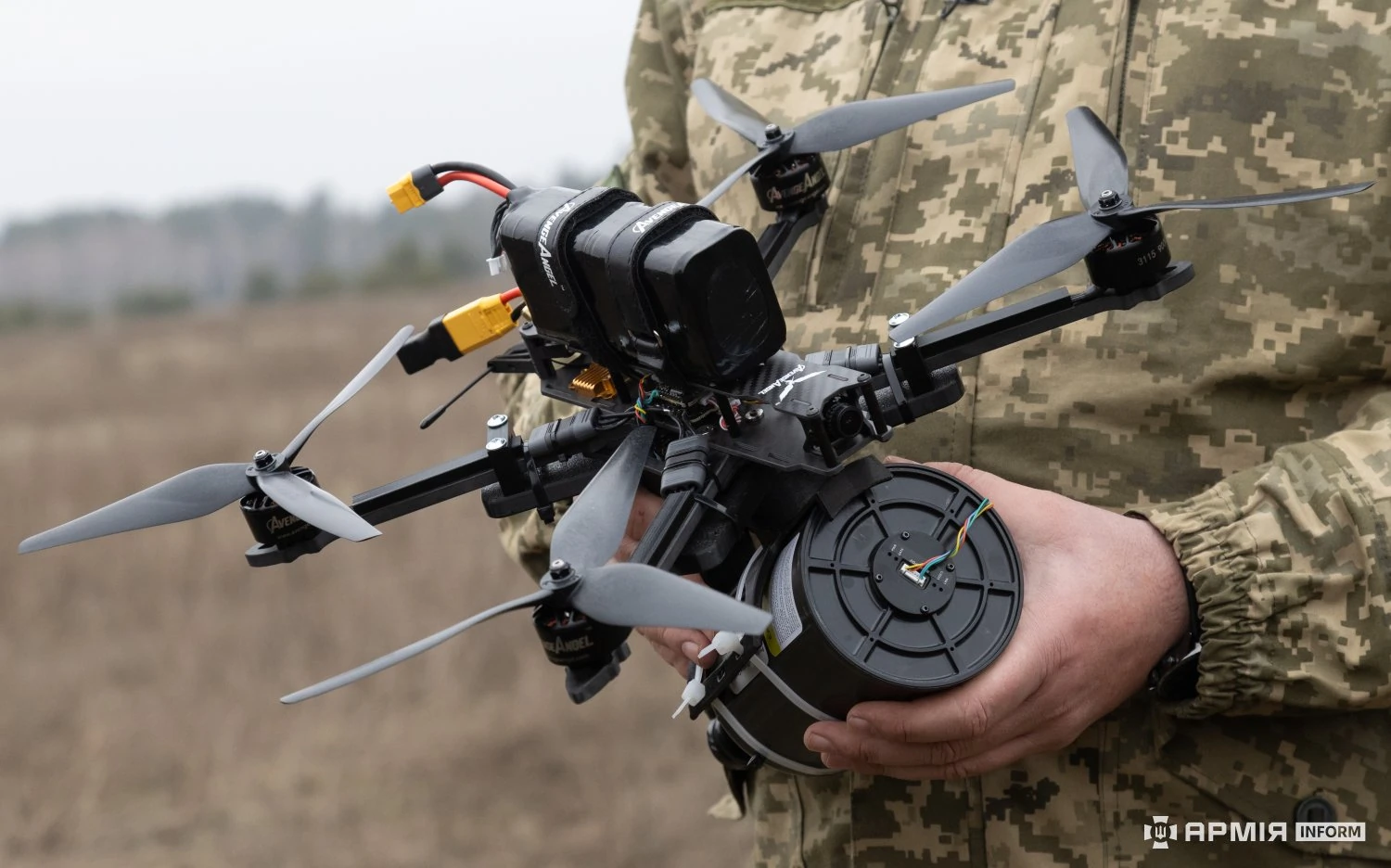
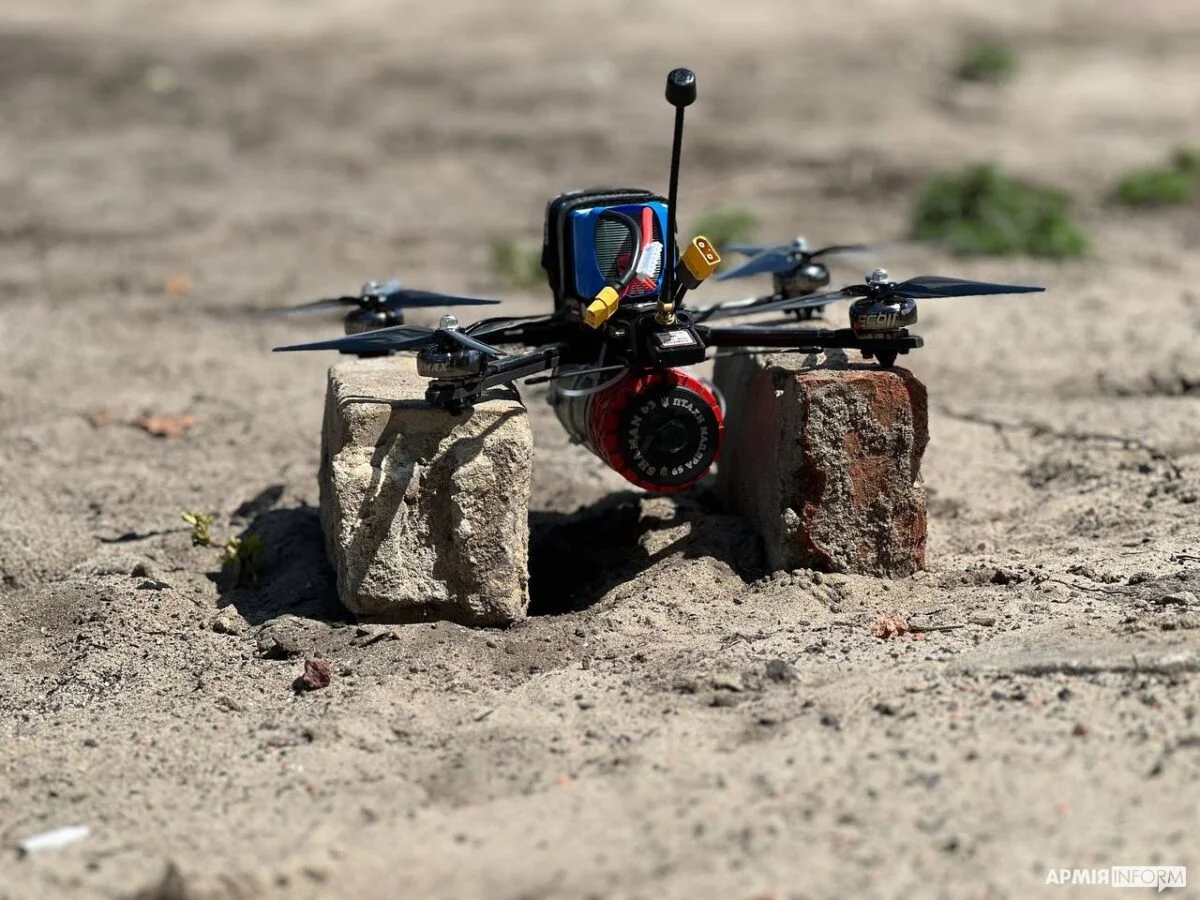
“Drone” covers aircraft with very different capabilities. A small quadcopter used against people or vehicles presents a different problem from a larger, long-range one-way attack aircraft. So does a drone that can continue parts of its flight without a live command link.
| Type or feature | What it changes | What defence must account for |
|---|---|---|
| Small FPV and payload-carrying drones | FPV means the operator sees a camera view from the aircraft. Small platforms have been used against personnel and vehicles. | Detection, reliable identification and a safe response close to people; limited payload and endurance do not make them harmless. |
| Loitering munitions | Can remain airborne while searching or waiting for a target, depending on the system. | A threat that may persist; communications and onboard functions vary. |
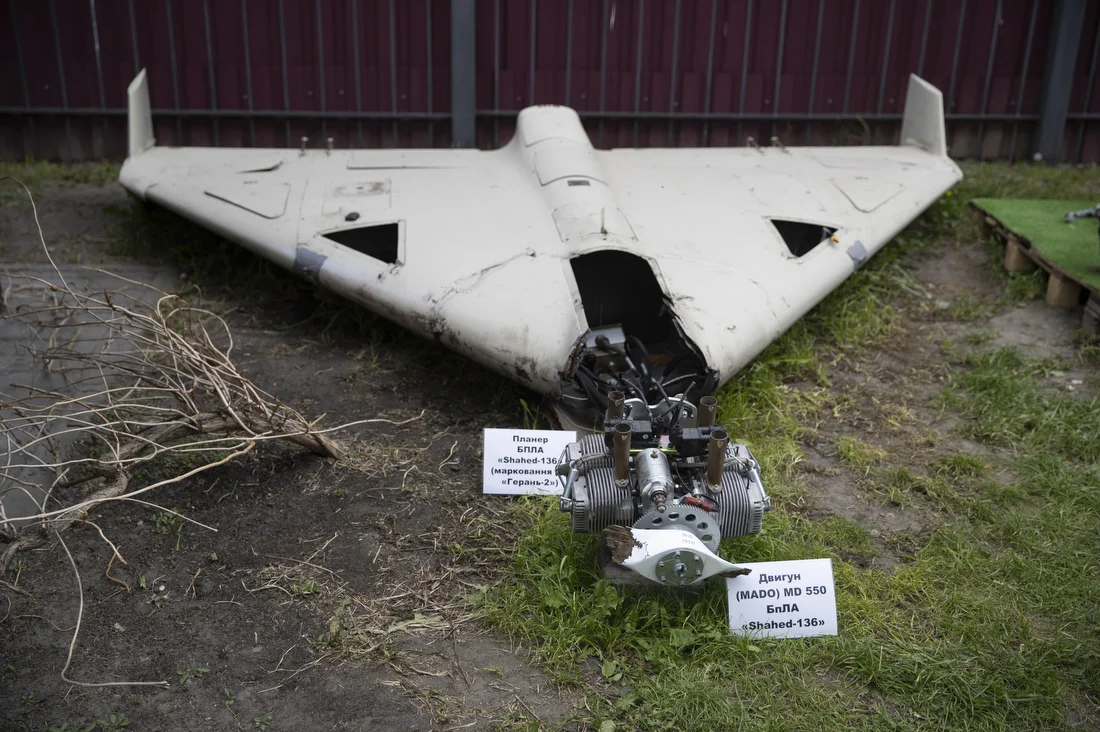
| Shahed-style one-way attack aircraft | Larger aircraft used for long-range attacks, including against infrastructure. | Sustained detection and interception capacity; these are a different class from a consumer quadcopter. |
| Fibre-optic control | Commands and video travel along a physical cable rather than a radio control link. | Conventional radio-link jamming cannot interrupt that cable. Cable carriage and endurance still constrain the aircraft. |
| AI-assisted or autonomous functions | Software may assist navigation, recognition or tracking; capabilities differ substantially. | A lost command link may not stop every function. Performance claims need testing in realistic conditions. |
These are overlapping characteristics, not five mutually exclusive categories. “AI drone” does not mean a machine that independently understands a battlefield, and several drones flying together do not necessarily constitute an autonomous swarm. CTC at West Point, drone-terrorism research; RUSI, UAV systems; RUSI, swarm analysis.
The distinction matters when buying defence. Equipment designed to interrupt a radio signal cannot be assumed to defeat an aircraft using a different means of control. In March 2026, UK Defence Innovation explicitly sought new ways to detect, track and defeat fibre-optic drones, describing their resistance to conventional radiofrequency countermeasures. A request for solutions demonstrates an identified problem; it does not demonstrate that the problem has been solved. UKDI market engagement.
What carries the instruction?
Radio link
The aircraft exchanges commands over radio.
Defensive questionDoes interrupting that link stop this model, or does it continue independently?
Fibre-optic link
A physical cable carries control and video.
Defensive questionWhat detection and defence remain when radio-link jamming cannot interrupt control?
Onboard functions
Some tasks can run on the aircraft itself.
Defensive questionWhich tasks depend on external signals, and which continue without them?
Britain has tools. Can it demonstrate readiness?
In May 2025, the government described a national police counter-drone capability with specialist personnel, equipment and vehicles. That establishes that a capability exists. It does not tell us its response time at a particular airport, prison or power station. Home Office parliamentary answer.
Public announcements also need separating into equipment in use, successful trials and promised deliveries. The Ministry of Defence’s April 2025 radiofrequency directed-energy trial reported defeating a drone swarm and an estimated 10p firing cost. More than £40 million had gone into research and development. Those figures describe a demonstrator and one part of its cost, rather than a ready-made national defence network. MOD trial announcement.
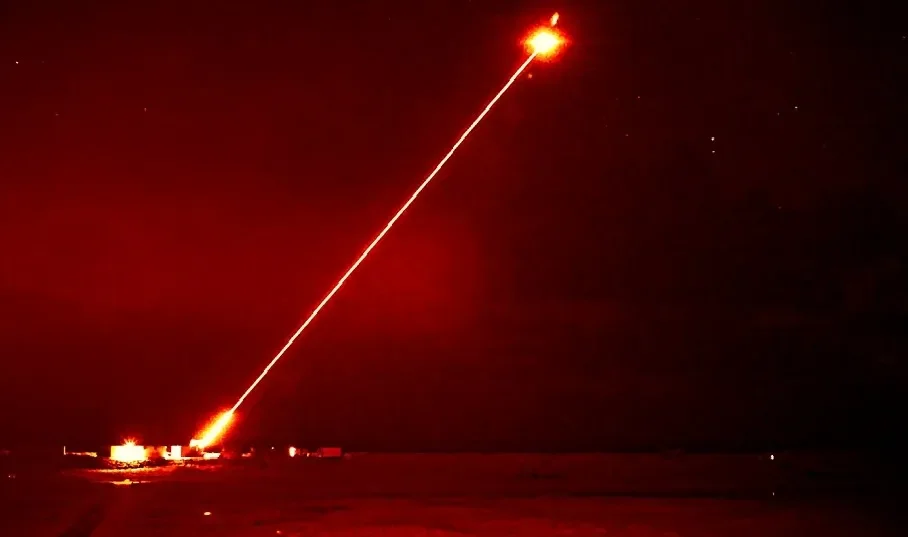
DragonFire offers another example. In November 2025, the MOD announced a £316 million contract, delivery to the Royal Navy from 2027 and approximately £10 per shot. A low firing cost is attractive. The system still needs acquisition, power, maintenance, trained people and conditions in which it can operate. MOD, DragonFire.
Lasers require precise tracking and a usable line of sight; atmospheric conditions affect performance. Physical interception can leave falling debris. Detection systems must distinguish relevant objects from background activity, and detection alone does not establish hostile intent. Radiofrequency directed energy aims to affect electronics, a different mechanism from jamming a control link. Leonardo’s engineering account; Department for Transport guidance.
A useful capability is not a complete shield.
Compare the job a defence performs with the limitation that must be tested.
Detection and identification
Combines evidence from sensors.
Constraint A detection is not proof of hostile intent; uncertainty can itself close a site.
Radio-link jamming
Can interrupt a susceptible control link.
Constraint Does not interrupt fibre-optic control; onboard functions may continue.
Physical interception
Acts on the aircraft rather than its control link.
Constraint Requires timely detection; falling aircraft and defensive fire can create danger.
Laser weapons
Concentrate energy on the target.
Constraint Precise tracking and atmospheric conditions matter; low shot cost excludes the system.
RF directed energy
Aims to affect electronics.
Constraint Different from link jamming; demonstration results do not establish universal coverage.
Defence and continuity
Reduce exposure and the consequences of disruption.
Constraint Defence is site-specific; services still need tested recovery arrangements.
A useful system therefore combines several methods and a decision process. Leaders need to know which threats it was tested against, what it missed, how often it raised false alarms and what safe action followed. A demonstration video rarely answers all four.
Gatwick: disruption without a confirmed strike
In December 2018, reported drone sightings disrupted roughly 1,000 flights and the journeys of around 140,000 passengers at Gatwick in West Sussex. Responsibility remained unresolved. It should not be presented as a proven terrorist attack. Contemporary reporting; subsequent investigation.
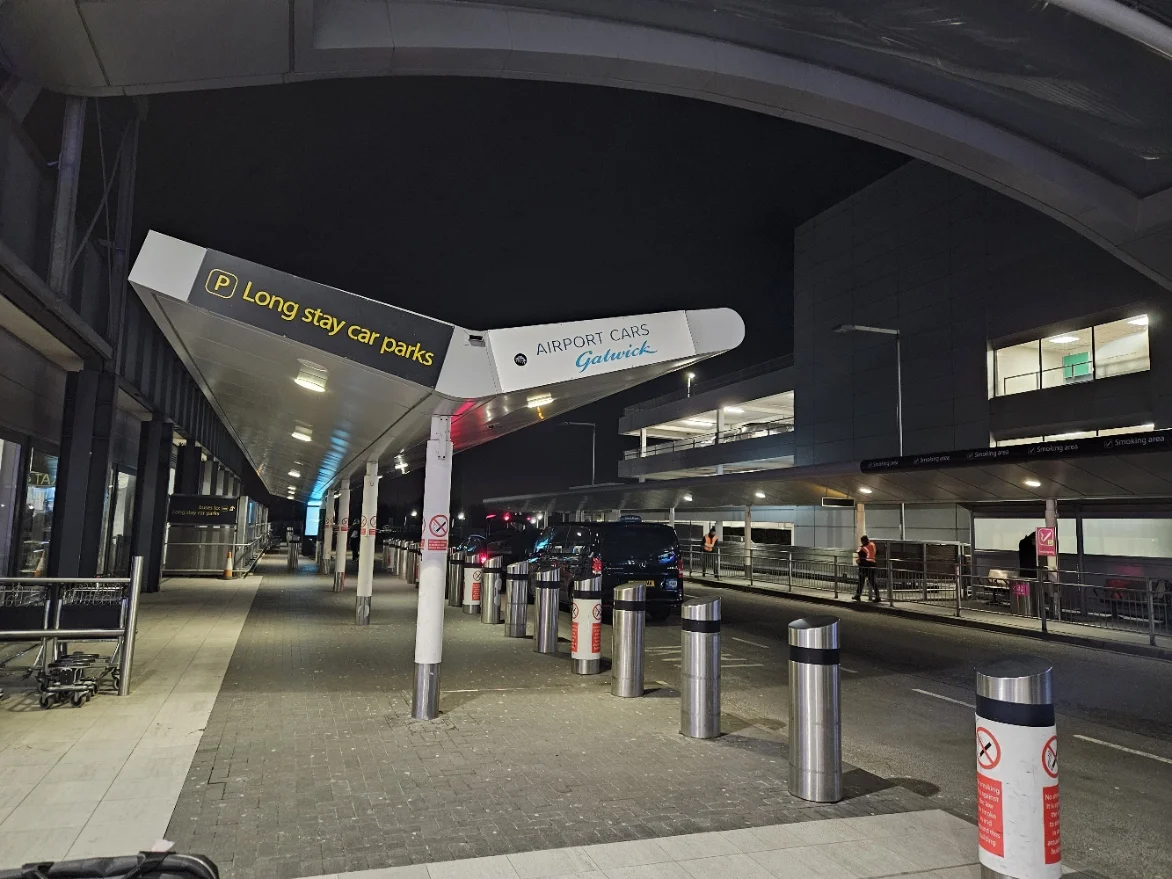
EasyJet reported £10 million in additional costs and £5 million in lost revenue. That is £15 million for one airline, not the total economic cost of the incident. No aircraft needed to be destroyed for the disruption to become expensive. EasyJet’s January 2019 trading presentation, slide 2.
A drone collision, including an engine encounter, is a serious aviation concern. But damage and the operational response depend on the circumstances. The CAA’s 2018 review judged significant engine damage unlikely for the small drones it considered and expected multi-engine aircraft generally to remain capable of landing safely even after damage. That older assessment addressed small, largely inadvertent encounters; it cannot settle every deliberate-attack scenario. CAA, CAP1627.
One incident could still prompt precautionary restrictions and knock-on cancellations. Repeated interruptions during a busy summer are a reasonable resilience scenario for airports, airlines, NATS and police to exercise. The available evidence does not establish that a few incidents would ground the whole country for a summer.
The useful question is how to maintain safe operations elsewhere and reopen affected services promptly. Passenger welfare, reliable public information and agreed reopening decisions belong in the defence plan.
What disruption looked like
BBC News reporting from 20 December 2018. This is contemporaneous coverage, not a final finding about who was responsible. The article text explains the subsequent uncertainty.
The price on the aircraft is only the beginning
Cheap is relative. CSIS has cited estimates of roughly US$20,000–50,000 for a Shahed-136. Prices vary with version, contract and what is included; this is not a retail price or a complete cost per operation. CSIS Missile Threat.
At the smaller end, Associated Press reported that the drones used in Spiderweb cost less than US$1,000 each. That excludes the intelligence and logistics behind the operation. Multiplying an estimated aircraft price by the number used does not give a reliable campaign budget. AP’s reporting.
The consequences can be far larger: injuries, lost lives, damaged infrastructure and interrupted services. They cannot all be expressed meaningfully as a ratio between an aircraft’s price and the value of its target.
Figure 03 · Three different parts of the bill
A cheap aircraft can trigger expensive decisions
One small attack drone
AP’s reported Spiderweb aircraft cost. Excludes intelligence and logistics.
One airline’s disruption
EasyJet: £10m additional costs plus £5m lost revenue following Gatwick, 2018.
A defence contract
MOD’s announced DragonFire contract, November 2025. Delivery planned from 2027.
For scale, the 2023 NATS technical failure affected more than 700,000 passengers, with estimated costs to industry and passengers of £75–100 million. It was an IT failure, not a drone incident. It shows the cost of aviation disruption, rather than forecasting the bill for an attack. CAA/DfT, independent review.
UK economic loss cannot be calculated by adding airline revenue losses, passenger compensation and cancelled spending together: some overlap or represent transfers. A credible assessment needs the duration of disruption, recovery costs, freight effects and how people change their plans.
What the data actually show
Ukraine gives the clearest warning about human harm. UN monitors verified 580 civilians killed and 3,295 injured by short-range drones in 2025, compared with 226 killed and 1,528 injured in 2024. The combined total rose by approximately 121%. These are verified casualties, not attack counts, and the actual toll may be higher. UN Human Rights Monitoring Mission.
Domestic criminal use is also established. Prisons in England and Wales recorded 1,712 drone incidents in April 2024–March 2025, up 43%. That does not mean 1,712 attacks or successful deliveries. It does show a recurring problem for institutions with controlled boundaries. Ministry of Justice.
The earlier question about suicide bombing remains worth checking. INSS recorded about 127 suicide attacks worldwide in 2020 and 31 in 2022. But Pakistan’s 2025 security report counted 23 suicide and fedayeen attacks, up from 13 in 2024; this is a broader, combined category. Neither series proves that drones are replacing suicide bombings. INSS; PIPS, pp. 25–26.
Meanwhile, ACLED’s recorded drone attacks in Colombia rose from one in 2023 to 149 in 2025. Different countries, periods and definitions prevent a like-for-like global comparison. The defensible finding is wider drone use alongside continuing older tactics. ACLED’s published Colombia figures.
Change is visible. Replacement is unproven.
Suicide attacks
Worldwide · INSS · events
Approximate totals; 2020–22 only.Drone attacks
Colombia · ACLED · events
A national conflict series; not a global total.Civilian casualties
Ukraine · UN · people killed or injured
Verified short-range drone casualties.Readiness has to keep moving
There is no public dataset that lets this article award Britain a reliable national preparedness score. Some capabilities are sensitive, and published procurement announcements do not provide independent evidence of defence at every site. That limits the conclusion in both directions: we cannot assume universal coverage, or infer complete helplessness.
NPSA advises organisations to develop a site-specific counter-drone strategy. The evidence reviewed here supports turning that advice into an exercised agreement between site operators, police and relevant security partners. NPSA guidance.
For police leaders, the first question is whether intelligence changes a defensive decision in time. Reports from different organisations need to reach people who can assess them and act. TAP’s article on intelligence-led policing examines that connection between analysis and decisions.
The next question is whether procurement can respond when the threat changes. Contracts should provide for realistic independent testing, updates, training and the full cost of operation. Claims about automated recognition deserve the same scrutiny as other AI tools considered by police leaders.
These are proposals for accountable preparedness, rather than interventions proven here to prevent an attack. Exercises should measure assessment time, specialist response time, missed threats, false alarms and time to restore service. Senior leaders need the results, including failures. The wider division of defence responsibilities also matters; see TAP’s guide to Martyn’s Law.
Ukraine, Gatwick, European airport disruption and the continuing use of drones around prisons describe different problems. Together they create a more demanding test for British institutions: not whether counter-drone technology exists, but whether intelligence, detection, authority, trained people and recovery arrangements have been exercised against the threats now appearing.
Method: targeted open-source evidence review, updated 6 October 2026. This is not a systematic review, a new incident database or an estimate of the probability of a UK attack. News reports, official capability announcements, monitoring data and proposed responses are distinguished throughout. Sources and image rights are recorded in the accompanying evidence register.