
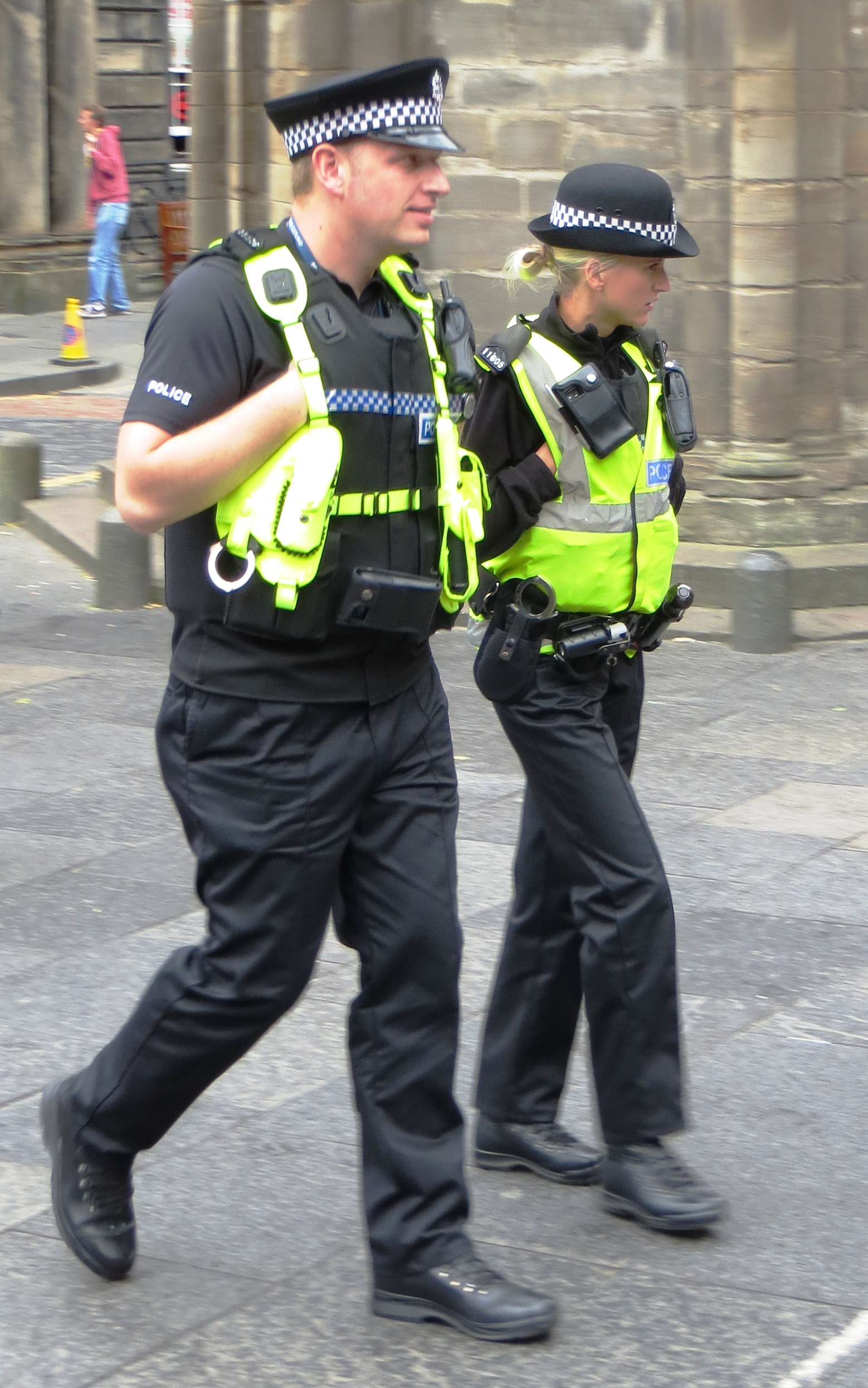

Police reform means changing the organisation and delivery of policing so that it provides a better service. It should help police prevent harm and investigate crime while treating people fairly. Moving force boundaries is only one part of that job.
Will the current reforms make a difference? There is a credible case that shared specialist services and better national systems could help. There is much less certainty that reducing the number of forces will, by itself, improve the policing people receive. Scotland’s experience shows why those two propositions need to be kept separate.
In England and Wales, the government’s January 2026 white paper proposes a National Police Service, fewer territorial forces and changes to local accountability and professional development. Read the white paper. The test should be what these arrangements allow officers and staff to do better, and what the public gains from them.
A better service needs more than a new structure
A force can move its headquarters and redraw its command structure without changing what happens when someone reports abuse or needs help. Those organisational changes may be necessary. They become useful when there is a clear explanation of how they improve the work.
For this guide, reform has four connected parts. Structure determines where capabilities sit. Accountability determines who can question decisions and require improvement. The workforce needs the skills to deliver, supported by good supervision. Day-to-day systems determine whether that capacity reaches the people who need it.
Structure
Which functions belong locally, regionally or nationally?
Test access to expertise.Accountability
Who sets priorities? Who challenges decisions and follows up failure?
Test influence and scrutiny.People
Do officers and staff have the skills and supervision the role requires?
Test competence and support.Delivery
Do systems help people prevent harm and complete good investigations?
Test the service received.The distinction is practical. A common digital system could remove repeated data entry without a force merger. A merger could bring specialist investigators together but leave them using incompatible systems. Better supervision could improve case decisions before either change is complete. Each proposal needs its own explanation and evidence.
The work has changed. The system struggles to keep up.
HMICFRS’s State of Policing 2025–26 describes forces struggling with everyday demand alongside specialist threats. It identifies fragmented capability and duplicated work. Services are inconsistent, while digital evidence and safeguarding add to the demands of investigations. Its assessment supports reform while recognising the commitment and strengths of the workforce. HMICFRS, September 2026.
That is a stronger case than simply saying that the force map is old. The relevant questions are whether a victim can obtain a reliable service and whether an investigator can obtain the expertise needed. A boundary becomes a problem when it obstructs that work.
There is also a question about how existing resources are used. Alan Pughsley’s Policing Productivity Review, published in November 2023, examined workforce deployment, technology and working processes. It distinguished better productivity from cutting costs: a saving that reduces the service can leave policing less productive. Productivity Review, section on public consent and trust.
Public protection and professional standards belong in this debate too. The Angiolini Inquiry’s December 2025 report examined prevention of sexually motivated crimes against women in public, made 13 further recommendations and revisited progress against its earlier recommendations. That is a different reform question from how many headquarters policing needs. It concerns whether institutions recognise risk and act on it. Angiolini Inquiry, Part 2 First Report.
These problems should not be bundled into a single promise that “reform” will fix everything. Shared purchasing, safer recruitment, stronger supervision and better local engagement work through different mechanisms. Leaders need to say which failure each change addresses.
National capabilities, larger forces and local policing areas
The white paper sets out a model operating at different levels. The proposed National Police Service would bring national bodies and capabilities together, including the National Crime Agency and Counter Terrorism Policing over time. Larger territorial forces would sit alongside Local Policing Areas intended to retain a local focus. NPCC explanation of the proposed model.
Shared capabilities and standards
A proposed National Police Service bringing together national functions and support.
Fewer, larger territorial forces
A review to recommend configuration, governance and how mergers would be delivered.
Local Policing Areas
Local priorities and neighbourhood policing within the larger organisation.
The white paper also proposes ending the PCC model in May 2028, with oversight passing to mayors and council leaders through new arrangements, including Policing and Crime Boards. It proposes a staged Licence to Practise, backed by development and wellbeing checks. These are future arrangements, not evidence that every officer already needs such a licence or that PCCs have already been replaced. White paper, local governance and professional development.
Some supporting work is already under way. The first Police Performance Framework was published on 26 January 2026. It sets out how performance is to be assessed across policing activity. Publication establishes the framework; it does not establish that performance has improved. Home Office, framework and first iteration.
There is an important boundary to the force-structures review. Its terms ask it to design a model with fewer, larger forces, including possible early mergers. It is not an open competition between every conceivable structure. The published terms are evidence of the task it was given, not proof that the preferred direction will produce the best result. Review remit.
Wales needs explicit consideration. In its January response, the then Welsh Government argued that arrangements must fit Welsh public services and that regional forces should not cross the England–Wales border. This was a policy position, not a settled boundary decision. Welsh Government, 27 January 2026. England and Wales share a policing jurisdiction, but a design that ignores differences in surrounding services would be incomplete.
The recent reports answer different questions
Read these documents for the job each can do. A white paper tells us what government intends. An inspection assesses performance. An inquiry investigates particular failures. Research can explain how change is experienced. None can substitute for all the others. Our guide to policing bodies and their reports explains their different responsibilities.
State of Policing 2025–26Independent assessment · England and Wales
HMICFRS supports reform but reports mixed evidence on force size. It identifies no single optimum size and says larger forces do not invariably perform better. Leadership, workforce capability and how the service operates need attention alongside structure.
Use it to: test sweeping claims that a merger automatically improves performance. Read the report, published 8 September.
Professionalism and performance – police leadership for the futureIndependent commission · England and Wales
The Police Leadership Commission, co-chaired by Lord Blunkett and Lord Herbert, made 27 recommendations. They cover workforce planning, development, promotion and senior appointments, including a proposed National Academy of Police Leadership.
Use it to: examine how people are prepared and selected to lead. Its proposed annual reviews, protected learning and promotion changes require implementation; the report itself does not change the rules. Report, 6 July · Recommendations.
Independent Review of Police Force Structures: terms of referenceReview mandate · England and Wales
Sets the questions for Lord Hogan-Howe’s review: force configuration, local policing areas, governance, transition and potential early mergers. It includes costs and minimising operational disruption.
Use it to: understand what the review can recommend. This document is its remit, not its findings. Read the terms, 17 March.
From local to national: a new model for policingGovernment white paper · England and Wales
The main statement of the government’s reform programme. Read it for the intended arrangements and the commitments ministers should be asked to explain and deliver.
Use it to: separate the actual proposals from commentary about them. A white paper is not legislation or an evaluation. Read the white paper, 26 January.
Best Value in policingJoint audit · Scotland
Audit Scotland and HMICS found effective leadership and strong financial management, alongside slow modernisation and underdeveloped workforce planning. Performance reporting could not demonstrate achievement of strategic goals.
Use it to: see what remained unresolved well after Scotland’s 2013 merger. Audit findings and report, 22 January.
Angiolini Inquiry: Part 2 First ReportPublic protection inquiry · England and Wales
Examines prevention of sexually motivated crimes against women in public. Its scope is specific: it is neither a whole-system merger review nor the entirety of Part 2.
Use it to: keep prevention and the delivery of previous recommendations in the reform discussion. Read the report, 2 December.
Policing Productivity ReviewEarlier foundation · England and Wales
Pughsley’s review examines how policing could use its people, time and technology more effectively. It remains relevant because reform has to improve working processes, as well as institutions.
Use it to: distinguish an estimated opportunity from a saving already delivered. Its potential time gains were conditional forecasts. Report, 20 November 2023; response linked in April 2024.
The useful question across this reading list is what has happened since each recommendation was made. A later report repeating an earlier recommendation should prompt an explanation of why it remains outstanding and who is responsible for completing it.
Ministers set the direction. Delivery has several owners.
Political leaders set the direction and operational leaders must deliver it. Independent reviewers scrutinise the choices. Researchers such as Wooff can test the reasoning and consequences; they do not decide England and Wales’s force map.
| Who | Their part in reform | What to ask them |
|---|---|---|
| Home Office and ministers | Shabana Mahmood launched the white paper as Home Secretary. Government owns the programme and must turn policy into legislation with clear funding choices. January announcement. | What is funded, what is being legislated for, and what service improvement is promised? |
| Lord Bernard Hogan-Howe | Appointed to lead the independent structures review. His role is to recommend a configuration and route to change. Appointment, 3 March 2026. | What evidence supports each merger, and which costs and alternatives were examined? |
| NPCC and chief constables | NPCC chair Gavin Stephens has supported reform. Forces and national policing leaders have to translate the programme into workable operational arrangements. Stephens, 8 September 2026. | Which changes improve frontline work, and how will service continue during transition? |
| College of Policing and the leadership commission | The College established the commission with Home Office support. Blunkett and Herbert’s review sets out proposals for developing and selecting leaders. Commission remit and reports. | How will learning change supervision and promotion in practice? |
| Local oversight and partners | PCCs, mayors, councils and Welsh partners are involved in the governance changes. The review is required to engage with them. Review engagement requirements. | Who can influence local priorities and challenge the removal of a service? |
| Inspectors, auditors and researchers | HMICFRS provides independent assessment. Scottish auditors and research offer comparisons and warnings. Their evidence should test the programme’s claims. | What has improved, for whom, at what cost, and with what unintended consequences? |
There is a difference between being consulted and holding a decision. A credible reform plan should make both visible. An officer, council or victim service should be able to identify who can resolve a problem when responsibilities cross organisational boundaries.
Scotland gained national capacity. Local connection needed more work.
Scotland combined eight regional police forces into a single service in 2013. Its reform aims included reducing duplication, improving access to specialist expertise and strengthening connections with communities. Localism was part of the promise from the start. Scottish Government, reform background.
The 2019 evaluation found uneven progress. Access to national capacity and specialist expertise had the strongest evidence of improvement. Duplication had reduced, but local officers and communities described resources stretched against demand. Strengthening community connections still needed work. Year-four evaluation.
FIGURE 03 / SCOTLAND’S EARLY REFORM
One merger. Different results.
Specialist access
Strongest evidence of progress
National expertise became more equally accessible.
Duplication
Progress, with pressures
Efficiency gains accompanied concern about local resources.
Local connection
Further progress needed
Engagement competed with other demands.
Qualitative evaluation findings · Early reform period · No causal effect sizes
The January 2026 joint audit brings the comparison closer to the present. It recognised strengths in leadership and governance, supported by good financial management. However, modernisation had been slow and the service could not demonstrate through its performance reporting that strategic goals were being achieved. A national organisation still had a reform programme to deliver. Audit Scotland and HMICS, January 2026.
Scotland therefore offers support for sharing specialist capability and a warning about assuming that organisational integration completes the job. It cannot tell England and Wales the correct number of forces. The comparison is complicated by differences in funding and geography. Institutions also differ, as do the changes happening alongside the merger.
Follow the work after the organisation changes
Andy Wooff, Director of the Scottish Institute for Policing Research, studies the everyday operation of policing, including rural communities and custody. SIPR biography. His contribution is useful because it makes reform visible below the level of a national strategy.
In ‘Soft’ Policing in Rural Scotland, Wooff examines responses to anti-social behaviour and the significance of local relationships and context. Wooff, published online 2016; journal issue 2017. The implication for reform is to identify useful local practice before standardising it. Consistency should improve the quality of a service without preventing an informed response to the place it serves.
His 2024 custody paper examines organisational boundaries and risk in rural Scotland. It draws on a 2016–2018 project involving two contrasting custody locations, 12 interviews and 15 hours of observation; the paper focuses on the rural site. Wooff argues that national organisation and staffing arrangements created difficulties in managing risk and working across internal boundaries. This is a small qualitative study, useful for explaining processes rather than estimating a national merger effect. Wooff, 2024: abstract and methods.
For a reform team, that suggests following the whole custody process. If locations or staffing arrangements change, calculate the consequences for transport, handovers, supervision and local officer availability. A budget line can fall while work moves to another team. That is an appraisal question prompted by the research, not a measured saving or loss reported by this article.
In a 2025 paper with Jamie Buchan, Shane Horgan and Andy Tatnell, Wooff also examines rural policing and public services during Covid-19 through the idea of “abstract policing”: services becoming more distant from the people and places they serve. Buchan and colleagues, 2025. Pandemic research cannot isolate the effect of the 2013 merger. It helps explain why physical presence alone is an incomplete measure of connection.
| Reform ambition | Question prompted by Wooff’s work | What to examine |
|---|---|---|
| Common standards | Which useful local practices could be lost? | Service quality alongside the ability to adapt to local circumstances. |
| National specialist functions | Who does the extra work across internal boundaries? | Staffing, handovers, travel and responsibilities across the whole process. |
| A stronger local presence | Can communities reach someone who understands the problem and can act? | The quality of relationships and the influence communities hold, alongside buildings and headcounts. |
TAP’s comparison of the reform programme with the studies cited above. These are questions derived from the research, not quotations or claims that Wooff has endorsed this article’s proposals.
Wooff’s research should not be reduced to an argument against bigger organisations. It gives reformers a way to inspect what happens inside them. The national proposal and the local evidence need to be considered together.
Give every reform a test it can fail
There is a reasonable case for concentrating scarce specialist skills and reducing unnecessary duplication. The Scottish evaluation supports that direction. There is also a reasonable concern that centralisation can make local decisions harder to influence. Neither position justifies accepting or rejecting every merger in advance.
The choice should be made function by function. A full merger offers one command and a route to common systems. Sharing selected services preserves separate organisations but requires workable agreements about funding and who holds responsibility for decisions. Retaining the present arrangement also has costs. The appraisal should compare those options against the same service requirement.
Before implementation, the Home Office and participating forces should publish the starting position, expected benefits, transition costs and review points. Independent evaluation should be funded as part of the programme. Where changes happen in phases, comparison with areas that have not yet changed can help distinguish reform effects from national trends. Interviews and observation are also needed to find burdens that a performance return misses.
FIGURE 04 / A PRACTICAL TEST OF REFORM
What would improvement look like?
Choose an area. Each panel separates the promised change from the result to inspect.
A service people can rely on
Inspect timely contact, investigation quality and whether promised updates happen. Examine results by crime type and community, so an improved average cannot conceal a poorer service for some groups.
Warning sign: faster case closure accompanied by weaker investigation.
Local knowledge with authority to act
Check availability, repeated harm and whether local commanders can change the response. Ask communities what changed following their involvement. Meeting counts alone cannot answer that question.
Warning sign: a local contact who has no practical route to obtain action.
Better decisions, properly supported
Assess supervisory quality, demonstrated skills, retention and access to development. Check whether training time and specialist support are available in practice, rather than recording course completion alone.
Warning sign: new professional requirements without time to meet them.
Savings that survive the full calculation
Separate recurring savings from transition spending. Include IT integration, transport, staff time and costs transferred to partners. Check specialist waiting times and unmet requests alongside the financial account.
Warning sign: a saving in one budget matched by additional work elsewhere.
The costs need particular scrutiny. The structures review’s terms say that the merger programme should not create additional pressure on central government policing costs. That is a planning constraint, not evidence that transition is cost-free. If integration is paid for from existing budgets, leaders should explain what else will be delayed or reduced. Review design principles.
There are also changes that forces can pursue while the national design is settled: useful supervision, credible appraisal and learning that addresses actual capability gaps. The July leadership commission’s recommendations on development and performance review offer a starting point. Recommendations 10, 18 and 19. Chiefs should identify what can improve now and what genuinely depends on legislation or a new institution. Read more about helping officers turn ideas into tested improvements.
Public explanation belongs in the delivery plan. People should be told what is changing locally, why leaders expect it to help, what could worsen during transition and how the result will be checked. Consultation should be capable of changing a decision. Confidence cannot be treated as an automatic dividend from doing what headquarters believes is right.
Police reform can make a difference if it improves the conditions in which good policing happens. The decision facing leaders is whether they can connect each organisational change to a demonstrably better service. Fewer forces would be easy to count. Better policing has to be shown.
Follow the evidence into practice
The reports above link directly to their publishers. Wooff’s studies are cited separately from Scotland’s wider evaluation; neither is treated as proof of a single causal merger effect.
About this revised article
This revised article replaces the focus of the earlier Andy Wooff profile with a broader guide to police reform. The research and policy check was completed on 29 September 2026. It draws on published documents, rather than presenting a reconstruction of a conference talk. Recent reports are distinguished from older explanatory research. No reform benefit, merger saving or public-confidence effect has been calculated by this article.