Cracking the Somerton Man Code
Not my normal type of work, but its Christmas and I need a hobby :)
Not my normal type of work, but its Christmas and I need a hobby :)
An unsolved death
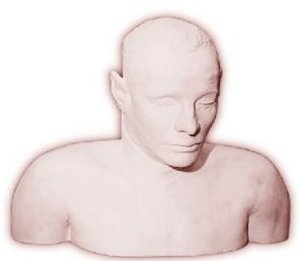
On the morning of 1 December 1948, a well-dressed man was found dead on Somerton Beach in South Australia. He carried no identification, and no one came forward to name him. In a hidden pocket was a scrap of paper bearing two words in Persian, Tamám Shud — “it is ended” — torn from a copy of the Rubáiyát of Omar Khayyám. The book itself was missing.

The book surfaced some weeks later, having been dropped through the window of a parked car. Faint indentations on one of its pages preserved five lines of capital letters — fifty in all — pressed into the paper by an earlier hand. They were quickly taken to be a code, and the obvious questions followed: was the dead man a spy, and were the letters a cipher tied to the book? Over the decades, police, cryptanalysts, amateur investigators and reportedly the American intelligence agencies all tried to break them. Every approach failed, and by any standard statistical test the letters looked random.
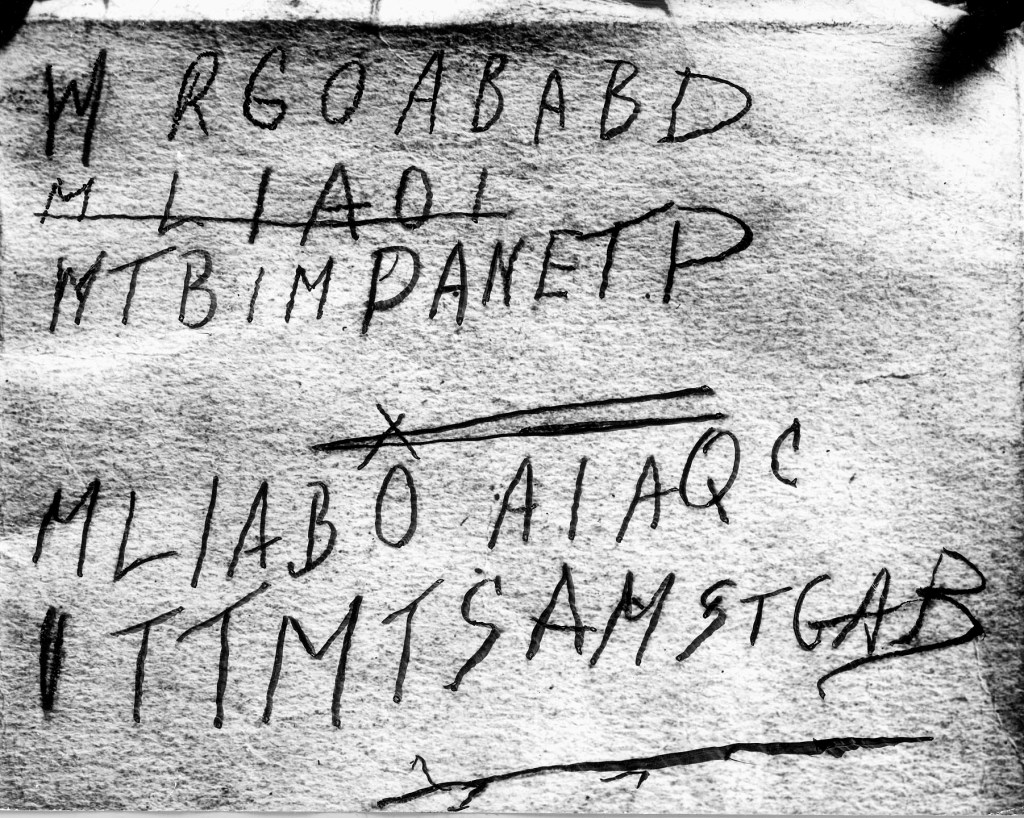
There is a simpler explanation, and it does not require a cipher at all. The letters may never have been meant to be decoded, because they may not be encrypted text. They read more naturally as a list of initials — the first letters of railway stations, recording journeys actually made across Adelaide.
In 2022, DNA analysis identified the Somerton Man as Carl ‘Charles’ Webb, an electrical engineer from Melbourne. The records from his divorce describe a methodical man in considerable emotional difficulty. Read against that background, the lines look less like a secret message and more like Webb’s own record of searching for Jessica Thomson across the Adelaide rail network in the last weeks of his life.
The case for this reading is geographic: each line traces a plausible route, and the distances between consecutive stations are the kind a traveller could actually cover.
The code
The code is five lines of capital letters, the second of which is struck through:
Line 1: MRGOABABD
Line 2: MLIAOI (crossed out)
Line 3: MTBIMPANETP
Line 4: MLIABOAIAQC
Line 5: ITTMTSAMSTGAB
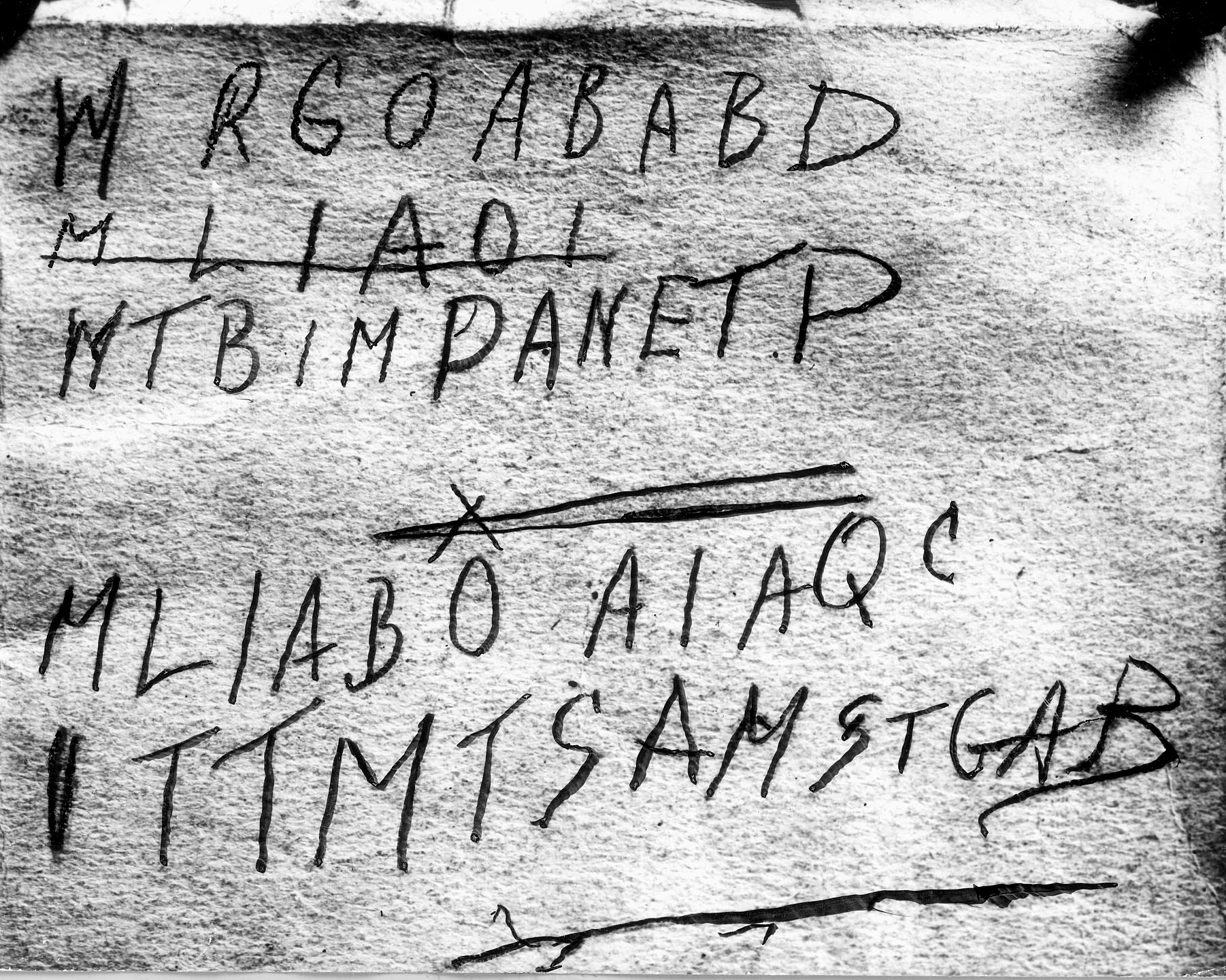
The premise is straightforward: each letter is the first letter of a railway station or town. What makes it more persuasive than a cipher is the spacing. Consecutive stations are typically under fifteen kilometres apart — not arbitrary letters that happen to match station names, but routes that could be travelled on Adelaide’s 1948 network.
Carl Webb
The letters make more sense once Webb himself is in view. His background and the divorce file record a few relevant things.
He was methodical. Trained as an electrical engineer at Swinburne Technical College, he made precision measuring instruments for a living, work in which careful documentation was routine.
He kept unusually careful habits. Every label had been removed from the clothing found on the body — a fastidiousness that some have linked, speculatively, to sensory sensitivity.
He did not cope well with rejection. The divorce papers describe emotional volatility and earlier suicide attempts, alongside a marked difficulty in letting relationships go.
Taken together, this is not the profile of a spy. It is a methodical man in distress, and a list of station initials is the sort of shorthand such a person might keep to track where he had already looked.
Line 1: MRGOABABD
Line 1 reads as a single day’s travel across Adelaide’s coastal and suburban lines — a sweep of the areas where Thomson might be found.
The route
| Pos | Letter | Station | Distance to Next | Notes |
|---|---|---|---|---|
| 1 | M | MARINO | → 8.5 km | Coastal station south of Adelaide |
| 2 | R | REYNELLA | → 12 km | Main line station south of Marino |
| 3 | G | GLENELG | → 11 km | Coastal terminus—where Thomson lived |
| 4 | O | OAKLANDS | → 8 km | Eastern suburbs line |
| 5 | A | ADELAIDE | → 10 km | Central railway terminus |
| 6 | B | BRIGHTON | → 10 km | Coastal station south of Glenelg |
| 7 | A | ADELAIDE | → 10 km | Central terminus |
| 8 | B | BRIGHTON | → 8 km | Coastal station |
| 9 | D | DARLINGTON | — END — | Southern line station |
Total Distance: 77.5 km | Average Leg: 9.7 km
What the distances suggest
Every leg in Line 1 falls between roughly eight and twelve kilometres, and that consistency is the point. Letters chosen at random would not, when matched to station names, produce a connected route; they would demand impossible jumps between unlinked points. These do not. Each leg is a journey that could actually be made.
The line also repeats: Adelaide to Brighton, back to Adelaide, out to Brighton again. That returning to the same place echoes the behaviour described in the divorce file. Brighton station, it is worth noting, lies about 1.5 kilometres from Somerton Beach, where Webb’s body was later found.
Line 2: MLIAOI (crossed out)
Line 2 is the only one struck through, and the deletion is itself suggestive. A cipher is not usually crossed out; a mistake in encoding would be rewritten or destroyed. A travel plan, by contrast, is exactly the sort of thing struck out when the plan changes.
The abandoned route
| Pos | Letter | Station | Distance to Next | Status |
|---|---|---|---|---|
Planned Distance: 45 km (never completed)
Why the route was dropped cannot be known. Thomson may have moved; Webb may have learned she was elsewhere; he may simply have changed his mind. The point is what the deletion implies: this was a working document, used and revised, rather than a finished message waiting to be decoded.
Line 3: MTBIMPANETP
By Line 3 the search has widened, taking in more of the network.
The extended route
| Pos | Ltr | Station | To Next | Notes |
|---|---|---|---|---|
| 1 | M | MARINO | → 9 km | Southern coastal station |
| 2 | T | TORRENS/THEBARTON | → 8 km | Inner western area |
| 3 | B | BRIGHTON | → 12 km | Coastal station |
| 4 | I | ISLINGTON | → 15 km | Northern suburbs |
| 5 | M | MARINO | → 18 km | Return to southern coastal |
| 6 | P | PORT ADELAIDE | → 12 km | Northwestern port terminus |
| 7 | A | ADELAIDE | → 8 km | Central terminus |
| 8 | N | NORTHFIELD | → 4 km | Northern line |
| 9 | E | ENFIELD | → 8 km | Northern suburbs |
| 10 | T | TORRENS/THEBARTON | → 10 km | Western area |
| 11 | P | PORT ADELAIDE | — END — | Port terminus |
Total Distance: 104 km | Average Leg: 10.4 km
Line 4: MLIABOAIAQC
Line 4 follows the same method, extending the coverage further north.
The route
| Pos | Ltr | Station | To Next | Notes |
|---|---|---|---|---|
| 1 | M | MARINO | → 15 km | Southern coastal station |
| 2 | L | LARGS BAY | → 8 km | Northwestern coastal |
| 3 | I | ISLINGTON | → 4 km | Northern suburbs |
| 4 | A | ADELAIDE | → 10 km | Central terminus |
| 5 | B | BRIGHTON | → 12 km | Coastal station |
| 6 | O | OAKLANDS | → 8 km | Eastern suburbs |
| 7 | A | ADELAIDE | → 6 km | Central terminus |
| 8 | I | ISLINGTON | → 4 km | Northern suburbs |
| 9 | A | ADELAIDE | → 15 km | Central terminus |
| 10 | Q | QUEENSTOWN | → 18 km | Northern line station |
| 11 | C | CHELTENHAM | — END — | Coastal area adjacent to Glenelg |
Total Distance: 100 km | Average Leg: 10 km
The line ends at Cheltenham, close to Glenelg, where Thomson lived. After reaching Queenstown in the north, the route returns to the coast — and to the same part of the city it keeps coming back to.
Line 5: ITTMTSAMSTGAB
Line 5 is the longest of the five, and the most telling. It ends G-A-B — Glenelg, Adelaide, Brighton — the three places that frame Webb’s final movements.
The route
| Pos | Ltr | Station | To Next | Notes |
|---|---|---|---|---|
| 1 | I | ISLINGTON | → 5 km | Northern suburbs |
| 2 | T | TORRENS/THEBARTON | → 5 km | Inner western area |
| 3 | T | TORRENS/THEBARTON | → 12 km | Repeated location indicator |
| 4 | M | MARINO | → 10 km | Southern coastal station |
| 5 | T | TORRENS/THEBARTON | → 8 km | Western area |
| 6 | S | SEATON | → 10 km | Western coastal suburbs |
| 7 | A | ADELAIDE | → 12 km | Luggage stored Nov 30, 1948 |
| 8 | M | MARINO | → 15 km | Southern coastal station |
| 9 | S | SEATON | → 6 km | Western coastal |
| 10 | T | TORRENS/THEBARTON | → 8 km | Western area |
| 11 | G | GLENELG | → 11 km | 52 Moseley St—Thomson’s address |
| 12 | A | ADELAIDE | → 10 km | Central terminus |
| 13 | B | BRIGHTON | — END — | 1.5 km from body discovery site |
Total Distance: 102 km | Average Leg: 8.5 km
The final three letters
Those last three letters map closely onto what is known of Webb’s final hours.
G — Glenelg. Thomson lived at 52 Moseley Street; the Rubáiyát was found in a car parked nearby. It is the likely site of Webb’s last contact with her.
A — Adelaide. Webb left his suitcase at the railway station on 30 November 1948 — the act of a man who did not expect to need it again.
B — Brighton. About 1.5 kilometres from Somerton Beach: the last station on the line before the place his body was found.
The pattern across the five lines
Taken in sequence, the five lines trace coherent routes through the 1948 network. Each letter matches a station that existed at the time; each leg is short enough — mostly under fifteen kilometres — to have been travelled in practice; and each line covers ground in the methodical way a person searching for someone might.
Summary
| Code Line | Total | Avg Leg | What It Shows |
|---|---|---|---|
| Line 1: MRGOABABD | 77.5 km | 9.7 km | Local search, ABAB pattern |
| Line 3: MTBIMPANETP | 104 km | 10.4 km | Expanded search |
| Line 4: MLIABOAIAQC | 100 km | 10 km | Ends at Cheltenham (near Glenelg) |
| Line 5: ITTMTSAMSTGAB | 102 km | 8.5 km |
The documented evidence
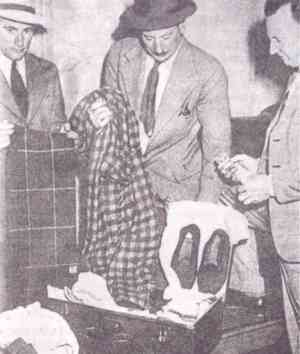
The body was found at Somerton Beach on 1 December 1948. Among the items recovered were a Glenelg bus ticket and, at Adelaide Railway Station, a suitcase deposited on 30 November. Glenelg, Adelaide and Brighton — the triangle the physical evidence already marks out — are the same three places the final line points to. Brighton station lies roughly 1.5 kilometres up the coast from Somerton Beach.
Every station named in this reading was open and in service in 1948. Marion station, which features in some rival interpretations, did not open until 1954 and so could not have appeared in a document from that year.
A man, not a cipher
On this account Webb was not a spy but a rejected and methodical man who recorded things and found it hard to let go. The lines are what such a person produces when trying to find someone: a systematic record, kept in the shorthand of the rail network he knew.
The struck-out line marks a change of plan; the repeated legs, a search gone over and over; and the closing G-A-B, where it ended — Glenelg, then Adelaide, then Brighton, a short distance from where he was found the next morning.
If this reading is right, the letters were never a cipher at all, but a record of searching — the last trace of a man looking for someone he could not find, until he stopped.
— END —
Comments
No login needed. Comments are moderated before publishing.