Policing the Police: Why the ‘Small Stuff’ Matters
When a police officer is finally dismissed or even convicted for gross misconduct, how often do their colleagues quietly nod and say something like, “I saw that coming”? More often than we’d like…
When a police officer is finally dismissed or even convicted for gross misconduct, it is striking how often colleagues quietly nod and say something like, “I saw that coming.” More often than we would like to admit, the signs of serious trouble are visible long before a scandal erupts. Yet in policing we have traditionally focused on the big incidents and tended to wave off the small transgressions. That approach needs to change.
Those who do big bad things also do little bad things
Professor Jason Roach’s theory of self-selection policing offers a simple insight: “those who commit big bad things also commit little bad things”[1]. Serious offenders often reveal themselves through minor offences. By breaking even trivial rules, they are effectively “offering themselves up for police attention”[1]. Roach, with Professor Ken Pease, has spent years researching these “trigger offences” – such as illegal parking in disabled bays or driving while disqualified – that frequently tip off police to bigger crimes[2][3].
Self-selection policing is attractive because it is proactive and preventative. If catching criminals can begin with a broken taillight or a minor infraction, the same logic may apply within police organisations. An officer who is willing to flout a small rule or behave badly in a minor way may be displaying the warning sign – the self-selection trigger – that points to more serious misconduct later on.
Minor misconduct as a major warning sign
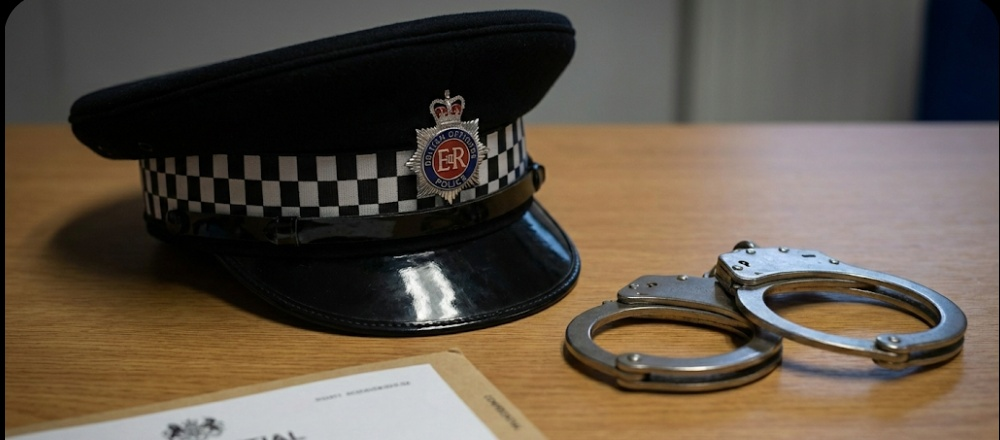
The same lens can be turned inward rather than outward. An officer who habitually bends the rules – whether through rudeness to the public, small dishonesty in paperwork, or ignoring protocols – may be signalling a deeper disregard for ethical boundaries. Many in policing can recall colleagues whose small behavioural issues were brushed aside for years, until one day they were no longer small at all.
This is the heart of applying self-selection policing to professional standards: early low-level misconduct can be the red flag for later gross misconduct, or even criminal activity, by officers. The officer who cuts corners or shows aggression in minor situations may be the same officer who causes serious harm later. When a major case arises – an excessive force incident, a corruption scandal – the common reaction internally is that people were not surprised. The warning signs were there; they were simply not acted upon.
Missing the chance for early intervention
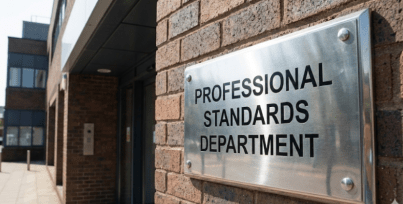
At present, most Professional Standards Departments (PSD) do not focus on the small stuff. They are occupied with investigating serious misconduct and criminal allegations. Lower-level misbehaviour is often passed to line supervisors to deal with informally. A young constable with attitude problems, sloppy discipline, or minor misconduct might receive only a talking-to from their sergeant, if that. The assumption is that anything short of gross misconduct is a local matter.
The intention is to handle minor issues at the lowest level, but in practice this delegation to local supervisors carries real problems. Front-line supervisors are stretched thin with operational demands, and many have little training in spotting the larger pattern behind a series of small incidents. As a result, crucial early warning signs are missed. Minor complaints or misconduct may be noted in isolation but not connected as a pattern of escalating behaviour.
Baroness Louise Casey’s 2023 review of the Metropolitan Police’s misconduct system[4] highlighted this problem. She found that behaviour “which in most other organisations would lead to instant dismissal or serious disciplinary action” was often addressed through only light-touch measures such as “reflective practices” in the Met[4]. Each incident was handled separately, with the force “failing to identify repeated or patterns of unacceptable behaviour” and potentially missing “escalating misconduct”[5]. The system was treating symptoms one by one and never diagnosing the disease.
This is not solely a Metropolitan Police issue. Research shows misconduct tends to be highly concentrated among a small number of officers. Studies have found that a small fraction of officers are responsible for a disproportionate share of misconduct[6] – the familiar “few bad apples” who account for much of the harm. One recent analysis of multiple U.S. police departments found about 5% of officers were responsible for around 20% of all citizen complaints[7], and a few officers generated an outsize number of use-of-force incidents and payouts for damages[8]. Criminologist Lawrence Sherman’s work on the Crime Harm Index and the “power few” in crime is apt here: most crime is committed by a small fraction of all criminals[9], and likewise most police misconduct is caused by a small cadre of repeat offenders in uniform.
“I saw that coming”: the colleague intuition
When an officer finally crosses a serious line, the least surprised people are often their coworkers. Many officers can think of someone who was known for skating on thin ice for years. It might have been the constable who always had an attitude problem and racked up minor complaints, or the detective who played fast and loose with the rules. When such individuals are eventually dismissed or arrested, fellow officers commonly remark that it was only a matter of time.
Consider some recent cases. Before Metropolitan Police officer Wayne Couzens kidnapped and murdered Sarah Everard, he had been reported for indecent exposure multiple times[10] with no action taken. Just days before the murder, Couzens exposed himself to women at a McDonald’s drive-through; one victim later said that if police had acted then, “we could have saved Sarah.”[11][12] Another Met officer, David Carrick, was nicknamed “Bastard Dave” by colleagues and had a long history of complaints, including eight separate reports of abuse, before he was finally prosecuted as a serial rapist[13]. These extreme cases make headlines, but they reflect a pattern: major harm by officers is nearly always preceded by minor harm that went unaddressed.
The pattern holds beyond the UK as well. In the United States, a Minneapolis officer who fatally shot an unarmed woman in 2017 had numerous red flags early in his career – training officers had raised concerns about his fitness for duty long before the tragedy[14]. He had even pulled a gun on a motorist during a routine traffic stop, pointing it at the driver’s head for a minor violation just weeks before the shooting[15] – a clear warning sign that was never properly addressed. These accounts underscore the same point: within police organisations, people often know who the likely future offenders are, based on their early conduct.
Changing the culture: take the small stuff seriously
To police our own effectively, we need a cultural shift. The message from leadership must be that integrity is non-negotiable in every action, however minor. That means empowering officers of all ranks to call out and correct small violations and concerning behaviours, not as petty nitpicking but as proactive harm reduction. Early intervention should not be seen as punitive but as preventative – a way to steer a potentially troubled officer back on track, or to remove them before they do serious damage.
In practice, this involves a few changes. First, training and supporting supervisors to recognise patterns and intervene early is crucial. Front-line sergeants need the time and tools to be effective gatekeepers of standards. They should not hesitate to document and address even low-level issues – a discourtesy here, a lapse of judgment there – and to flag patterns upward to PSD. Agencies are increasingly using early intervention systems – data-driven tools that monitor problematic behaviour – to flag officers who may benefit from immediate retraining, counselling, or extra supervision[16][17]. These systems only work where there is a will to act on the alerts.
Second, Professional Standards units must not dismiss the small stuff as beneath their remit. They should treat repeated minor misconduct as seriously as one major incident, because in terms of harm potential it is. A pattern of small infractions can reveal an officer who poses a significant risk. PSDs could adopt a policy of reviewing any officer with, say, three or more minor complaints in a year – not to punish them for those complaints in isolation, but to assess whether a deeper problem is developing and to intervene accordingly.
Finally, there is a need for organisational courage and support for whistleblowing. Officers must feel able to say “this isn’t right” about a colleague’s behaviour without fear of ostracism. We know that a code of silence often protects misconduct[18]. Leaders have to break that culture by rewarding integrity and backing those who speak up. If multiple team members quietly believe Officer X is trouble, that should prompt action rather than collective shoulder-shrugging. A healthy organisation is one where saying “I’m worried about Bob’s behaviour” is seen as loyalty to the service’s values, not a betrayal of colleagues.
Conclusion: proactive harm reduction
The theory of self-selection policing tells us that people reveal their true selves in small ways before they ever commit headline-grabbing acts. Policing has begun to embrace this approach externally, catching serious criminals through minor crimes. It is now time to embrace it internally as well. Every police force has its share of low-level grumbles and “bad feeling” about certain individuals. Rather than dismissing that as gossip or personality clashes, we should pay attention. When patterns emerge – even of minor rule-breaking or discourtesy – they should prompt a closer look. The aim is not to punish every small mistake, but to recognise the smoke before there is a fire.
The stakes are high. A single officer who goes rogue can inflict harm far disproportionate to their number, undermining public trust, harming victims, and tarnishing the reputation of thousands of honest officers. That fall from grace rarely happens overnight; the seeds are sown in the early, smaller transgressions that we too often ignore. For police leaders and policymakers, the challenge is to build systems and a culture that catch the small things and connect the dots. As one victim’s testimony made painfully clear, if we hold people accountable when warning signs first appear, we can prevent the worst outcomes. In policing, no act of misconduct is ever truly “small” – it is an opportunity to intervene, to redirect, or to remove, before it is too late.
1] [2] [3] The Self-Selection Policing Approach | Psychology Today
https://www.psychologytoday.com/us/blog/stopping-crime/202211/the-self-selection-policing-approach
[4] [5] Casey Review: Misconduct in the Met and officer dismissal
https://commonslibrary.parliament.uk/casey-review-misconduct-in-the-met-and-officer-dismissal/
[6] [16] [17] [18] Study finds misconduct spreads among police officers like contagion | NOVA | PBS
https://www.pbs.org/wgbh/nova/article/police-misconduct-peer-effects/
[7] [8] nnscommunities.org
https://nnscommunities.org/wp-content/uploads/2024/02/Police-Misconduct-Issue-Brief-Addressing-the-Few.pdf
[9] Less Is More When Fighting Crime | ScienceDaily
https://www.sciencedaily.com/releases/2007/11/071119113913.htm
[10] Police ‘could and should have’ stopped him: key points from Wayne Couzens report | Wayne Couzens | The Guardian
https://www.theguardian.com/uk-news/2024/feb/29/police-could-and-should-have-stopped-him-key-points-wayne-couzens-report
[11] [12] Police reviewing how it treats indecent exposure after Wayne Couzens scandal | Police | The Guardian
https://www.theguardian.com/uk-news/2023/may/02/police-consider-rethink-on-indecent-exposure-after-wayne-couzens-scandal
[13] Four officers face disciplinary action over David Carrick investigation | UK news | The Guardian
https://www.theguardian.com/uk-news/2024/sep/30/four-officers-face-disciplinary-action-over-david-carrick-investigation
[14] [15] Records: Cop accused in Australian’s death can’t take stress | Fox News
https://www.foxnews.com/us/records-cop-accused-in-australians-death-cant-take-stress
Comments
No login needed. Comments are moderated before publishing.