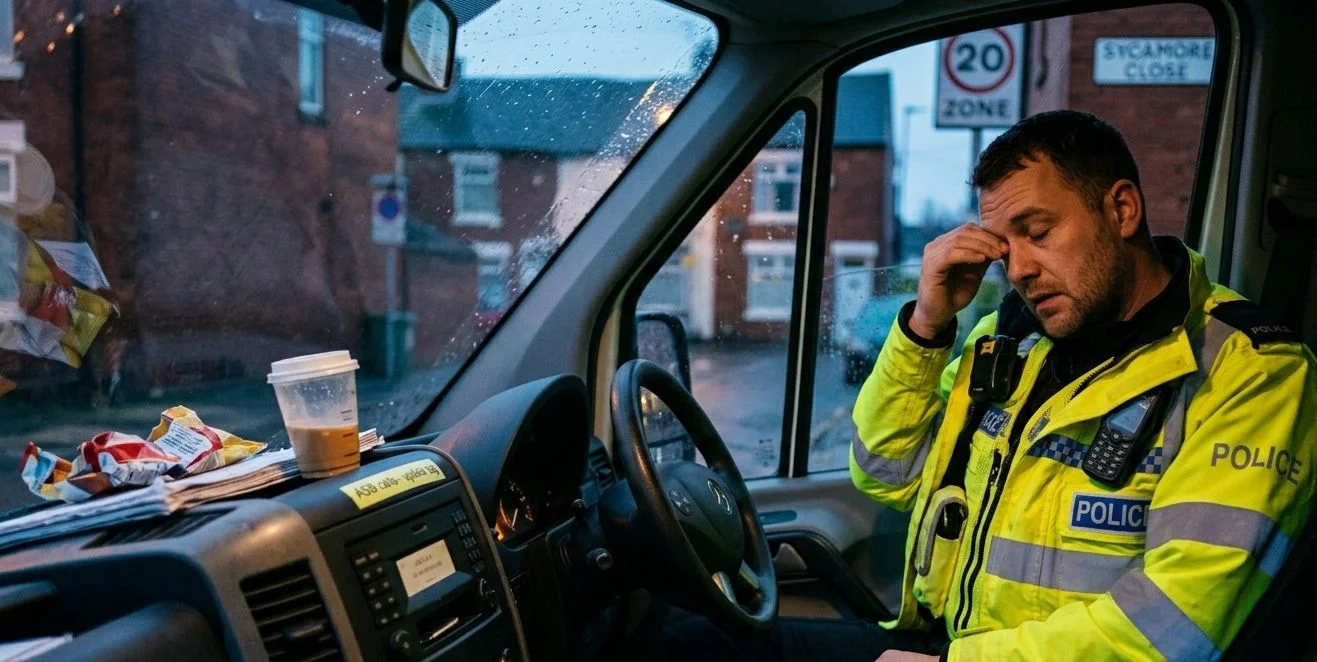
The Hidden Crisis: How Police Burnout Threatens Officer Safety and Public Trust
Police burnout isn’t just an occupational hazard — it’s a critical public safety issue that directly increases the risk of excessive force and threatens community trust. 83% of officers report…
Police burnout is more than an occupational hazard. It is a public safety issue, because it raises the risk of excessive force and erodes community trust. According to the 2024 What Cops Want Survey of nearly 3,000 officers, 83% report that their mental health affects their work performance. Research also indicates that burned-out officers hold more positive attitudes toward use of force and resort to violence more often on duty. This is not a question of officers being “weak”; it reflects the cumulative neurological and psychological toll of a profession that demands constant hypervigilance, repeated trauma exposure, and split-second life-or-death decisions. The consequences reach well beyond individual wellness. When 71% of officers report sleep disturbances and 50% experience heightened anger, departments face more citizen complaints, costly lawsuits, community distrust, and preventable tragedies. Treating burnout early is not an optional extra; it is central to officer survival, effective policing, and community safety.
Why police burnout looks different from everyday exhaustion
Law enforcement burnout differs from general occupational stress because of the nature of the work. Officers experience near-constant activation of the “fight or flight” response that civilian workers rarely encounter; a traffic stop, welfare check, or domestic call can become life-threatening within seconds. This sustained hypervigilance prevents full psychological decompression even during off-duty hours.
Trauma exposure also differs from other helping professions. Whereas a single catastrophic event might cause PTSD in a civilian, officers face cumulative stress from repeated traumatic events. Witnessing violence, death, child abuse, fatal accidents, and human suffering shifts from occasional incident to routine exposure. A Portuguese study of 2,057 officers found that 85% presented high operational stress levels and 55% were at risk of developing psychological disorders. Over time, this repeated exposure alters brain chemistry and neural density.
Physical symptoms tend to be more severe and more frequent among officers. Research shows officers have cardiovascular disease rates twice as high as the general population, elevated blood pressure compared with clerical workers, and increased cancer mortality. The 2024 survey found that 71% struggle with sleep disturbances, far above the general population rate of 15–20% for sleep disorders. Chronic headaches, muscle tension, and significant weight fluctuations occur at high rates.
The emotional and cognitive toll is equally distinctive. Depression linked specifically to work stress affects 39% of officers, compared with 18.4% in the general U.S. population. Officers report anxiety or panic attacks at 36%, PTSD symptoms at 35%, and suicidal thoughts attributable to work stress at 11%. Officers face a suicide mortality rate three times higher than other municipal employees. Cognitive symptoms include difficulty maintaining focus during critical situations, recurring traumatic memories affecting 44% of officers, and impaired split-second decision-making.
The cultural dimension is perhaps the most difficult to address. Officers work within an organisational culture that has traditionally valued “toughness” and stigmatised vulnerability. The expectation to “shake it off” deters many from seeking help even when symptoms become debilitating. Public scrutiny through body cameras and social media adds constant performance anxiety, while anti-police sentiment intensifies the sense of being unsupported and unfairly judged. Unlike other professions, where seeking therapy is increasingly normalised, only 22% of officers engage in individual counselling despite widespread need.
Operational stressors compound these psychological burdens. Shift work and unscheduled mandatory overtime disrupt circadian rhythms. Understaffing, cited by 60% of officers in 2024, means longer shifts, fewer recovery periods, and greater exposure to traumatic calls. Administrative burdens consume hours that might otherwise go to policing or recovery, while shortages force experienced officers to shoulder disproportionate workloads alongside inexperienced recruits.
The link between burnout and excessive force
The connection between officer burnout and inappropriate use of force is empirically established and neurologically explicable. A 2001 study by Kop and Euwema, examining 422 Dutch police officers, found that burnout correlates significantly with more positive attitudes toward use of force and more frequent use of violence on duty. More recently, Amanda Devan’s 2020 study of 144 U.S. officers found that higher burnout subscale scores are significant predictors of nonlethal force use, with burned-out officers reporting significantly more force incidents in the preceding 30 days than officers with high compassion satisfaction.
The psychological mechanisms connecting burnout to force are well documented and operate through four main pathways: compassion fatigue reducing empathy, stress and exhaustion diminishing impulse control, cognitive impairment reducing situational awareness, and a breakdown in risk assessment.
Compassion fatigue and the erosion of empathy
FBI Law Enforcement Bulletin research identifies a measurable decrease in empathy among officers showing signs of compassion fatigue. This impairment affects trust-building between officers and community members, reducing officers’ ability to understand others’ perspectives and respond with appropriate compassion. Multiple studies document how impaired empathy, combined with impulsivity and rash judgement during crises, leaves officers more prone to errors and flaws in judgement and decision-making.
The behavioural signs include emotional distancing, pessimism, impulsive decision-making, and breakdowns in interpersonal communication. When officers who once felt satisfaction from helping others lose that capacity, they also lose a protective factor against aggressive responses. Research shows that officers with higher empathy have lower burnout levels; compassion satisfaction serves as recovery capital. As this protective factor erodes, the risk of inappropriate force rises.
How exhaustion undermines impulse control and tolerance
The RITE Academy, which has trained more than 2,000 police agencies since 2015, identifies what it terms “Block-Out Syndrome” as a key mechanism linking burnout to force. During Block-Out, officers experience cloudy thought processes that impair sound judgement, a narrowed field of attention that causes them to miss critical behavioural cues, shallow breathing that intensifies anxiety, empathy giving way to apathy and, most seriously, a diminished regard for the sanctity of life that substantially increases the risk of excessive force.
The Academy makes a central point: “Officers don’t show up for their shift thinking, ‘Today I am going to use excessive force.’ Everything that has been negatively building up in the officer’s life before the incident is what triggers the final blow.” Cumulative stressors, including PTSD from multiple incidents, family problems such as divorce or custody battles, financial instability, and health issues, can build toward career-ending moments.
Research confirms that impulsiveness, aggression, irritability, and angry outbursts are associated with sleep deprivation, and that the inability to sustain resilience and manage stress responses significantly impairs judgement and decision-making, in extreme cases resulting in inappropriate use of force. This is not a matter of moral failure; it reflects neurological and physiological systems overloaded beyond their capacity to regulate behaviour effectively.
How chronic stress impairs critical decisions
A 2021 study found that police officers with PTSD displayed significantly lower cognitive performance across several domains: executive functioning, verbal learning and memory, and lexical access. These impairments directly affect the ability to deal with critical incidents. Even mild, subclinical cognitive difficulties affect social and occupational functioning in ways that increase danger.
Physiological stress research from 2025 showed that an increased heart rate during incidents correlates with lethal force errors, decreased memory for the perceptual aspects of scenarios, and impaired recall of officers’ own actions. When heart rates spike too high, officers experience perceptual distortions and cognitive errors, including tunnel vision and impaired spatial processing. One study noted that “untreated levels of stress, accompanied by loss of control and composure, cause impaired perception, memory, decision-making, reaction, and work performance.” Officers without effective coping mechanisms may pose a threat to themselves, their colleagues, and the public.
Sleep deprivation and impairment comparable to intoxication
The findings on sleep deprivation’s effect on use-of-force decisions are particularly significant. More than 40% of police officers screen positive for sleep disorders, nearly double the general population rate of 15–20%. The operational consequences are serious: 46% of officers reported falling asleep while driving, with 26% reporting that this happens one to two times a month.
A Washington State University study published in the journal Sleep found that after 24 hours without sleep, subjects showed a marked inability to differentiate patterns in reversal learning tasks, precisely the kind of rapid threat assessment required in policing. Even after recovery sleep, significant differences persisted. Another study that factored fatigue into deadly force simulations found that many fatigue measures correlated significantly with reduced decision-making accuracy and increased reaction times, with effects most pronounced in no-shoot and ambiguous scenarios.
A 2020 study in Nature Scientific Reports found that mild sleep loss over just four nights significantly affected performance on the Police Officer’s Dilemma Task. Sleep restriction increased the tendency to shoot and altered decision criteria, making officers more inclined to fire. The National Institute of Justice confirms that being awake for 17 hours produces motor-skills impairment equivalent to a blood alcohol content of 0.05%, while 24 hours awake equals 0.10% BAC, meaning that officers working extended shifts are functionally impaired to a degree equivalent to legal intoxication.
How risk assessment breaks down under cumulative stress
Dr Cara Rabe-Hemp, a criminal justice professor and police stress expert, explains that “high levels of stress can impair an officer’s ability to make rational decisions in high-pressure situations,” reducing clear thinking and sound judgement, and leading to instances of excessive force or biased policing. Her own observations confirm that officers who were burned out “were cynical, mistrusted everyone, and were not productive.”
Police psychologists surveyed identified five officer profiles at risk for excessive force, including officers with personal problems causing anxiety and destabilised job functioning, those with previous traumatic job experiences, and officers with low frustration tolerance. The evidence from neuroscience, psychology, and law enforcement practice points to the same conclusion: officer wellness is not merely a personal health issue but a public safety matter directly linked to appropriate use of force.
Recognising burnout before it becomes a crisis
Early identification of burnout is considerably more effective than crisis intervention. Several agencies have shown that teaching officers and supervisors to recognise early warning signs prevents critical incidents, reduces sick leave, decreases citizen complaints, and saves careers.
Helping officers recognise burnout in themselves and their peers
The FBI Law Enforcement Bulletin’s Behavioral Health Training (BHT) programme represents good practice for officer-level training. This prevention-focused approach begins at the academy and continues through mandatory departmental training. The psychoeducational programme covers depression, PTSD, and suicide using media including pictures and videos, delivered in an optimistic, upbeat manner that fits law enforcement culture. It teaches officers to recognise signs and symptoms of psychological distress in themselves and their coworkers, reducing stigma around mental health.
The POWER (Peace Officer Wellness, Empathy & Resilience) Training Program, certified by California POST and IADLEST, provides intensive three-month cohort-based training covering mindfulness practices, compassion-based communication exercises, and stress management. The evidence of effectiveness is substantial: statistically significant improvements in mindfulness, emotion regulation, empathy, perceived stress, and anger, with anecdotal improvements including reduced headaches and stomach aches, better sleep, and improved family relations. Biometric measurements showed improvements in Heart Rate Variability, a physiological indicator of stress resilience.
The Fraternal Order of Police’s two-hour Officer Wellness Training focuses on individual and family resiliency. It reviews early red-flag indicators and sets out how to respond before and after crises occur. The training acknowledges that law enforcement loses more officers to personal crisis than to duty-related tragedy, which underscores the importance of peer vigilance.
Critical Incident Stress Management (CISM) training from the International Critical Incident Stress Foundation is a three-day course in peer support crisis intervention skills, in effect a form of “psychological first aid” for coworkers and others affected by critical incidents. The curriculum covers post-traumatic stress, the long-term effects of cumulative stress, individual crisis intervention fundamentals, and group crisis intervention protocols.
Equipping supervisors with recognition and response skills
Supervisors serve as the “primary caregivers” for their teams, a philosophy embedded in the San Diego Police Department’s case study by the Police Executive Research Forum. Supervisor training should develop wellness-related and interpersonal skills, teaching command staff how to provide effective wellness services and to treat wellness as integral to good leadership rather than separate from it.
The VALOR Program’s leadership training from the Bureau of Justice Assistance offers executive and mid-level leadership courses with self-paced virtual training modules, guided self-examinations, and practical application of theory to working philosophy. Executives and first-line supervisors complete the course with an implementation plan, moving from conceptual understanding to actionable strategies.
Supervisors need to monitor specific behavioural indicators across emotional, physical, and performance domains. Emotional and psychological signs include irritability, cynicism, or lack of patience with colleagues and the public; emotional disengagement or detachment from work; apathy, cynicism, or rigidity as defence mechanisms; and feelings of tension, anxiety, or depression. Physical signs include chronic fatigue even after rest, persistent exhaustion, headaches and muscle tension, sleep problems, and decreased alertness. Performance and behavioural signs include increased absenteeism, decreased job performance, difficulty making decisions especially under pressure, increased citizen complaints, safety violations or administrative errors, angry reactions to minor issues, social withdrawal from colleagues, and difficulty distinguishing important from unimportant factors in dangerous situations.
The International Association of Chiefs of Police Officer Resilience Training for Leaders equips executives with knowledge about promoting well-being, understanding the impact of resilience skills on personal and professional lives, and strengthening resilience within departments from an executive perspective.
Implementing early warning systems that work
Traditional Early Warning Systems track citizen complaints, firearm discharge reports, use of force incidents, civil litigation, resisting arrest incidents, vehicular pursuits and accidents, attendance issues, and performance concerns. Studies in Minneapolis and New Orleans showed 67% and 62% decreases in citizen complaints respectively after EIS implementation. The Department of Justice now considers these systems evidence-based technology, though only around 18% of law enforcement agencies nationwide currently use them.
A more recent approach is the PowerVitals Early Intervention System, an AI-powered wellness-focused platform that quantifies cumulative stress data from multiple sources, including CAD notes, action reports, and internal affairs cases. The system calculates the level of trauma exposure and auto-calculates a “Pulse Score” for each officer, notifying supervisors when officers show signs of increased stress or trauma. This allows intervention before traditional systems would detect problems, tracking officer behaviour over time with considerable precision.
San Diego Police Department’s “Recap” system produces monthly reports on wellness contacts, tracking the number of individuals served, the type of service received, general demographics, and a general description of issues, with no identifying information, to protect confidentiality. The emphasis is on themes and trends rather than on targeting individuals. Their Quarterly Management Report documents employees providing wellness assistance and hours spent, issue areas ranked from most to least prevalent, training provided, new and ongoing projects, community partnerships, and summaries of critical incidents.
Case study: San Diego PD’s comprehensive approach
The San Diego Police Department, selected as a 2016 Officer Wellness Winner and featured in a PERF case study, illustrates good practice. Its full-time dedicated Wellness Unit includes two sergeants, one officer, and one civilian dispatcher under an Assistant Chief’s command, and is located in headquarters to normalise wellness services rather than placing them off-site.
The department’s training programme includes Emotional Survival Training (four hours in the academy), Psychological Preparedness Training (a full day immediately after graduation), Effective Interactions Training (two days after field training), and Advanced Officer Training with quarterly wellness modules. Educational programming is tailored to emerging issues identified through data analysis.
The recruitment and selection process for wellness staff focuses on interpersonal skills over rank, looking for compassionate, non-judgemental, experienced, trustworthy individuals through a formal interview process. Two-year rotation limits prevent burnout among wellness staff themselves, with mandatory psychological check-ins for those providing services.
The results after two years were substantial: 78% felt there was more discussion about suicide, substance abuse, and ineffective coping; 70% felt the stigma of asking for help was decreasing; 89% trusted that they could ask for and receive help; and 79% felt comfortable walking into the Wellness Center. These figures show that cultural change is achievable with sustained leadership commitment.
Evidence-based coping mechanisms for police stress
Research identifies several intervention categories with proven effectiveness for reducing burnout and building resilience. These range from individual psychological strategies to comprehensive organisational programmes, all supported by peer-reviewed studies and documented departmental outcomes.
Psychological interventions with demonstrated efficacy
Cognitive Behavioural Therapy (CBT) and Eye Movement Desensitisation and Reprocessing (EMDR) are gold-standard treatments. Brief six-to-eight-session Trauma-Focused CBT or EMDR substantially reduces symptoms of PTSD, depression, and anxiety in police officers. TF-CBT helps officers process traumatic memories through exposure as a core element, while Cognitive Processing Therapy addresses thought patterns that contribute to stress. Research shows that officers are more interested in these evidence-based treatments than current uptake rates suggest, which points to access barriers rather than unwillingness.
Mindfulness-Based Resilience Training (MBRT), structured as 10 sessions over eight weeks and including hatha yoga, psychoeducation, and practical mindfulness exercises, produces significant reductions in stress, depression, anxiety, burnout, and alcohol consumption. Programmes such as HEROES, POWER, and the POLICE initiative have documented outcomes demonstrating real-world effectiveness. Components include breathing control, meditation techniques, cognitive diffusion, situational awareness, and emotional regulation, all of which apply directly to law enforcement challenges.
The IACP/University of Pennsylvania Law Enforcement Resilience Training offers a one-day interactive format with role plays, videos, and discussions, teaching three core skill domains: mind skills (harnessing thinking to drive productive emotions and reactions), energy skills (regulating energy and maintaining vitality), and connection skills (strengthening professional and personal relationships). Based on the empirically validated Penn Resilience Program, these skills become automatic and reliably applied in crisis moments with practice.
Physical wellness as psychological protection
The evidence linking physical activity to burnout prevention is clear. Exercise is positively and significantly related to lower burnout risk, with regularity mattering more than the type of exercise. Officers who take regular physical activity show reduced mental exhaustion and lower overall burnout. Portland Police Bureau’s on-duty fitness hour programme, which provides one hour per shift for wellness activities, demonstrates organisational commitment, while Bend Police Department’s structured on-duty fitness programme, running since 2015, produced a 40% reduction in on-the-job injuries.
Sleep optimisation may be the most important intervention. Officers sleeping fewer than six hours are 1.6 times more likely to experience emotional exhaustion. The Seattle Police Department’s fatigue management training delivered just 18 additional minutes of sleep per night, with significant reductions in depression, anxiety, and PTSD symptoms. Interventions include sleep science training on physiology and hygiene practices, sleep disorder screening for apnoea and shift work disorder, and education on shift work sleep strategies.
Nutrition programmes that provide access to registered dietitians who understand law enforcement schedules, meal prep services, and shift-appropriate meal planning offer practical support. Bakersfield Police Department’s partnership with a food catering company for discounted meal-prep services is an achievable model. Leisure activities that build social connections outside the job reduce stress and burnout and moderate the effect of job stressors; the type of leisure matters less than the intention to build relationships.
Organisational interventions that change culture
Research identifies specific protective organisational factors. Meaningful work, when officers understand their mission’s impact and see community benefit, significantly lowers burnout rates. Organisational justice in all three forms (distributive fairness in allocating resources, procedural fairness in processes, and interactional respect and communication) is a strong protective factor against exhaustion and disengagement. Organisational identification, when officers identify strongly with their department, correlates with lower burnout. Health-oriented leadership, where supervisors prioritise officer wellness, model healthy behaviours, and support recovery, directly buffers the effect of work effort on burnout levels.
Managing quantitative demands through appropriate staffing, workload distribution, and alternative delivery systems such as 311 for non-urgent calls addresses the primary burnout risk factor. Job rewards including recognition, career development, and appropriate compensation protect against work-related strain. Providing appropriate autonomy and decision-making authority, alongside predictable work environments with clear performance standards, reduces stress.
Comprehensive wellness programmes with proven track records
Portland Police Bureau’s programme, launched in 2018, provides each officer one hour per shift for wellness activities including exercise, mental health services, and financial planning. Wellness training runs from pre-academy through Advanced Academy, covering sleep, nutrition, financial wellness, and stress management. Each precinct has a gym with fitness coaches, personalised plans, and organised classes. Officers report measurable improvements in physical health, including weight loss and increased fitness, better sleep and stress management, and a cultural shift that normalises mental health conversations.
Stockton Police Department’s Wellness Network won the 2017 Destination Zero Award with minimal budgetary expenditure beyond their contracted psychologist. Their four pillars, a peer support team, police chaplaincy, contracted psychologist, and city-sponsored Employee Assistance Program, are coordinated by a Wellness Network Manager. Implementation includes an eight-hour wellness orientation before field training, quarterly sergeant workshops, roll call presentations, and a response to all officer-involved shootings and in-custody deaths.
The German metropolitan police longitudinal study provides some of the most compelling evidence. After implementing an occupational health-based shift schedule, researchers followed 116 officers for 5.5 years and found statistically significant improvements in work-life balance, job satisfaction, and quality of life, improvements that were sustained over the long term.
Practical steps departments can implement immediately
Addressing police burnout requires action at several levels: individual officers, supervisors, command staff, and organisational policy. The following evidence-based recommendations are achievable regardless of department size or budget.
For individual officers experiencing warning signs
Within the first 72 hours of recognising burnout symptoms, officers should accept that seeking help demonstrates strength, not weakness, and understand burnout as an occupational hazard affecting the majority of law enforcement professionals. Access confidential support immediately through COPLINE (1–800-COPLINE), a 24/7 hotline staffed by retired officers offering complete confidentiality and anonymity; the 988 Suicide & Crisis Lifeline, which provides 24/7 free confidential support; Employee Assistance Programs available through most agencies; or trained peer support team members. Schedule a medical assessment screening for sleep disorders, depression, anxiety, and PTSD, alongside a physical health check-up that discusses symptoms openly.
Within one to four weeks, establish therapy with a culturally competent provider offering CBT, EMDR, or trauma-focused therapy (many agencies offer six to eight sessions through wellness programmes). Optimise sleep by aiming for a minimum of six hours (seven to nine optimal), creating a dark, quiet sleep environment, establishing consistent sleep routines despite shift work, and screening for sleep apnoea if experiencing snoring or daytime fatigue. Begin physical activity using on-duty wellness hours if available, with a minimum of 30 minutes of moderate exercise three to five days per week; consistency matters more than intensity. Re-engage with family, friends, and leisure activities outside work to rebuild social connections.
Within one to six months, enrol in resilience training through IACP programmes or equivalents, practising mind skills, energy skills, and connection skills daily. Request fixed shift schedules where possible, since irregular schedules increase burnout risk by 1.91 times, and limit shifts exceeding 11 hours. Attend department financial planning workshops, create realistic budgets, and address debt concerns early. Establish work-life boundaries by limiting fatigue-causing secondary employment, protecting family time, and automating routine decisions to reduce decision fatigue.
Long-term maintenance requires annual mental health check-ins, continued therapy as needed, regular peer support engagement, and family counselling if needed. Seek meaningful work assignments aligned with interests, pursue training and development opportunities, consider specialised units, and mentor newer officers to build connection and purpose. Maintain regular exercise routines, continue sleep hygiene practices, sustain social connections outside work, and complete regular health screenings.
For supervisors becoming primary caregivers
Supervisors should accept their role as the “primary caregivers” for their teams; wellness is integral to effective leadership. Learn to recognise behavioural indicators including irritability with colleagues or public, emotional disengagement, increased absenteeism, decreased performance, difficulty making decisions, and social withdrawal. These observable changes signal that intervention may be needed.
Have direct, intentional conversations rather than waiting for officers to disclose problems themselves. Phrases such as “I’ve noticed you seem different lately — are you okay?” or “That was a tough call — do you want to talk about it or connect with a peer supporter?” open doors without forcing disclosure. Document concerns through factual behavioural observations rather than diagnostic labels, so that the process does not stigmatise.
Provide schedule flexibility for therapy appointments, wellness activities, and adequate recovery time. Enforce rest periods between shifts and protect officers from excessive mandatory overtime. When officers access wellness services, treat it as a sign of strength and professionalism, not weakness. Support the peer support team publicly, giving them credibility and command backing. Follow up consistently after critical incidents; do not assume officers are “fine” simply because they do not ask for help.
For command staff leading cultural transformation
Commit from the top with public, unequivocal support for wellness. Chief executives must model wellness behaviours, since officers watch what leaders do, not only what they say. Allocate protected resources with dedicated funding and staffing that survives budget fluctuations. Develop written policies reviewed by legal advisors, with clear confidentiality protections and exceptions.
Implement comprehensive wellness programmes addressing all seven essential categories: mental health and psychological support, physical wellness and health management, sleep and fatigue management, family and relationship support, financial wellness, spiritual and moral support, and organisational culture and leadership development. Use data to track outcomes including sick leave usage, workers’ compensation claims, turnover rates, citizen complaints, and use of force incidents. Adjust programmes based on evidence of what works in your specific department.
Partner with culturally competent mental health professionals who understand law enforcement culture. Address organisational justice systematically through fair resource allocation, transparent procedures, and respectful treatment. Optimise shift schedules based on occupational health research: irregular schedules increase emotional exhaustion risk by 1.91 times, shifts exceeding 11 hours increase burnout, and mandatory overtime increases emotional exhaustion risk by 1.37 times. Create meaningful work by connecting officers to mission impact and community benefit stories.
For departments starting from zero budget
Even departments with severe budget constraints can implement effective programmes. The Stockton Police Department model required minimal expenditure beyond a contracted psychologist. Their approach prioritised rigorous peer support selection based on active listening skills, peer credibility, and integrity of intent rather than expensive technology or facilities.
Apply for federal grants including Law Enforcement Mental Health and Wellness Act (LEMHWA) funding, VALOR Initiative resources (offered at no cost), and state-level funding opportunities. Partner with neighbouring agencies to share resources, training costs, and contracted services; regional peer support networks and shared psychologist contracts reduce individual agency costs.
Start small and build systematically. Begin with peer support team development (training costs are modest), implement confidential hotline access (COPLINE is free), establish written confidentiality policies (no cost), train supervisors on recognition (in-house training), and gradually add components as resources allow. Document outcomes meticulously to justify future budget requests with hard data on reduced sick leave, fewer complaints, lower turnover, and decreased workers’ compensation claims.
Make creative use of existing resources. Many Employee Assistance Programs already contracted by cities or counties include services that police departments are not fully using. Local mental health providers may offer pro bono or reduced-cost services for first responders. Fitness facilities often provide law enforcement discounts. Retired officers frequently volunteer as peer supporters. Universities conducting research may provide assessment and evaluation support at no cost in exchange for data access.
Policy changes that cost little but save much
Shift schedule optimisation based on occupational health research requires only administrative changes, not funding. Reduce irregular schedules, limit shifts to 10–11 hours where possible, rotate overtime equitably, enforce mandatory rest periods between shifts, and minimise night shift frequency. The German study found that these changes alone produce statistically significant improvements in work-life balance, job satisfaction, and quality of life, sustained over 5.5 years.
Confidentiality policy development requires legal review but no ongoing costs. Clear written policies specifying what is confidential, what exceptions exist (danger to self or others, child abuse, domestic violence, elder abuse), and how information is protected substantially increase officers’ willingness to access services. San Diego Police Department’s model policy can serve as a template.
Cultural messaging from command staff that normalises help-seeking costs nothing but yields substantial results. When chiefs and sheriffs share their own experiences with stress management, discuss therapy openly, or acknowledge the difficulty of the profession, it gives officers permission to be human. Regular mentions in roll calls, newsletters, and command staff meetings that “it’s okay to not be okay” and “seeking help is professional, not weak” gradually shift culture.
Integrating training into existing academy curricula and in-service training adds content but not necessarily time or money. The FBI’s Behavioral Health Training approach embeds wellness content throughout existing training rather than creating separate programmes. Four hours in the academy on emotional survival, quarterly wellness modules in in-service training, and two-hour resilience sessions replace rather than supplement other content.
The path forward: preventing tragedy before it strikes
The research is clear: police officer burnout is widespread, dangerous, and preventable. With 83% of officers reporting that mental health affects work performance, and clear evidence linking burnout to excessive force, the status quo is untenable. The solutions, however, are achievable, evidence-based, and already in use by departments nationwide.
The central point is that burnout prevention must occur early and continuously. Waiting for crisis, whether officer-involved shootings, suicides, excessive force incidents, or the loss of experienced personnel, is ethically indefensible and economically wasteful when effective interventions exist. Every officer deserves to finish their career healthy, every community deserves officers capable of making sound decisions under pressure, and every department deserves to retain experienced personnel who have invested decades in serving.
Departments can begin with concrete actions: train supervisors to recognise warning signs, establish peer support teams, implement shift schedule optimisations, provide confidential access to mental health resources, apply for federal grants, and signal from command staff that officer wellness is a strategic priority equal to any tactical or investigative function.
The officers who run toward danger when others run away, who witness humanity’s worst moments repeatedly, who make split-second decisions under intense pressure, and who carry the weight of community safety deserve support systems that recognise the neurological, psychological, and physiological realities of their profession. Investing in officer wellness is not “soft”; it is among the most pragmatic decisions police leadership can make. Burned-out officers cannot protect communities, make sound decisions, build trust, or sustain careers. Healthy, resilient, supported officers can do all of these things.
The question for departments is not whether they can afford comprehensive wellness programmes, but whether they can afford not to implement them. On the evidence, and given the real-world consequences of inaction, the conclusion is straightforward: addressing police burnout is essential for officer survival, effective policing, and community safety.
Comments
No login needed. Comments are moderated before publishing.