

Self-Selection Policing: What Minor Offences Can Reveal
What self-selection policing can reveal through minor offences, what the driving research establishes, and the limits on searches and misconduct prediction.
Read the articleA minor offence can be an investigative clue. Self-selection policing asks whether particular behaviours help officers identify people involved in wider offending. The research gives that idea a basis for testing, especially in roads policing. It gives officers no additional power to search, detain or treat someone as a serious offender.
That distinction decides whether the approach becomes useful police work or suspicion dressed up as evidence. Forces should test specific triggers against current offending, count the encounters that produce nothing further, and account for the intrusion they create. Applying the same idea to police misconduct requires a separate body of evidence.
This article explains the research and its implications for policing in England and Wales. The legal discussion below concerns that jurisdiction.
What is self-selection policing?
Jason Roach and Ken Pease describe self-selection policing, or SSP, as identifying active serious offenders through other, less serious offences they commit. The starting point is observed behaviour. Their 2016 book presents it as a complement to existing investigation and intelligence work.
The mechanism is offence versatility: someone who commits one type of offence may also commit others. That makes it worth testing whether particular behaviours tell police something useful about wider offending. It does not follow that the everyday minor offender is likely to be a serious criminal. The frequency of serious offending in the group being checked is part of the calculation.
Roach’s work challenges the assumption that offenders fit neatly into one category. Our profile of his practical police psychology examines that wider argument. Here, the question is narrower: which behaviours have been tested, and what can officers reasonably do with the result?
Driving research supports a clue, not a national prediction rule
In Roach’s 2007 HO/RT1 study, people who failed to produce required driving documents were more likely than those who complied to have recorded offending histories. Their offending was also more recent. The published abstract reports offending after the document requirement, giving the finding relevance beyond a list of old convictions.
A later study of 50 disqualified drivers examined the range and recency of other offending. It reported that a large majority had convictions for other types of offence. Published online in 2017 and in a 2019 journal issue, it is a small study of an already selected group. It cannot tell us how accurately a traffic encounter today identifies an otherwise unknown serious offender across England and Wales.
The distinction between a criminal history and a new detection is substantial. A study can establish that disqualified drivers often have other convictions without establishing how many additional offences an SSP deployment will uncover, whether those offences would otherwise have been detected, or whether the deployment reduces harm.
Roach returns to the approach in Practical Psychology for Policing, published in 2023. That is a later synthesis and argument for adoption, rather than a new national trial. This targeted update did not identify a subsequent evaluation establishing a general serious-crime reduction effect. Publisher and university abstracts were available for the principal studies; detailed methods and full result tables were not available for appraisal.
An investigative clue does not create a search power
There are two different decisions: whether information warrants attention, and whether the officer has a lawful basis for the next action. A statistical association cannot answer the second on its own.
For a search under section 1 of the Police and Criminal Evidence Act 1984, the officer needs reasonable grounds to suspect that they will find an object covered by that power. A motoring offence does not automatically supply those grounds. Arrest, further detention and other searches must each meet their applicable legal conditions.
PACE Code A, paragraphs 2.2–2.2B, requires suspicion grounded in the particular circumstances and an objective basis. Paragraph 2.11 prohibits stopping or detaining someone simply to find grounds for a search. Calling the encounter “self-selection policing” changes none of this.
A useful clue still needs a lawful next step. A force briefing should specify the policing purpose, permissible enquiries and the point at which officers must stop. Database access also needs a legitimate purpose and compliance with the applicable information rules; the existence of a research association is no substitute for those checks.
A useful clue still needs a lawful next step.
Count the checks that produce nothing further
An arrest makes a convincing briefing slide. The encounters that do not uncover anything are easier to leave out. An evaluation needs both.
Consider an explicitly invented pilot: officers make additional lawful enquiries in 100 encounters, and confirm the specified target offending in 10. The observed detection yield is 10%. The remaining 90 enquiries produced no confirmed detection. That does not prove that all 90 people were uninvolved, and it is not a measured false-positive rate.
The measures answer different questions:
| Measure | What it tells the force |
|---|---|
| Detection yield | How many additional enquiries produced a confirmed target detection, out of all additional enquiries. |
| Positive predictive value | What proportion of people selected by the trigger actually have the defined target outcome, established through an adequate verification method. |
| False-positive rate | What proportion of people who do not have the target outcome are nevertheless selected. This requires information beyond the selected group. |
| Additional benefit | What the tactic achieved beyond what ordinary practice would have achieved over a comparable period. |
The example is arithmetic, not a research result. If nobody establishes what happened among unselected people, the force cannot claim to know the tactic’s false-positive rate or how much offending it missed. If recording stops at arrest, it cannot present arrests as proven offending.
Cost also needs a denominator: officer minutes per additional confirmed detection, time people spend detained, and the searches that find nothing. These distinctions sit alongside the wider question explored in The Copper’s Nose: Can We Trust It?. Experience can identify a candidate worth testing; it cannot supply the missing comparison.
Behaviour-based selection still needs a fairness check
Beginning with behaviour has an attraction: the trigger can be specified, recorded and challenged. It does not guarantee equal treatment.
There is a straightforward mechanism by which disparities could arise. If police look for a common offence more intensively in one neighbourhood, more residents there become eligible for the additional enquiry. The trigger may be applied consistently after detection while the opportunities to be detected differ. This is a risk to test in the pilot, not a finding that the existing SSP studies quantify.
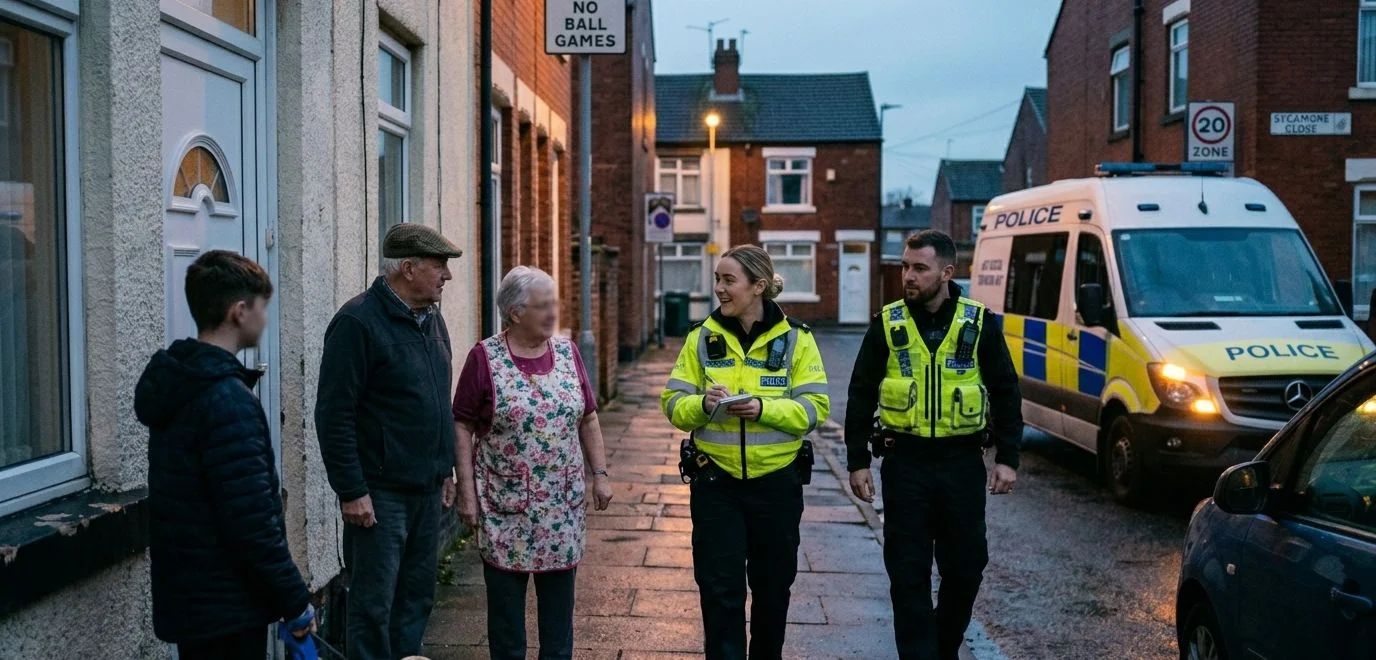
The review should therefore examine who was eligible, who received the additional enquiry, what officers did and what followed. An overall yield can hide markedly different experiences across groups. For searches, Code A already requires supervision and scrutiny of disproportionate use. Fairness during the encounter also deserves attention; the procedural justice guide sets out what supervisors can look for.
The misconduct extension remains a different research question
It is tempting to carry the idea inside the organisation: perhaps repeated minor breaches identify officers who will later commit serious misconduct. The driving studies do not establish that relationship. Nor should misconduct such as dishonest recording or improper access to police systems be casually reclassified as trivial merely because it could precede something worse.
There is relevant newer work, but its outcome needs careful reading. Gibson and Stubbs, published in July 2026, used a survey of 228 retired officers from the UK and US, with 214 complete cases, to explore relationships between entry motivations, social connections and subsequent exposure to misconduct investigations. The available abstract calls for independent validation and checks on calibration and fairness before operational use.
Being investigated is not a finding of misconduct. Recruitment motivations are not minor conduct breaches. This exploratory mixed-country study therefore does not validate SSP as a method of identifying future serious misconduct in British officers.
Professional-standards teams could commission a distinct study using clearly defined, substantiated outcomes and information available before those outcomes occurred. Researchers would need to account for differences in role, public contact and opportunity to receive complaints, and test performance on officers outside the development sample. The related proposal on harmful team cultures asks what organisational information might add.
Such research should not delay responding to evidence of an actual offence or misconduct. Its purpose would be to test whether a proposed early indicator improves decisions, before that indicator influences someone’s career.
A local pilot should have a stopping rule
The evidence supports a bounded test of a specified trigger. A roads-policing lead and force research team could agree the behaviour, the lawful enquiry and the target outcome before deployment. They should record all eligible encounters, compare the pilot with ordinary practice, and follow detections far enough to distinguish suspicion, charge and established offending.
They should also agree in advance what would end the pilot: little additional detection, excessive time or intrusion, poor compliance with powers, or disparities the force cannot justify. Publishing the result should include unsuccessful enquiries and operational costs, alongside any useful detections. This is a proposed evaluation design, not an intervention already shown to work.
Self-selection policing earns its place when a particular behaviour leads to demonstrably useful, lawful enquiry. Without that evidence, a force has renamed a hunch. With it, officers have a clue whose value and limits they can explain.
Updated 7 October 2026: clarified that research associations confer no additional police powers; corrected the distinction between detection yield and false-positive rates; added the 2026 misconduct-prediction study and its limitations. This is a targeted evidence review, not a systematic review.
Sources and further reading
- Roach — HO/RT1Culture: driving-document non-production study (2007).
- Roach — Self-selection Policing and the Disqualified Driver (2017 online; 2019 issue).
- Roach and Pease — Self-Selection Policing: Theory, Research and Practice (2016).
- Roach — Self-Selection Policing, in Practical Psychology for Policing (2023).
- PACE 1984, section 1 and Home Office, PACE Code A, December 2023.
- Gibson and Stubbs — Exploring predictive disciplinary exposure in police recruitment (2026).
Photograph credits
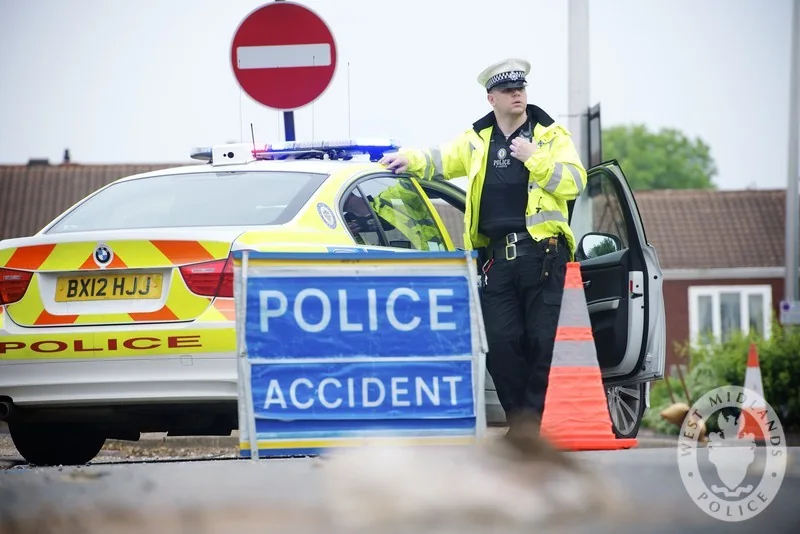
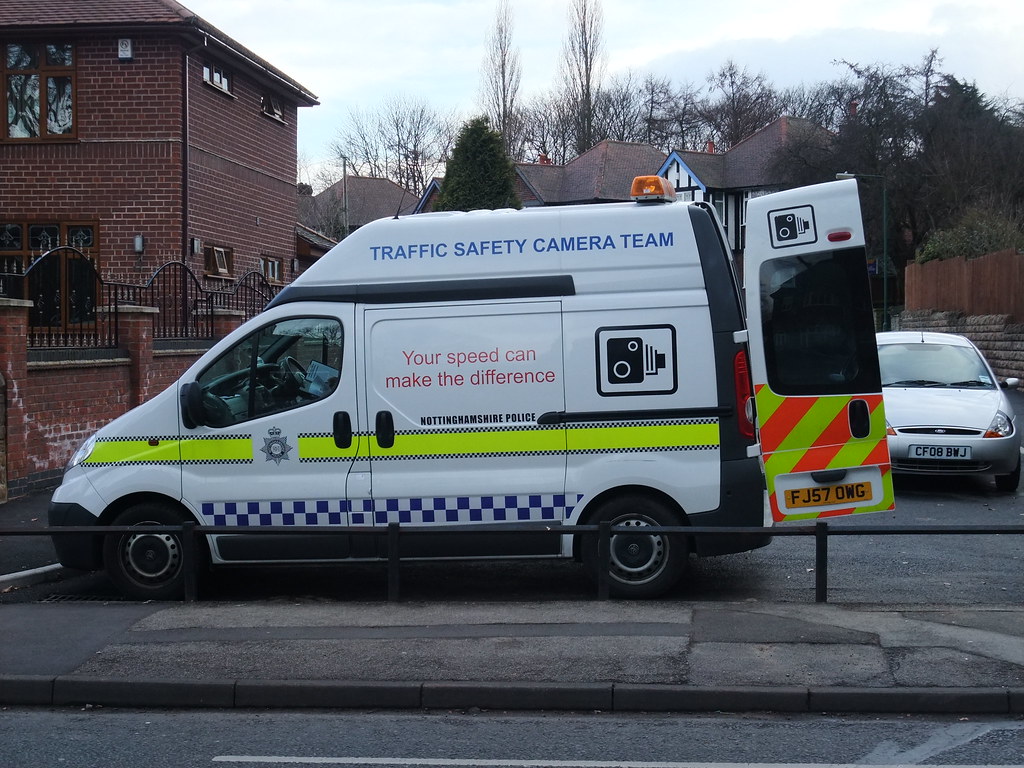
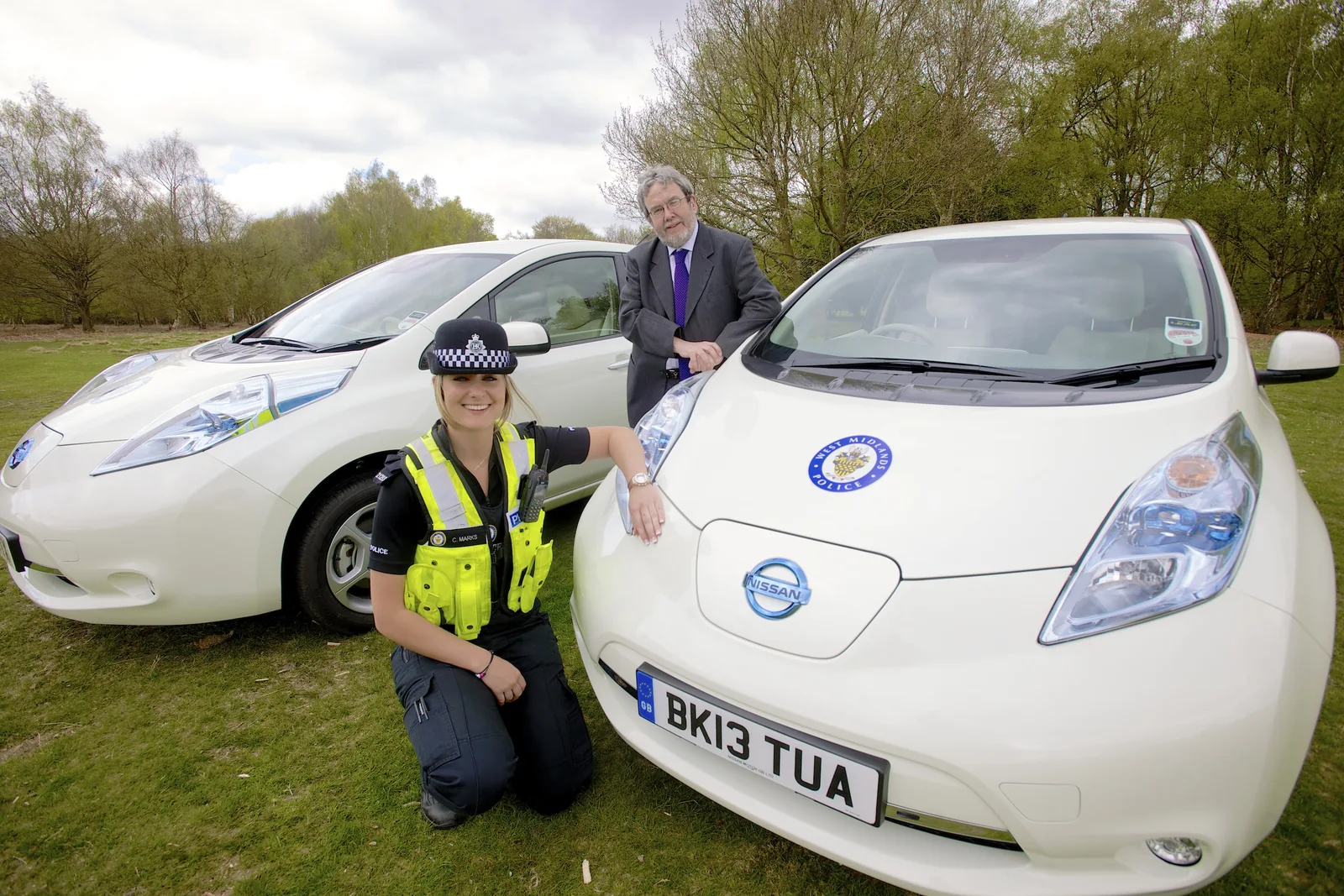
Opening photograph: A West Midlands Police traffic car in an archive photograph. Illustrative of roads policing, not a documented self-selection policing operation. West Midlands Police, CC BY-SA 2.0. Resized and converted to WebP. Other photograph credits appear with each image.
Discussion questions
- 01
Which trigger offences identify additional current offending in your force, rather than simply people with previous convictions?
- 02
Can officers explain the separate legal basis for each step after the initial encounter?
- 03
Does your evaluation count the time and intrusion experienced by people for whom no further offence is established?



























.jpg)
