Police Electric Vehicles: What the 2030 Petrol Car Rules Mean
Do police cars have to be electric by 2030? The UK policy, August 2026 review, specialist vehicles and the charging decisions forces need to make.
Read the articlePolice forces do not have to replace every petrol or diesel vehicle in 2030. They do need to prepare for changes in what manufacturers supply, and prove that replacement vehicles can do the job. Charging, equipment weight and the demands of the next shift belong in that decision from the start.
The policy is also still developing. On 14 August 2026, government opened a review of the zero emission vehicle mandate. The consultation examines annual manufacturer targets, compliance arrangements and how the 2030 phase-out should be defined. A proposal in that review is not an implemented rule.
The decision for a chief officer remains practical: can this vehicle, with its equipment and charging arrangements, deliver the required policing capability? The answer needs testing by role. A neighbourhood car and an armed response vehicle are different procurement problems.
What the 2030 policy actually covers
The April 2025 government response set out the UK policy: phase out new cars powered solely by petrol or diesel from 2030, permit qualifying hybrids until 2035, and move to zero-emission new cars and vans by 2035. It allowed new combustion vans to continue until 2035. These are new-sales policies; they do not order existing vehicles off the road.
| Vehicle or purchase | Policy position relevant to fleet planning |
|---|---|
| Existing petrol or diesel vehicle | No requirement in this phase-out policy to withdraw it in 2030. |
| New purely petrol or diesel car | Scheduled to be phased out from 2030, subject to defined exceptions. |
| New qualifying full or plug-in hybrid car | Allowed between 2030 and 2035 under the announced policy. |
| New petrol or diesel van | The announced phase-out date is 2035, rather than the 2030 car date. |
The distinction between a full hybrid and a mild hybrid is important when purchasing vehicles. Part 5 of the August 2026 consultation says mild hybrids do not meet the intended post-2030 definition. It seeks views on the technical test separating them from full hybrids. A hybrid badge alone is therefore a poor basis for a long-term procurement assumption.
The consultation announcement retains the 2030 and 2035 policy endpoints while reviewing the route towards them. It gives a closing date of 23 October 2026. Fleet teams should follow the eventual government response and legislation, rather than treating a consultation option as a confirmed change.
Police use does not settle the exemption question
The 2025 response announced an exception for special-purpose vehicles from the 2030 pure-combustion-car requirement. It did not announce a blanket exception for every police car. The practical task is to establish whether a particular finished vehicle falls within the relevant classification. DfT response, question 11 and government response.
The type-approval framework’s special-purpose categories include ambulances and armoured vehicles, illustrating why the term describes construction and purpose rather than a police logo. Regulation 2018/858, Annex I, Part A, section 5. Fleet teams should obtain classification advice for specialist conversions and check the eventual phase-out rules before relying on an exception.
Even where an exception applies, it cannot guarantee that manufacturers will continue offering a suitable combustion model, conversion or maintenance package at an acceptable price. That is a separate supply risk to test with suppliers.
Can an electric car do police work?
The useful test is whether a particular model can meet a defined role over its difficult shifts as well as its ordinary ones. An average daily mileage cannot answer that by itself.
For a neighbourhood or enquiries car, the pilot should establish how often it returns to a charger and for how long. For response work, include successive shifts, winter conditions, prolonged incidents and unexpected redeployment. Specialist vehicles need tests with their actual equipment and crew load. Record the tasks the vehicle could not complete, as well as the miles it covered.
Pursuit suitability requires a further decision. The College of Policing’s pursuit guidance requires pursuit-trained drivers to assess the suitability of the vehicle they are driving continually. Acceleration figures are not a substitute for vehicle suitability, authorised training and the ongoing risk assessment.
This is an evidence-based procurement proposal, rather than a finding that every electric vehicle can fulfil every police role. A credible pilot needs a comparison with the current vehicle, the same operational tasks and clear failure criteria. TAP’s guide to reading police data explains why the average can conceal the cases that should drive a decision.
Charging belongs in the operational plan
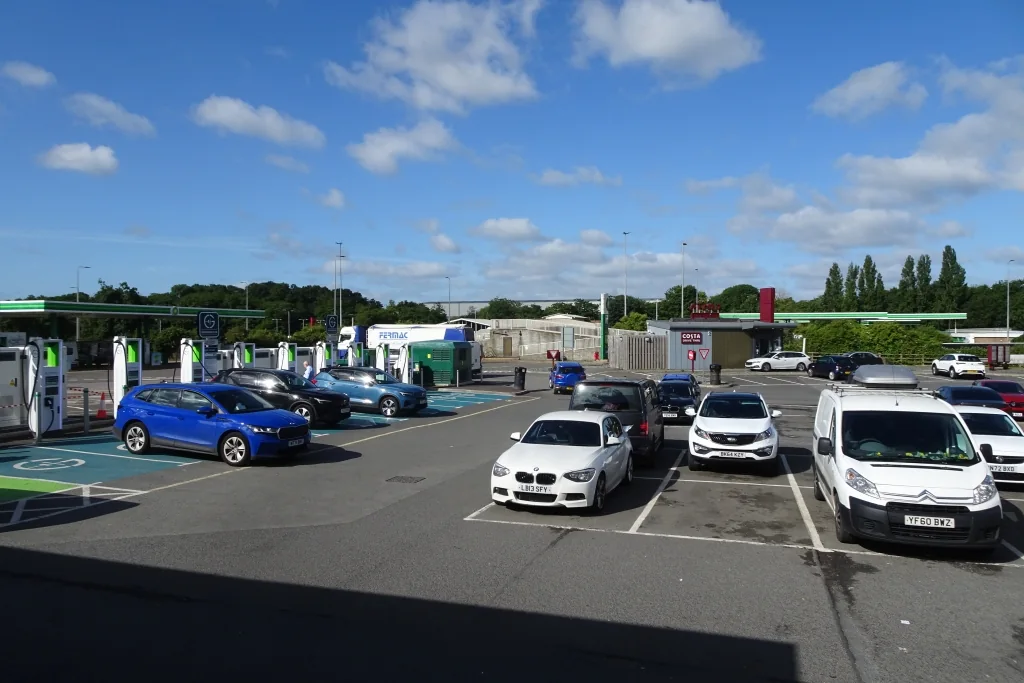
The Metropolitan Police has already put this issue into a formal business case. MOPAC decision PCD 2045, approved on 28 May 2026, draws on charging pilots begun in April 2024 and vehicle telematics. It supports a mixture of on-estate charging and private hubs away from the police estate, with £4.1 million of initial capital funding across 2026/27 and 2027/28. Further costs remain subject to the full business case and funding arrangements.
The paper identifies dependence on public chargers as an operational risk, including availability during civil unrest or a power outage. It is a planning and investment decision, not a published finding that the completed transition has improved response times.
DfT’s public-charging collection, updated on 9 September 2026, contains both monthly faster indicators and quarterly statistics. Those figures help describe the wider network. They do not establish that a suitable charger will be free when a particular police vehicle needs it.
A force’s operating plan should specify where vehicles charge between duties, who monitors faults and what happens when a site loses power. Procurement should include charger maintenance and the time officers spend reaching and using a charger. Buying a car without funding those arrangements leaves the availability question unanswered.
Buy against the difficult shift
Chief officers should require a role-by-role replacement plan that joins fleet, estates and operational demand. The business case should compare whole-life cost, including vehicles, conversions, chargers, maintenance and downtime. A lower energy bill alone does not establish a cheaper operational capability.
National policing bodies can reduce duplication by agreeing common test requirements for response, pursuit and heavily converted vehicles, then publishing the results that other forces can use. Record where a model fails and revisit those gaps as vehicles and charging improve. The wider case for using and testing evidence in police leadership applies to procurement as much as to a patrol tactic.
Policy dates will continue to attract attention. The decision forces control now is whether the next purchase has been tested against the work, the charging arrangements and the cost of being unavailable. An exemption is no substitute for that preparation.
Updated 7 October 2026: added the August ZEV mandate review and its consultation status, clarified the separate car and van timelines, and corrected the MOPAC approval date to 28 May 2026. The technical proposals remain under consultation at this review date.
Photograph credits
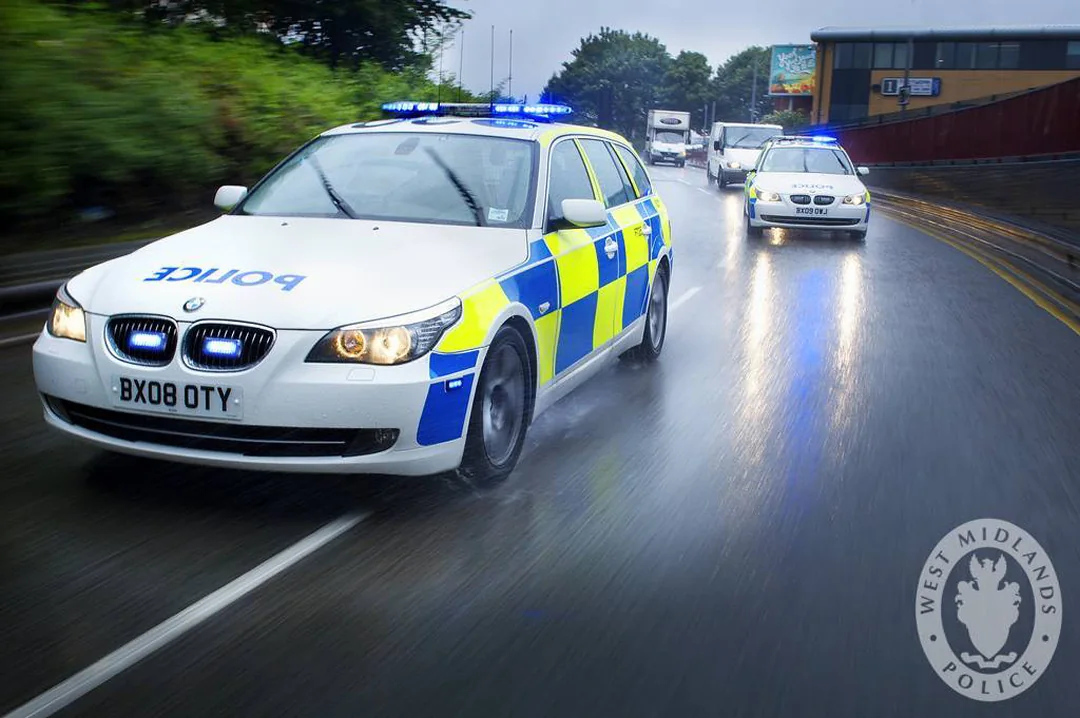
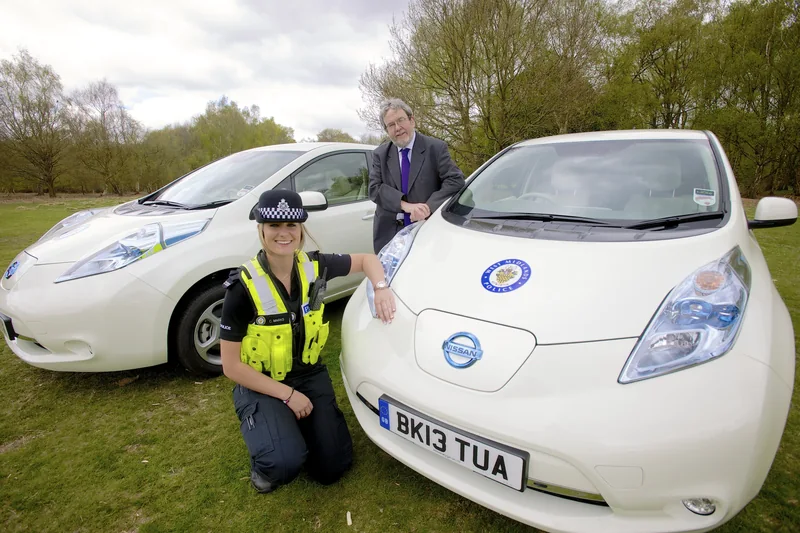
Opening photograph: West Midlands Police Nissan Leafs, photographed in 2013. An early example of electric fleet use, not a picture of today’s response fleet. West Midlands Police, CC BY-SA 2.0. Resized and converted to WebP. Other photograph credits appear with each image.
Discussion questions
- 01
Which police vehicle roles in your force could move to battery electric now without reducing operational capability?
- 02
Does your fleet team know the 95th-percentile mileage, payload and return-to-base pattern for each operational role?
- 03
Who owns charging readiness when a response vehicle is unavailable: fleet, estates or operational policing?