Should Britain Drill More in the North Sea?
More North Sea drilling can support domestic production and jobs, but it would not give Britain a protected domestic energy price. The real policy question is how much additional production is worth pursuing in a mature basin while demand and infrastructure change.

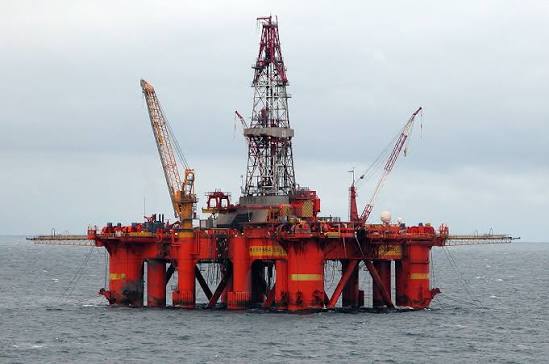
More North Sea drilling can support domestic production, jobs and tax receipts. It cannot give Britain its own protected oil or gas price. That distinction is the centre of the argument and the reason much of the public debate talks past itself.
Andy Burnham became Prime Minister on 20 July 2026. GOV.UK. His government inherited several large offshore projects already moving through licensing and environmental processes. Rosebank and Jackdaw are the most politically visible, but neither should be described simply as a new government opening the basin from scratch.
As of August 2026, the official Rosebank project page still describes the development as under review and records a further-information public notice running from 16 July to 17 August 2026. The Jackdaw project page was also updated in July with further environmental information.
The useful policy question is therefore narrower than ‘drill or do not drill’. It is which projects are worth approving, on what evidence, and for what purpose?
Domestic production is not a domestic price cap
Oil and gas extracted from the UK Continental Shelf enter traded markets. That means extra production can reduce the physical amount Britain needs to import, support domestic supply chains and generate tax, but it does not oblige producers to sell to British consumers below the wider market price.
That is why claims that another field will materially cut household bills need a mechanism, not just a barrel count. If the commodity still trades at the prevailing market price, the direct bill effect of one UK project is likely to be small relative to the size of the wider market.
The opposite overstatement should also be avoided. Domestic production is not economically meaningless simply because it does not set the price. Imports and domestic production can differ in tax capture, jobs, balance-of-payments effects, emissions intensity and resilience to particular supply disruptions. Those are real policy considerations. They are simply different from a guaranteed cheap-energy claim.
The basin is now a portfolio of decisions
The North Sea Transition Authority’s 2025–26 annual report is a better guide to the current policy problem than slogans about either abundance or immediate shutdown. The basin is simultaneously producing oil and gas, decommissioning mature infrastructure and being repurposed for carbon storage and other offshore-energy activity.
That makes project design matter. A tie-back using an existing platform is not the same economic or environmental proposition as a new stand-alone development. A project that preserves infrastructure with later value for carbon storage may have a different strategic case from one that creates large new liabilities. A short-lived field with limited UK supply-chain benefit should not automatically receive the same weight as a development with substantial domestic investment.
The same applies to taxation. In July 2026, HMRC published draft policy for a permanent Oil and Gas Revenue Levy, intended to replace the Energy Profits Levy when the latter ends and to apply during periods of high prices. HMRC, 13 July 2026. The fiscal return from a project therefore depends on prices, costs, allowances and the tax regime over its life, not simply on gross production value.
What a serious consent decision should publish
The government should make the trade-off visible for each major project.
A standard appraisal should set out expected recoverable production, annual production profile, likely UK tax contribution under stated price assumptions, direct and supply-chain employment, operational emissions, the likely source of replacement energy if the project does not proceed, and whether infrastructure has credible future use beyond oil and gas.
That would not eliminate political disagreement. It would make the disagreement testable.
It would also help separate three questions that are routinely collapsed into one. New exploration asks whether Britain should search for additional resources. Development of an existing discovery asks whether a known field should proceed. Tie-backs ask whether relatively small reserves near existing infrastructure should be connected at lower incremental cost. Those are not interchangeable decisions.
The stronger energy-security test
Energy security has at least two levers. Britain can produce more of what it still consumes, and it can reduce how much volatile internationally traded fuel it needs.
The first can matter during a transition. The second is the only route that permanently reduces exposure to the commodity price itself. Electrification, efficiency, storage, network investment and domestic low-carbon generation therefore belong in the same security conversation as North Sea production, not in a separate climate box. Road transport is already living that shift — the 2030 petrol-car rules and what they actually require of a police fleet are a working example of demand-side change arriving fleet by fleet.
That leads to a more defensible conclusion than either side’s slogan. Britain does not need to pretend the remaining North Sea is worthless. Nor should ministers imply that additional drilling can recreate the economics of the basin’s peak years or insulate households from world prices.
Approve or reject projects on their actual contribution, publish the assumptions, and judge energy security by both what Britain can produce and what it no longer needs to buy.
Sources and further reading
- GOV.UK — Prime Minister: Andy Burnham.
- Offshore Petroleum Regulator for Environment and Decommissioning — Rosebank Field Development.
- Offshore Petroleum Regulator for Environment and Decommissioning — Jackdaw Field Development.
- North Sea Transition Authority — Annual Report and Accounts 2025–26.
- HMRC — Oil and Gas Revenue Levy, 13 July 2026.
Discussion questions
- 01
What outcome should define energy security: producing more domestically, paying less, or reducing exposure to volatile fossil-fuel markets?
- 02
Should government publish a standard project-by-project scorecard for production, tax, jobs and emissions before North Sea consent decisions?
- 03
Which North Sea infrastructure is worth preserving because it can support future carbon storage, hydrogen or offshore-energy activity?