Football and domestic abuse: what the ‘38% rise’ headline leaves out
In brief
What studies of England matches reveal about alcohol, timing and recorded domestic abuse, and how police and partners could test their response.

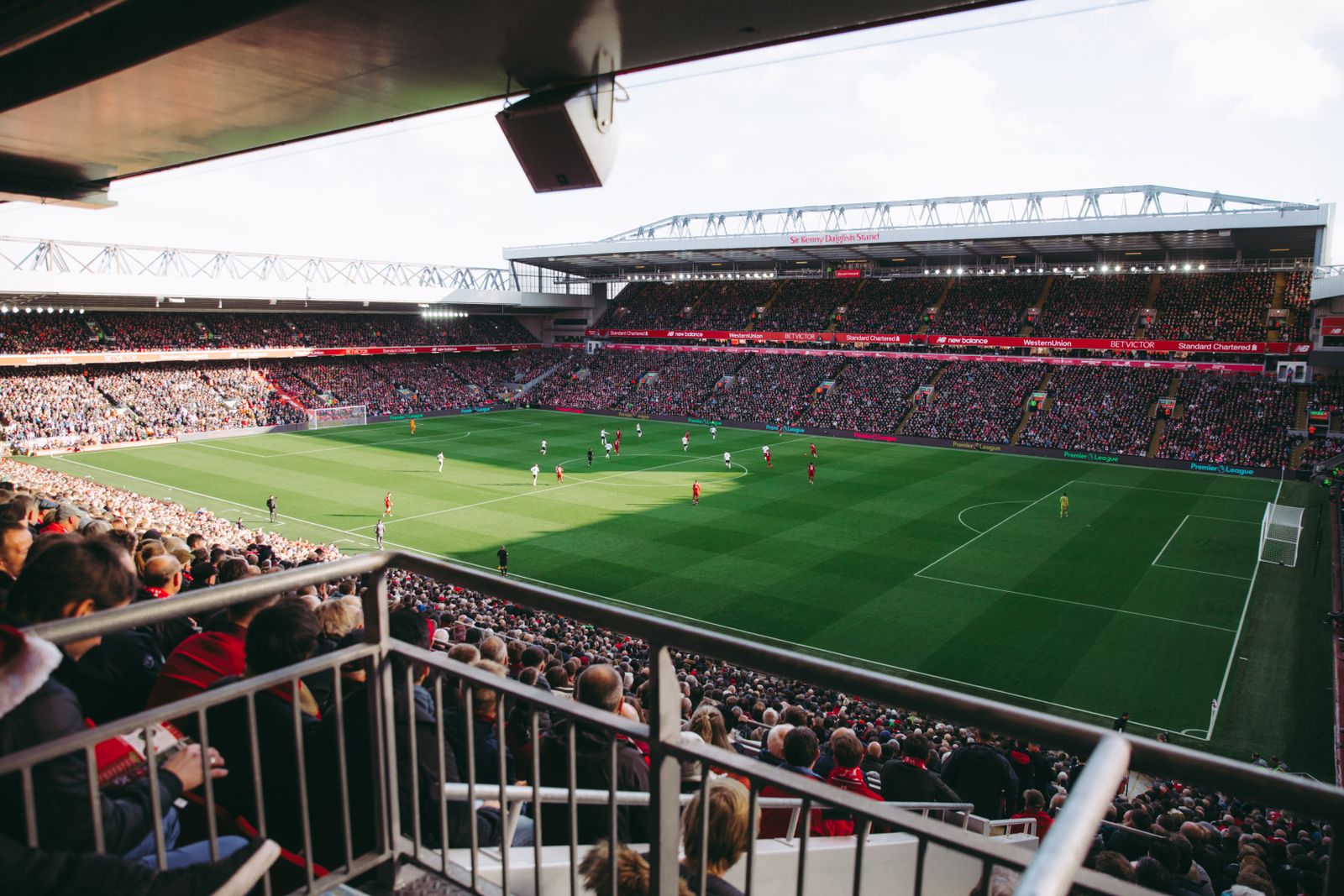
Major England football matches are associated with changes in police-recorded domestic abuse. The evidence does not support the familiar story that defeat is the main trigger. Later English studies point more strongly towards alcohol, kick-off time and the hours after a match.
The distinction matters operationally. If forces and safeguarding partners plan around the idea that disappointed supporters become violent after a loss, they risk preparing for the wrong nights and the wrong mechanism. And when the extra reports arrive, each one meets the grading decision examined in Domestic Abuse Risk: Why ‘Medium’ Is the Dangerous Middle. The better reading is narrower: some major England fixtures create a predictable period in which recorded domestic abuse, particularly alcohol-related abuse, increases. How large that increase is varies by study, place and match circumstances.
This is a More or Less Policing article. The aim is not to weaken a safeguarding warning. It is to make sure the warning says what the evidence can actually support.
The 38% figure is real, but it is only half the finding
The best-known statistic comes from Stuart Kirby, Brian Francis and Rosalie O’Flaherty’s 2014 study of domestic abuse incidents reported to one police force in north-west England during the 2002, 2006 and 2010 football World Cups.
Compared with days when England did not play, the researchers found reported domestic abuse was 38% higher on days England lost. They also found it was 26% higher when England won or drew. Both results belong to the same study.
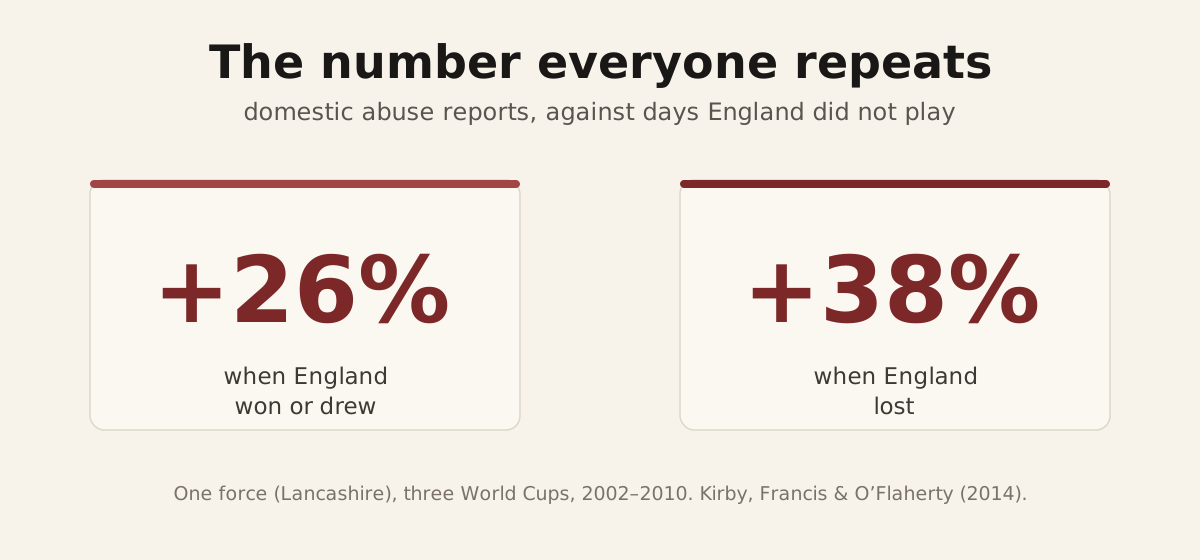
That immediately changes the interpretation. Defeat may have been associated with the largest increase in this dataset, but the study did not find a problem confined to defeats. A campaign line that quotes only the 38% result turns a two-part finding into a simpler causal story than the research established.
There is a second limitation. These are police-reported incidents in one force area, not a national estimate of how much domestic abuse occurred. Police-recorded domestic abuse is affected by victim and third-party reporting, recording practice and operational activity. The Office for National Statistics explains that the Crime Survey for England and Wales is the better source for prevalence and trends because police-recorded domestic abuse is affected by changes in recording and reporting.
The 2014 result remains important. It identified a repeatable match-day pattern worth investigating. It should not be stretched into the claim that domestic abuse nationally rises by exactly 38% whenever England lose.
Ten years of West Midlands data shifted attention towards alcohol
A later study asked a more useful question: what part does alcohol play?
Anna Trendl, Neil Stewart and Timothy Mullett analysed West Midlands Police domestic abuse data from 2010 to 2019 and separated incidents recorded as alcohol-related from those that were not. Their principal estimate was that alcohol-related domestic abuse increased by about 47% following an England victory, with a 95% confidence interval from 26% to 71%.
They did not find a measurable increase in the non-alcohol-related category. The result also survived a series of robustness checks and was replicated using another English geographical area.
That is stronger evidence against the simple defeat story. The largest increase in this study followed a win. More importantly, the difference sat in cases where alcohol had been recorded as involved.
The study does not prove that alcohol is the sole cause. Police flags for alcohol are imperfect, and observational data cannot recreate a controlled experiment. The authors nevertheless conclude that the pattern is strongly consistent with a causal link between national football tournaments, alcohol consumption and domestic abuse. That is more defensible than saying a football result itself causes violence.
The timing of incidents makes the mechanism clearer
The most detailed recent English study adds the hour-by-hour pattern. Ria Ivandić, Tom Kirchmaier, Yasaman Saeidi and Neus Torres-Blas matched individual Greater Manchester domestic abuse calls with major football matches over eight years.
They found incidents fell during the roughly two-hour match period, then increased afterwards, reaching their highest point about ten hours after kick-off. The cumulative increase was strongest for early matches and cases involving male perpetrators recorded as having consumed alcohol. Unexpected match results did not produce different abuse dynamics.
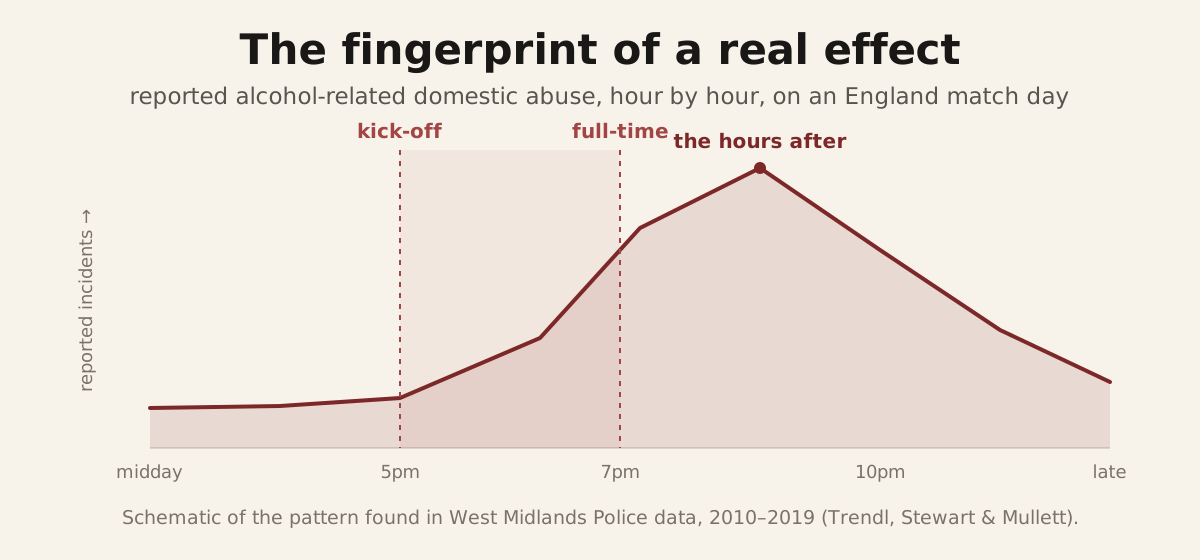
This is an important correction to the intuitive story. If anger at an unexpected result were the dominant mechanism, the score and immediate post-match period should carry more explanatory weight. Instead, the study found a pattern more consistent with displacement and extended drinking, particularly when an early kick-off leaves many hours afterwards.
The evidence still does not justify saying football is merely incidental. A major international match changes behaviour at scale: where people are, when they drink, how long they drink and when they return home. The useful policy question is therefore not whether football or alcohol gets the label. It is which features of the occasion create a predictable increase in risk and can be acted on.
Recorded incidents are not the same as prevalence
All three studies rely substantially on police data. That is appropriate for studying operational demand, but it places a limit on what can be said about underlying prevalence.
An increase in recorded incidents can reflect more abuse, more reporting, changes in how incidents are recorded, or some combination of these. Domestic abuse is particularly sensitive to that distinction. The ONS repeatedly cautions against using police-recorded domestic abuse as the main measure of prevalence or long-term trends.
The match-day studies do more than compare crude annual totals. They use timing, comparison days, alcohol indicators and different datasets to test alternative explanations. That makes the evidence considerably stronger than a simple before-and-after count. It does not eliminate the measurement problem.
For policing, that distinction is practical. A force planning staffing or control-room demand is directly interested in reported incidents and calls. A policymaker estimating how many victims experience domestic abuse is asking a different question and should use survey and wider safeguarding evidence as well.
What the evidence now supports
Taken together, the English studies support four conclusions.
First, major England football fixtures are associated with a measurable change in domestic abuse recorded by police. The finding has appeared in different force areas, periods and analytical designs.
Second, the famous 38% after a defeat statistic is not a satisfactory summary. Even the study that produced it found a 26% rise after wins or draws, while later work found a large alcohol-related increase after victories.
Third, alcohol and timing are more consistent explanations than the match result alone. The West Midlands study isolates the increase in alcohol-related cases; the Greater Manchester study finds the strongest cumulative effect after early matches and among alcohol-recorded male perpetrators.
Fourth, these studies do not tell every force exactly how much demand will rise at the next tournament. Their estimates come from particular areas and periods. Local baseline demand, reporting behaviour, tournament scheduling, licensing environments and policing activity can all alter the observed effect.
That is enough evidence to act, but not enough to pretend the effect is identical everywhere.
What police and partners can do with it
There are three credible approaches.
One is to keep using the 38% defeat statistic because it is familiar and memorable. It has communications value, but the evidential case for retaining it as the main message is weak. It directs attention towards losses when later evidence suggests that wins, alcohol and early kick-offs can be at least as important.
A better option is to plan around the fixture as a risk period, using local data to identify the hours when calls, incidents and safeguarding referrals change. Forces can compare England match days with matched non-match days, separate alcohol-related incidents where recording quality permits, and test whether early and late kick-offs produce different demand locally.
The strongest option is to combine that demand analysis with existing domestic-abuse safeguarding, licensing and partnership arrangements. This does not mean treating football supporters as likely offenders. The overwhelming majority will not commit abuse. It means recognising that a predictable mass event can change the conditions around existing abusive relationships and adjusting services accordingly.
For neighbourhood and response leaders, this sits alongside the wider question of how policing uses evidence rather than slogans. The same discipline applies to public confidence: measure the outcome you actually care about, distinguish what the data records from what you infer, and do not let a memorable number become more certain than its source.
The next tournament should be treated as a testable intervention window
Chief constables cannot remove the underlying causes of domestic abuse by changing a football operation. They can decide whether predictable demand is met with predictable preparation.
Before the next major England tournament, forces with sufficient data should establish a local baseline for domestic-abuse calls and incidents by hour, identify the match and post-match periods of highest excess demand, and agree with safeguarding partners what additional capacity will be available. Licensing teams and local authorities should consider whether alcohol-related harm indicators change around early kick-offs. Communications should warn about risk without presenting the 38% figure as a universal national law.
Then the operation should be evaluated. Did calls or high-risk incidents change? Was additional safeguarding capacity used? Did any licensing or prevention activity alter demand compared with similar fixtures? Where reporting increased, was that evidence of more harm, better access to help, or both?
The evidence is now good enough to move beyond “if England lose, domestic abuse rises 38%”. The operational question is harder and more useful: what happens locally around major fixtures, when does the risk concentrate, and which response reduces harm?
Discussion questions
- 01
Should forces still use the '38% when England lose' statistic in public campaigns when later evidence points more strongly towards alcohol and match timing?
- 02
What local data would a force need to decide whether extra safeguarding or response capacity around England fixtures is proportionate?
- 03
How should police and partners measure whether match-day prevention activity reduces harm rather than simply changing reporting patterns?