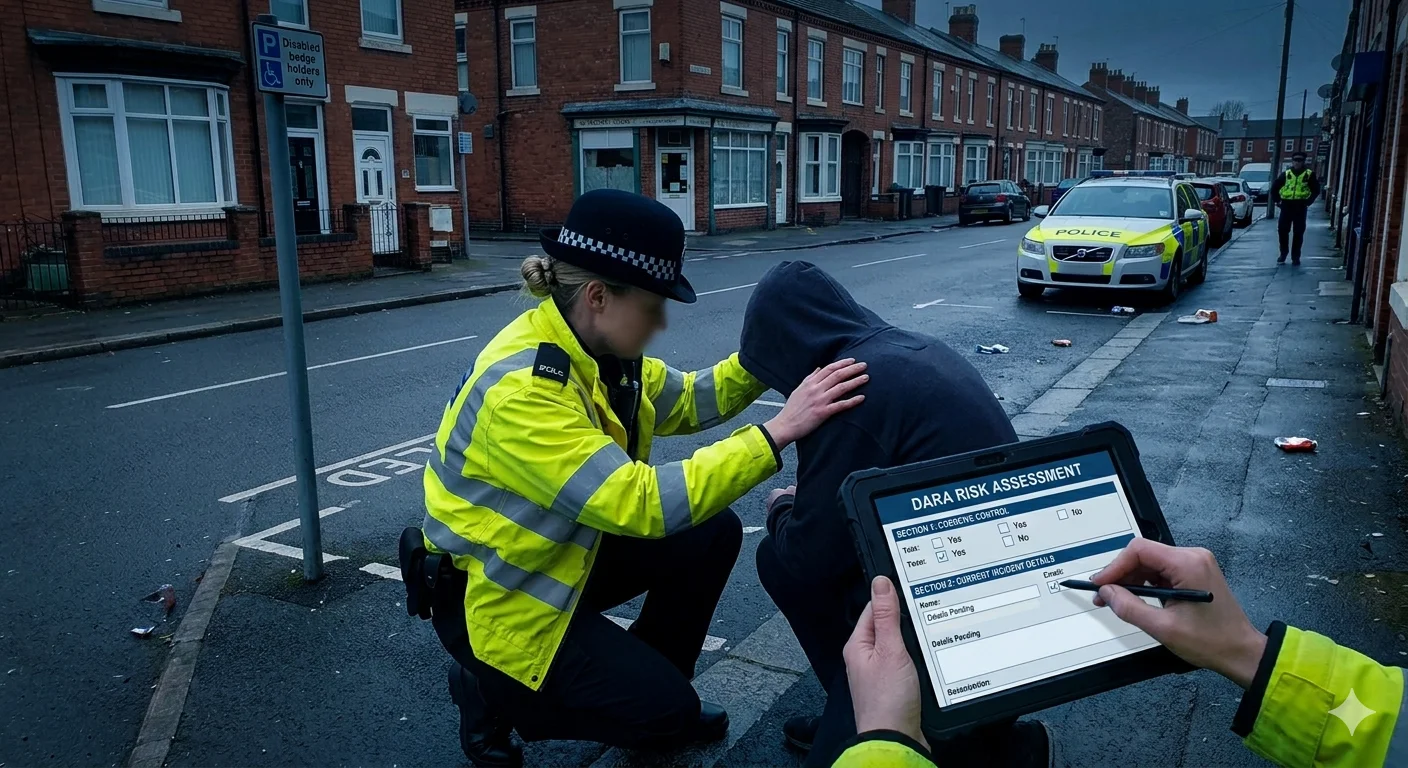

If police leaders cannot identify their highest-harm offenders, how can they target them?
Police cannot give everyone the same attention. The Crime Harm Index offers a stronger basis for deciding where scarce resources can prevent the greatest harm.
Read the articlePolice cannot give every offender the same level of attention. There are not enough officers, investigators or hours in the day. Decisions about who receives proactive attention are unavoidable.
The question is whether those decisions are based on the harm people cause.
Forces should identify the perpetrators responsible for the greatest harm and direct sustained, proportionate attention towards them. That can involve difficult choices about where officers spend their time. But spreading scarce resources without understanding where harm is concentrated is difficult to defend.
Senior leaders should be able to explain who their highest-harm perpetrators are, why they have been prioritised and what police are doing about them. If they cannot identify those people, on what basis can they demonstrate that their resources are targeting the greatest harm?
The busiest offender is not necessarily the most harmful
Counting offences gives each crime the same numerical value. A theft counts as one. A rape counts as one. An offender associated with numerous less serious offences can therefore appear more prominent than somebody linked to fewer, much more serious crimes.
The Cambridge Crime Harm Index provides a way to account for that difference. Developed by Lawrence Sherman, Peter Neyroud and Eleanor Neyroud, it weights offences using sentencing guideline starting points for England and Wales. Adding those weights produces a measure of recorded harm, rather than simply a total of offences. Sherman, Neyroud and Neyroud (2016), original index paper.
This changes the starting point for allocating resources. Instead of asking only who commits the most crime, police can examine who is associated with the most serious combined offending.
The index is an imperfect measure. It cannot fully describe an individual victim’s experience. Where it uses reported allegations, it does not establish guilt. But it offers a consistent basis for examining priorities and challenging decisions that might otherwise depend on familiarity or incident volume.
A small group can account for a substantial share of harm
Domestic abuse research illustrates why this approach deserves attention.
Matthew Bland and Barak Ariel examined approximately 36,000 domestic abuse records reported to Suffolk Constabulary between 2009 and 2014. Fewer than 2% of victim–perpetrator pairs accounted for 80% of the recorded harm measured by the index. Bland and Ariel (2015), Suffolk study.
In a separate study, Lee Barnham, Geoffrey Barnes and Lawrence Sherman examined 140,998 intimate partner abuse incidents reported to Thames Valley Police during 2010–2015, covering 52,296 perpetrators. Around 3% accounted for 90% of the total recorded crime harm. Barnham, Barnes and Sherman (2017), Thames Valley study.
These percentages should not be treated as a universal rule. They describe particular datasets, periods and measures. They exclude abuse that never reached police records.
Nevertheless, the implication is substantial. If harm is heavily concentrated, allocating additional resources to the people responsible offers a plausible route to preventing more serious victimisation.
That is the theory forces should test locally. Identify where harm concentrates, intervene against the perpetrators responsible and assess whether the additional attention reduces subsequent harm.
The concentration alone does not prove that an intervention works. It tells police where a potentially valuable opportunity lies.
London’s V100 makes prioritisation operational
The Metropolitan Police’s V100 programme applies this thinking to violence against women and girls.
Its published approach examines relevant reported offending over the previous 12 months, combining frequency with seriousness through the Cambridge Crime Harm Index. A monthly review identifies the highest-ranked suspects, with those in the top 100 eligible for the programme. It is a changing priority group, rather than a permanent list of London’s worst offenders. Metropolitan Police, V100 briefing; programme explanation, November 2025.
The practical value lies in what follows selection. The Met describes choosing tactics to disrupt offending, including pursuing other criminality where that provides an earlier opportunity to act. The focus becomes the person’s offending and the available opportunities to prevent further harm. Metropolitan Police, 15 June 2026.
This is the move other forces should consider: from analysing incidents separately to maintaining an informed, current view of the people associated with the greatest harm.
A priority list should lead to an investigation or management plan, a named owner and a review of whether the action is protecting victims. Otherwise, the force has produced an analytical product without changing its response.
The difficult choice is where to put the next available officer
Harm-based targeting does not remove the obligation to respond to emergencies, investigate crime or safeguard vulnerable people. It should guide the allocation of scarce additional capacity.
The choice might concern where a proactive team spends its next shift, which investigation receives specialist support or which outstanding suspect receives sustained efforts to locate them.
Those decisions have an opportunity cost. Time spent on one perpetrator cannot simultaneously be spent on another. Some high-harm investigations will also require sustained work before producing a visible result.
That can make the approach uncomfortable in the short term. Activity may be easier to count than prevention. A team dealing with numerous straightforward offences can demonstrate immediate outputs; a team building a difficult case against a serious perpetrator may take longer.
The leadership judgement should be explicit: where is this additional resource most likely to prevent serious harm?
That does not justify dismissing repeated theft, criminal damage or antisocial behaviour. Their frequency and cumulative effects still deserve attention. It requires leaders to explain their choices using more than the number of incidents processed.
Leaders should be able to show the connection between harm and action
A chief officer does not need to memorise every name on a force-wide list. They should require a system that can demonstrate:
- Who is associated with the greatest recorded harm, and how that assessment was reached.
- What current information changes the assessment of those people.
- Who owns the response and what action is underway.
- Whether the intervention is reducing harm and improving victim safety.
The test is the connection between those answers. Knowing who causes harm is useful only if that knowledge affects deployment, investigation and offender management.
Northumbria’s Multi-Agency Tasking and Coordination approach offers a related example. The College of Policing describes identifying harmful and serial domestic abuse perpetrators through a matrix covering recency, frequency, gravity and victims, followed by intelligence profiles and individual multi-agency plans. College of Policing, MATAC practice account.
Forces should also record why a high-priority person has received little or no additional attention. That makes shortages, delays and competing decisions visible to leaders who can address them.
Targeting must remain responsive to new harm
A list can become outdated. The Thames Valley research found that the 100 most harmful offenders identified in 2010 had substantially reduced recorded harm in 2011 and, on average, very low recorded harm during 2012–2015. Historical prominence was not a permanent condition. Barnham, Barnes and Sherman (2017).
There is an equally serious problem at the other end. In the Suffolk study, more than half of the highest-harm victim–perpetrator pairs had no previous domestic abuse contact with police. A repeat-offender list alone would not have provided an earlier warning about those relationships. Bland and Ariel (2015).
Forces therefore need regularly refreshed analysis and a route for victims, practitioners and partner agencies to identify urgent concerns that the score misses. Low recorded harm cannot be treated as proof of low danger.
The outcome must be less harm, not simply more targeting
In June 2026, the Met reported research finding that people receiving V100 interventions committed 54% less overall harmful offending and 53% less violent offending than their predicted levels. These are promising reported findings, but the full underlying evaluation was not located for this article, so its methods and causal conclusions could not be independently assessed. Metropolitan Police, 15 June 2026.
Other forces should build evaluation into their approach from the beginning. A fall in offending after selection is insufficient on its own: people selected during an unusually harmful period may subsequently improve without the intervention. A credible comparison is needed, alongside attention to victim safety, reporting changes and time spent in custody.
Police leaders cannot avoid choosing where to concentrate their resources. They can choose to make those decisions informed, explicit and testable. Knowing who causes the greatest harm, directing effective action towards them and checking the result should be a basic expectation of leadership. If a force cannot demonstrate that connection, it cannot convincingly claim that its scarce resources are being used where they can protect communities most.
Opening artwork: original conceptual illustration for Thinking About Policing. It does not depict real people, police intelligence or measured data.