
"Burgulars shoplift on their day off" Can we target high harm offenders by considering all of their offending behaviours?
A shop theft or an anti-social behaviour incident can provide a lawful opportunity to interrupt much more serious offending. Police should assess that opportunity against the harm caused by the person, as well as the offence in front of them.
Read the articleA person responsible for repeated burglaries does not become an entirely separate policing problem when caught stealing from a shop. Yet assessing each incident in isolation risks overlooking the wider pattern.
The question is how much harm we could prevent by acting on the offending we can evidence now.
Police should use well-evidenced shop theft, anti-social behaviour and breaches of existing orders to intervene with identified high-harm offenders. Community Protection Warnings, Community Protection Notices, Criminal Behaviour Orders and the incoming Respect Orders can all contribute, where their individual legal tests are met.
That could mean interrupting the activities of a burglar, a robber, a domestic abuse perpetrator or someone who carries weapons. The overlap must be established for the individual. A shoplifting allegation is not, by itself, evidence of any of those other behaviours.
Police cannot give every offender the same level of proactive attention. They should be able to explain why the people receiving the most attention are those whose behaviour presents the greatest harm, and how the intervention is expected to reduce it.
The offence we can prove may provide the opportunity
Shop theft captured on clear CCTV, supported by reliable identification and evidence from the retailer, can present a more straightforward evidential opportunity than a burglary where the offender’s identity remains uncertain. The same applies to a clearly witnessed breach of a precisely drafted order. It still requires a proper investigation and proof of the relevant offence.
Northamptonshire’s Operation Elegance illustrates the opportunity. The initiative, which began in May 2023, improved the collection and preparation of shoplifting evidence. Its local review in August 2023 reported that three prolific offenders linked to serious acquisitive offending had been jailed through the initiative. The College of Policing’s account explicitly recognises the connection between shop theft and wider acquisitive crime. Operation Elegance: College practice account
That is a useful operational example. It does not establish how many subsequent burglaries or robberies were prevented, and it was not a controlled evaluation of that question.
Nevertheless, the practical implication is clear. Where the same person is committing offences across several categories, dealing effectively with one part of that offending creates an opportunity to affect the rest. A shoplifting investigation deserves to be considered within that wider picture.
The shop worker also deserves protection in their own right. Their case should not need a connection to a more serious offence before it receives attention.
The powers create different opportunities
These provisions concern England and Wales. At the time of writing, 20 October 2026, Respect Orders have been enacted but are not yet available. Their commencement regulations bring the relevant provisions into force on 26 October 2026. Until then, the Home Office says practitioners should continue using the July 2025 statutory guidance. 26 October commencement regulations · Home Office guidance transition notice
Community Protection Warning (CPW)
The written warning required before a CPN, identifying the conduct that must change and giving sufficient time to address it.
Non-compliance. Ignoring the warning is not a separate criminal offence. Continued qualifying behaviour can justify a CPN. 2014 Act, section 43
Community Protection Notice (CPN)
Requirements addressing unreasonable conduct with a persistent or continuing detrimental effect on the quality of life of people in the locality. The warning and opportunity to comply must come first.
Non-compliance. Breach is a criminal offence, subject to statutory defences. For an individual, the breach offence itself is punishable by a fine, not imprisonment. 2014 Act, section 43 · 2014 Act, section 48
Criminal Behaviour Order (CBO)
A court order following a criminal conviction, sought by the prosecution. It can prohibit specified behaviour and impose positive requirements.
Non-compliance. Breach without reasonable excuse is a criminal offence. The maximum sentence on indictment is five years’ imprisonment. CPS: Criminal Behaviour Orders · Sentencing Act, section 339
Respect Order, from 26 October
A civil court order for someone aged 18 or over, without requiring a previous conviction. It can impose prohibitions and positive requirements to prevent ASB.
Non-compliance. Breach without reasonable excuse is a criminal offence, with a maximum of two years’ imprisonment on indictment. Activity requirements have a specific prior-warning safeguard. 2026 Act: Respect Orders
CBOs are particularly relevant to this argument. CPS guidance confirms that the behaviour supporting the order does not have to be the same behaviour that produced the conviction. A shoplifting conviction can therefore provide the occasion to seek an order addressing a wider, separately evidenced pattern of ASB. The court must be sure that the relevant behaviour caused, or was likely to cause, harassment, alarm or distress, and consider that the order will help prevent it. CPS: Criminal Behaviour Orders
Respect Orders use a different test. The civil court must be satisfied on the balance of probabilities that the person has engaged in, or threatens, ASB, and consider the order just and convenient to prevent it. Applicants must assess risks, the person’s vulnerabilities and alternative ways of preventing the behaviour. A prosecution for breach still requires criminal proof. 2026 Act: Respect Orders · 2026 statutory guidance
These powers are separate decisions, not a compulsory ladder. Each intervention needs its own justification. Suspicion of serious offending cannot repair an inadequate application or an unlawful condition.
An order needs an operational plan
An order should make something specific safer. Its conditions need to address evidenced behaviour and be clear enough for the recipient, police and court to understand.
Havering’s CBO panel offers a practical example. It brings neighbourhood policing, offender management, council services and treatment providers together to review existing orders, new applications, recent offending and compliance. Positive requirements are considered alongside restrictions. The College’s account also describes removing people from consideration when they are making progress and no longer offending. Havering CBO panel: College practice account
This is a useful model for organising the work. The College labels the practice “untested”; its reported local crime reductions cannot establish the independent effect of the CBOs.
For a high-harm offender, the officer managing the case should be able to explain which behaviour each condition addresses, how a breach will be identified and who will act. Frontline officers need access to the current order and its exact wording. Retailers and other affected people need a workable way to report incidents and supply evidence.
Positive requirements need the same attention. A treatment condition is of limited practical value if nobody has checked that the service can provide it, the person can access it and attendance will be monitored. The CPS requires evidence about the suitability and enforceability of a CBO requirement before it is imposed. CPS: Criminal Behaviour Orders
Applications, monitoring and breach investigations consume officer time. Treatment requires available services. Commanders should establish that this work can be delivered before expanding their target list; otherwise, an ambitious set of orders can leave victims with promises nobody has the capacity to keep.
There is evidence of what can go wrong. Research by Vicky Heap and Alex Black, based on 36 interviews with practitioners and trainers across four English areas, documented CPN practices that extended enforcement into increasingly minor behaviour and used escalation in ways the authors considered disproportionate. This was qualitative research, not an estimate of how often misuse occurs nationally. It is a reason to scrutinise conditions and escalation carefully. Heap and Black: CPN practice study
The aim should be compliance that protects people. An order deliberately made difficult to comply with is a poor substitute for a defensible plan to reduce harm.
The benefit could extend beyond the original incident
There are several ways this approach could reduce wider offending. A justified restriction can interrupt access to a location or opportunity connected to the behaviour. Consistent enforcement can make consequences more credible. Suitable treatment and support can address circumstances sustaining repeated offending. Where a court imposes custody, it can temporarily restrict opportunities to offend in the community.
Those are mechanisms to test. They are not proof that every ASB intervention prevents a burglary or an assault.
Related evidence comes from focused deterrence: identifying a defined group of offenders and combining direct communication, enforcement and support. A Campbell systematic review found an overall crime reduction across 24 evaluations, with smaller effects in stronger studies. Twenty-three evaluations were American and one was Scottish; none was a randomised trial. That supports testing a focused approach here, but does not establish that CPNs, CBOs or Respect Orders independently reduce serious crime in England and Wales. Campbell focused deterrence review
Nor does removing someone from one street necessarily remove their harm. Havering’s own account identifies displacement as a problem with exclusion zones, including offenders committing crime elsewhere. Forces need to follow the person’s offending across boundaries rather than treating their disappearance from one town centre as success. Havering CBO panel: College practice account
The distinction is especially important with domestic abuse. A town-centre restriction may do little to protect someone at home. The wider plan must address the actual risk to the victim. CPS guidance says a restraining order will usually be more appropriate than a CBO where there is a named victim and a domestic abuse offence. CPS: Criminal Behaviour Orders
Arrest also does not guarantee detention, and a proved breach does not guarantee imprisonment. A plan that depends entirely on somebody being sent to prison leaves a substantial gap whenever the court takes another course.
Leaders should be able to show what harm has changed
Chief officers should require a current, evidence-based account of their highest-harm offenders and the interventions being used with them. Local commanders should be able to connect that account to daily tasking.
Selection should consider the seriousness and recency of offending, repeat victimisation and credible evidence of escalation. Convictions, allegations and intelligence should remain distinguishable. Counting incidents alone risks prioritising someone with numerous visible offences over someone causing severe harm behind closed doors.
For each person selected, there should be a named owner and a clear explanation of why the proposed action should protect particular victims or reduce particular behaviour. That includes investigating serious offences alongside any ASB intervention. A manageable shoplifting file should not become a reason to abandon the harder investigation.
The results should be assessed across the person’s offending, including repeat victimisation, serious incidents and changes in where offences occur. Harm-weighted crime measures can supplement offence counts, with their limitations made explicit. Breaches, arrests and orders obtained show activity; they do not, on their own, establish prevention.
Count the work. Then test the harm.
Enforcement activity
- Orders obtained
- Breaches identified
- Arrests and prosecutions
These show what police and partners did.
Protection achieved
- Fewer repeat victims
- Fewer serious incidents
- Less harm across locations
These help test whether the intervention worked.
Analysts should use a credible comparison where feasible and account for time in custody, changes in reporting and the possibility that an unusually intense period of offending would have subsided anyway. More active enforcement may initially reveal more offences. Success means fewer people harmed, rather than simply a more impressive enforcement total.
The difficult leadership choice is where to place scarce attention. A straightforward shop theft or a clearly evidenced order breach may be the best available opportunity to intervene with someone causing much greater harm. A force that knows who those people are should be able to show how it is using those opportunities, and whether their victims are becoming safer.
For the wider practical context, see The power of civil orders.
Sources and further reading
Research checked on 20 October 2026. This targeted review concerns England and Wales. The evidence does not quantify serious offences prevented by these particular ASB powers.
- Northamptonshire Police: Operation Elegance, College of Policing Practice Bank, 13 June 2024
- Crime and Policing Act 2026 (Commencement No. 3 and Saving Provisions) Regulations 2026, regulation 4
- Home Office: Antisocial behaviour powers; guidance transition notice
- Anti-social Behaviour, Crime and Policing Act 2014, section 43
- Anti-social Behaviour, Crime and Policing Act 2014, section 48
- CPS: Criminal Behaviour Orders, updated 9 August 2024
- Sentencing Act 2020, section 339
- Crime and Policing Act 2026, section 1, inserting Part A1 into the 2014 Act
- Home Office: 2026 ASB statutory guidance; effective from 26 October 2026
- Metropolitan Police: Criminal behaviour order panel, College of Policing Practice Bank, updated 3 August 2026
- Heap, V. and Black, A. (first published 2024): Net-widening, gap-filling, and shortcut justice: The practice of Community Protection Notices to regulate anti-social behaviour
- Braga, A. A., Weisburd, D. and Turchan, B. (2019): Focused deterrence strategies effects on crime: A systematic review
Image credit
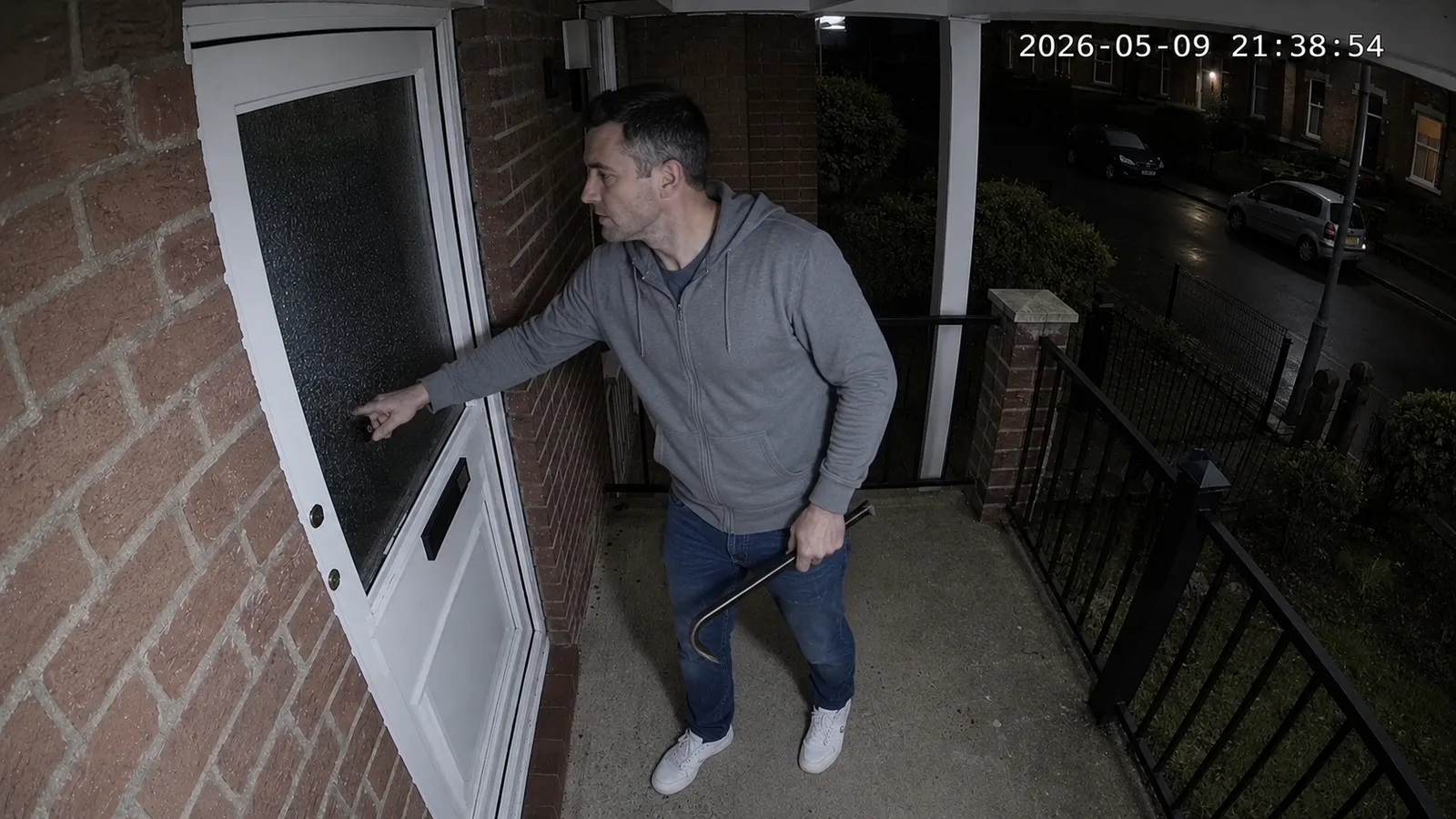
Opening image: AI-generated burglary illustration created for Thinking About Policing. It depicts no real incident or identified offender.