Robert Peel and the Meaning of Policing by Consent
In brief
Robert Peel created the Metropolitan Police in 1829, but the nine 'Peelian principles' were not written by him. What the history actually supports — and why policing by consent remains a useful test of legitimacy.


Robert Peel created the Metropolitan Police in 1829. He did not, as far as the surviving evidence shows, sit down and write the nine ‘Peelian principles’ now quoted in his name. Both facts matter.
The Metropolitan Police records 1829 as the year Peel, then Home Secretary, formed the force under two Commissioners. Metropolitan Police history.
The Home Office, however, is explicit about the famous principles: there is no evidence of a direct link to Robert Peel, and the philosophy was likely developed by the first Commissioners, Charles Rowan and Richard Mayne. Home Office — Definition of policing by consent.
That correction does not weaken policing by consent. It makes the idea more interesting. The doctrine matters because British policing chose to make it part of its institutional identity, not because the wording can be authenticated as Peel’s personal manifesto.
The 1829 settlement was designed to be distinguishable from military force
The political difficulty facing the new Metropolitan Police was obvious. A centrally organised permanent police force could be seen as another form of state coercion.
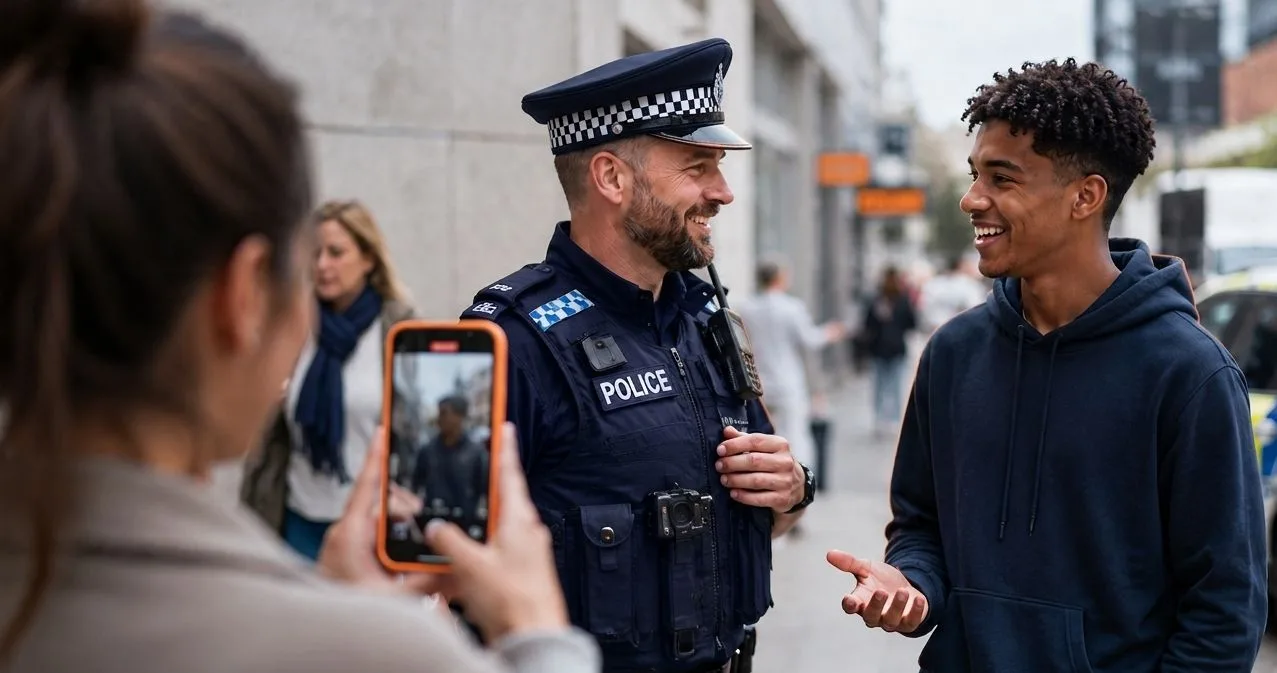
The early Metropolitan model deliberately differentiated the police from the military in uniform, role and public presentation. Peel’s political achievement was to establish a professional force that could operate routinely among the public without being understood simply as soldiers performing domestic order duties.
This institutional settlement developed into a wider philosophy: the police need public approval and cooperation to perform their functions effectively, and the need for physical force should reduce as public cooperation increases.
Those propositions appear in the Home Office’s modern statement of the nine principles. Home Office, 2012.
The principles are better understood as an institutional tradition
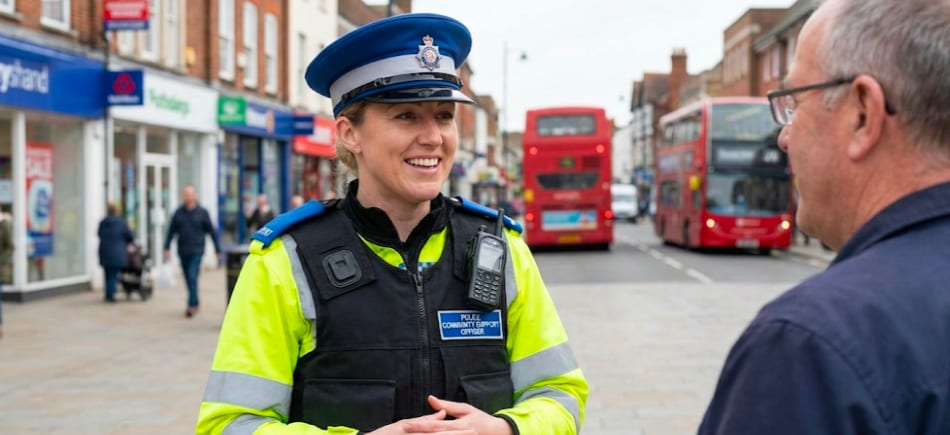
The line most often quoted is that “the police are the public and the public are the police.” It captures an idea that police officers are citizens exercising full-time duties on behalf of the wider community rather than a separate class of authority.
The problem comes when the quotation is used as if Peel’s authorship were settled historical fact.
The Home Office’s account says the principles were likely devised by Rowan and Mayne and were reflected in the general instructions issued to new police officers from 1829. The modern numbered formulation is therefore better treated as a later statement of the early Metropolitan ethos than as a document written by Peel himself. Home Office — policing by consent.
That distinction is useful for policy writing. Institutions often create myths around their origins. The responsible response is not to discard the value simply because the origin story has become tidier than the archive supports.
Consent does not mean popularity or permission for each police action
“Policing by consent” is sometimes misunderstood as though the police require popular approval before exercising lawful authority.
The Home Office definition is different. It describes public approval and cooperation as conditions that affect the police’s ability to fulfil their duties. It also stresses impartial service to law rather than pandering to public opinion. Home Office, 2012.
That is a more demanding and more practical idea.
An officer may need to arrest somebody who strongly objects. Public-order policing may require restrictions that a crowd dislikes. Stop and search will often be experienced as intrusive. Consent does not remove coercive authority from policing.
The question is whether the institution exercises that authority in a way that sustains enough legitimacy and cooperation for policing to function in a democratic society.
Modern legitimacy evidence gives the tradition a measurable form
The College of Policing’s current public-confidence guidance gives modern operational content to parts of the old philosophy. It identifies procedural justice, respectful treatment, trustworthy motives, effective neighbourhood policing and tackling police wrongdoing as activities likely to affect public confidence. College of Policing — Improving public confidence.
That does not prove that Peel anticipated contemporary legitimacy research. It shows that the central institutional problem remains recognisable: police depend on more than legal powers and arrest capacity.
The public’s willingness to cooperate, report crime, provide information, comply with officers and accept difficult decisions can be affected by how authority is exercised.
For leaders, legitimacy is therefore not a decorative value to discuss after operational effectiveness. It can be part of operational effectiveness.
Intrusive powers create a practical consent test
The principle becomes most useful when a force is considering a tactic that is lawful and potentially effective but intrusive or controversial.
Facial recognition, stop and search, public-order tactics, surveillance and armed deployments all raise different legal and evidential questions. Policing by consent does not supply a simple yes-or-no answer to any of them.
It does add questions that a purely legal review can miss:
- Is the tactic applied impartially and transparently?
- Can the force explain why it is necessary?
- Are safeguards visible and credible?
- Is the public able to challenge errors or misuse?
- Does the operational benefit justify the legitimacy cost?
- Is there evidence that the tactic is being overused beyond the circumstances that justified it?
These are governance questions, not historical ones.
Peel’s legacy is stronger when the mythology is removed
Robert Peel’s role in creating the Metropolitan Police is secure. His authorship of the nine principles is not.
British policing loses nothing by saying so. The value of the tradition lies in what the principles ask of the institution: prevent crime rather than merely display enforcement, secure cooperation where possible, use force with restraint, act impartially and remember that police authority depends on its relationship with the public.
Nearly two centuries after 1829, those remain sensible tests of police legitimacy. They do not need a doubtful signature to matter.
Sources and further reading
Discussion questions
- 01
Which current police tactic creates the clearest tension between legal authority and public consent?
- 02
How does your force measure the legitimacy cost of an intrusive but effective tactic?
Related reading
- Leadership & CultureWhat is Police Reform and will it make a difference?Sept 2026
- Evidence & PracticeNeighbourhood Policing Guarantee: Confidence and Crime Need Different MeasuresJun 2026
- Evidence & PracticeIf police leaders cannot identify their highest-harm offenders, how can they target them?Oct 2026