

Leadership & Culture
What is Police Reform and will it make a difference?
What is police reform? Explore England and Wales’s 2026 proposals, recent reports, reform leaders and lessons from Scotland and Andy Wooff’s research.
Read article →
Thinking About Policing
Your TAP
Your reading preferences and articles saved before signing in are stored in this browser.
Signing in lets TAP store your saved articles, research and CPD against your account. Account settings include your optional profile details, email preferences and account deletion controls.
The Research Assistant sends submitted questions to research and AI services. Use public topics, without names or details of individual cases. Your CPD reflections are not sent to those AI services.
TAP records article views and uses website analytics when configured to understand how the site is used.
Ask about your data →Accessibility
Translations are generated automatically and cached after the first request. You can return to the original English page at any time.
Topic
Why trust in the police matters, and how it is won or lost.
18 articles · All topics →
What is police reform? Explore England and Wales’s 2026 proposals, recent reports, reform leaders and lessons from Scotland and Andy Wooff’s research.

What is the IOPC? How do you complain about the police or check your local force? A plain-English guide to policing bodies and their latest verified reports.

Where to deploy speed camera vans, what to tell the public and how to measure results. Evidence on speeds, collisions and support, with plain-language examples for online posts and roadside messaging.

A proposed Right to Understand childhood crime records: existing access rights, new evidence on sentencing transcripts and a supported route for adult survivors.

What self-selection policing can reveal through minor offences, what the driving research establishes, and the limits on searches and misconduct prediction.

Was Worthing really the UK’s shoplifting capital? What reporting changes, population measures and the latest ONS evidence reveal about the claim.

What procedural justice means for UK policing: four principles, evidence on trust and crime, and practical ways to improve stop and search and supervision.

Compare Guardian police headlines with public confidence data, inspect the method and understand why the two trends cannot establish causation.

Alex Murray spent a career investigating murders and running counter-terrorism operations, then built the institution that asked British policing a harder question: does any of this actually work? A profile of the founder of the Society of Evidence-Based Policing.

What studies of England matches reveal about alcohol, timing and recorded domestic abuse, and how police and partners could test their response.

Martyn's Law is enacted but not yet in force. Here is what the 2025 Act requires, what changed in 2026, and what police and venues should do before commencement.

In 1981 Lawrence Sherman ran a domestic violence call as a scientific experiment, and policing was never quite the same. A profile of the American criminologist who argued that the police should be tested like medicine — and who taught the officers, Alex Murray among them, who carried the idea into British policing.

Robert Peel created the Metropolitan Police in 1829, but the nine 'Peelian principles' were not written by him. What the history actually supports — and why policing by consent remains a useful test of legitimacy.

Henry Nowak’s murder: the sentencing findings, the IOPC investigation into two officers and the questions about urgent care, police decisions and accountability.

The Neighbourhood Policing Guarantee combines named local policing, visible presence and hot-spots patrol. These can support confidence and crime reduction, but the evidence points to different mechanisms and measures for each.

Police and courts routinely ask people whether they understand cautions, rights and conditions. A yes/no answer can hide confusion. PACE and judicial guidance require active support for understanding; teach-back is one practical way to check it.

PACE gives detainees in England and Wales a right to free independent legal advice and forbids police from dissuading them from using it. The harder question is whether the way custody presents that right helps people make an informed decision when they decline.
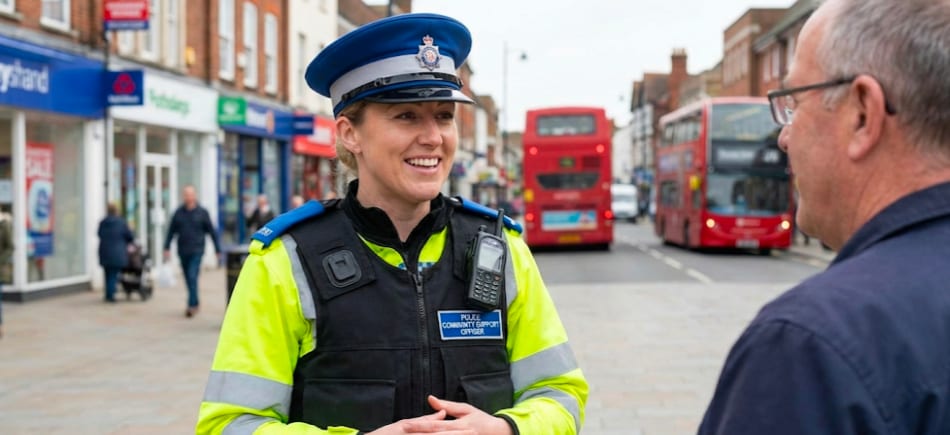
The evidence supports neighbourhood policing as a route to higher public confidence, but visibility alone is not enough. The strongest model combines targeted presence, community engagement and problem-solving — and requires forces to protect the capacity to deliver all three.