When Seeing Is No Longer Believing: The AI generated content Threat to Criminal Justice
All images and video have been generated for the purposes of this article and does not depict real people or events.
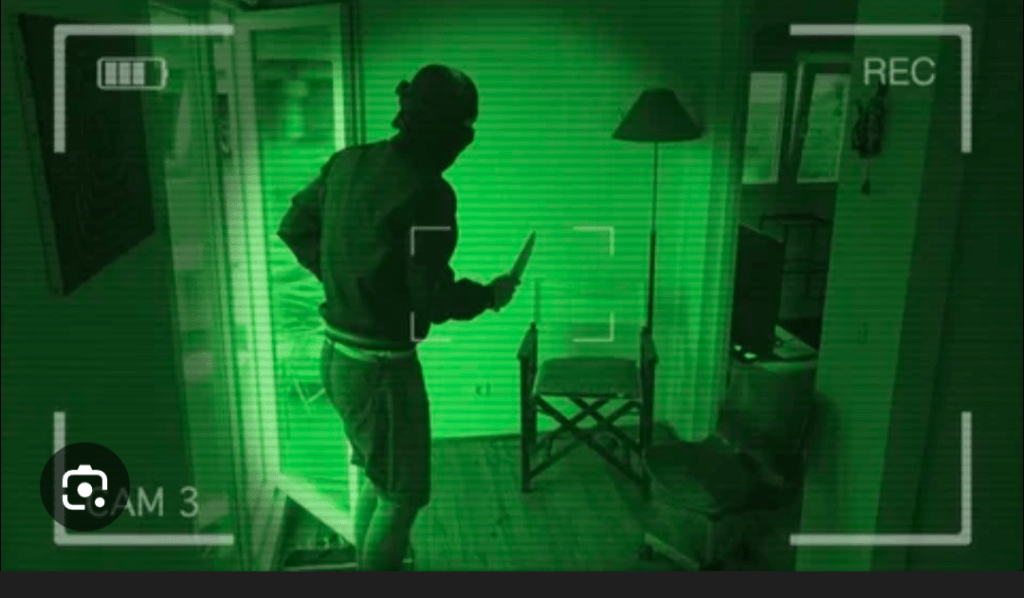
All images and video have been generated for the purposes of this article and does not depict real people or events.
The technology to fabricate convincing digital evidence is now widely available, and policing and the courts are not yet prepared for it
For decades, video evidence has held a privileged position in criminal proceedings. CCTV footage, mobile phone recordings, and body-worn camera captures have become the gold standard of proof. When a jury sees footage of an event, they tend to treat it as truth, and where a witness’s account conflicts with what the camera recorded, the camera usually prevails.
That assumption is now outdated. Generative artificial intelligence has reached the point where images, audio, and video can be fabricated or manipulated with considerable ease and convincing results. Work that once required Hollywood-level resources and expertise can now be carried out by anyone with an internet connection in a matter of minutes.
Consider an image like the one below, the kind of footage that might form the centrepiece of a prosecution case: a figure caught on camera, weapon in hand. It appears compelling and, on first viewing, difficult to dispute.
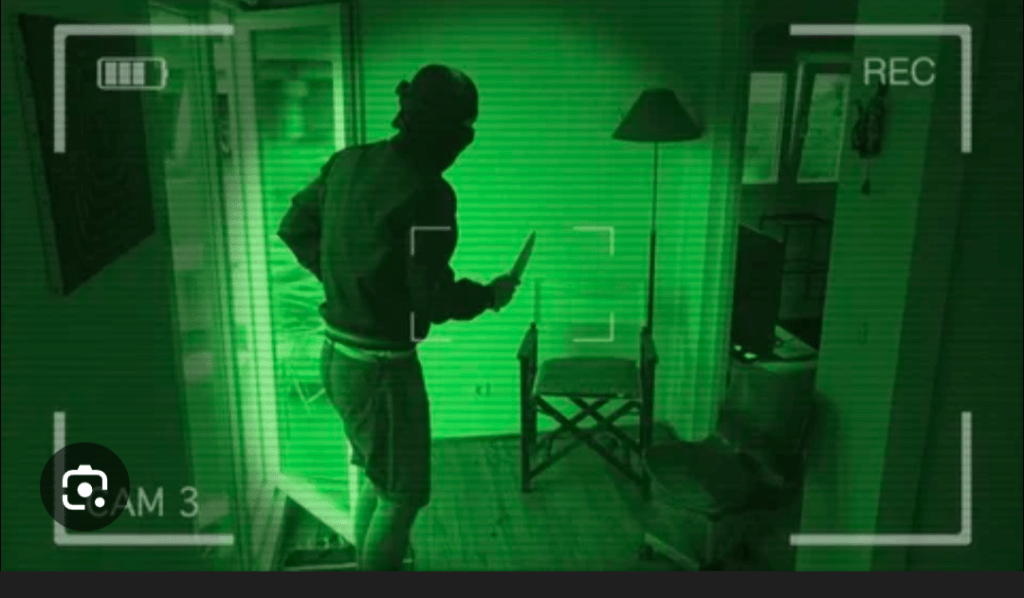
[IMAGE 1: CCTV-style footage showing a figure holding a knife]
Now suppose that image is submitted for the court’s consideration. Below is the same image after AI manipulation, created in under one minute.

[IMAGE 2: The same scene, but the knife has been replaced with flowers]
Consider how quickly the evidence can be undermined. Using freely available AI tools, the weapon becomes a bouquet of flowers. The lighting remains consistent, the figure’s posture is natural, and the manipulation is, to the untrained eye, invisible. On its own, this image does little to introduce doubt.
The defence then produces a further image.
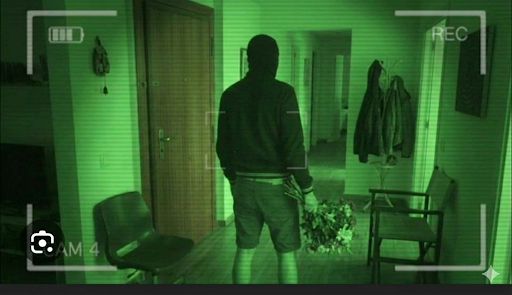
[IMAGE 3: An alternative camera angle of the same scene]
A second camera angle. Corroborating footage. Evidence that appears to multiply and reinforce itself, all of it synthetic.
In under two minutes, and with minimal technical knowledge, we have two images that contradict the first. Doubt is now beginning to accumulate. Which is real, and which is fake?
To add further doubt, this video is produced, created from a single image using a two-line prompt:
“2-3 second video of this image of the man entering the room and putting the flowers on the table and leaving, keep the camera fixed as a CCTV camera would be”
[VIDEO: Generated footage with audio showing the figure entering, placing flowers, leaving]
These examples illustrate a capability that prosecutors, defence lawyers, judges, and juries must now contend with in every case involving digital evidence.
The logical endpoint is not the complete fabrication of evidence, but the injection of enough doubt into the evidential chain that no jury could be confident in finding someone guilty beyond all reasonable doubt.
The British picture
How well equipped is British policing to meet this challenge? The research findings are not reassuring. A 2022 analysis of industry knowledge within the British criminal justice system concluded that it is “inherently vulnerable and unequipped to deal with the threat and its subsequent challenges,” characterised by “a lack of awareness across the system.”
The UK government has recognised the severity of the issue. The Accelerated Capability Environment (ACE), which connects frontline government and law enforcement with innovative technology, has described deepfakes as “arguably the greatest challenge of the online age.”
Responses are emerging. The Home Office, the Department for Science, Innovation and Technology, ACE, and the Alan Turing Institute jointly launched a Deepfake Detection Challenge, bringing together academic, industry, and government experts to develop practical detection solutions. Several promising tools from organisations including Frazer-Nash, Oxford Wave, the University of Southampton, and Naimuri are now in benchmark testing and user trials.
The College of Policing has developed a deepfake training module, and some forces have implemented specific policies. Sussex and Surrey Police, for example, have adopted a Deepfake Technology Policy providing frontline officers with guidance on detection and investigation.
The scale of the challenge remains considerable. The Office of the Police Chief Scientific Adviser notes that forensic teams can face up to a million images on a single seized device. Detection capabilities, while advancing, remain in development rather than deployment. The contest between creation and detection continues, with creation currently holding the advantage.
The courts
Legal frameworks present their own difficulties. Under current arrangements following the 1999 amendments to PACE, there exists a common law presumption that computers operate correctly in producing electronic evidence. This presumption, already controversial in light of the Post Office Horizon scandal, was not designed with synthetic media in mind.
As Mr Justice David Waksman has observed, in the adversarial system of England and Wales, responsibility for challenging document authenticity falls to the parties rather than to judges, who may lack the detailed context needed to detect falsified evidence. Court rules require parties to formally challenge authenticity or risk implicit acceptance, but this assumes that the need for challenge will be recognised.
The family court deepfake case succeeded only because the defence obtained the original audio file and commissioned forensic analysis. Without that scrutiny, which required both suspicion and resources, the manipulated evidence would have been accepted at face value.
At present there are no standards, procedures, or rules specifically addressing deepfake evidence in British courts. Judges and lawyers face these challenges without established frameworks for response.
Judicial and jury awareness
Legal professionals are beginning to engage with these issues through conferences and continuing education. A March 2025 panel discussion hosted by Penningtons Manches Cooper brought together High Court judges, forensic experts, and practitioners to examine the challenges of deepfake evidence, including a live demonstration that tested attendees’ ability to distinguish real from synthetic content.
Jurors, by contrast, arrive with varying technological literacy and no specialised preparation. They may be unaware of how convincing manipulated media has become, leading them to accept synthetic evidence. Alternatively, heightened awareness might lead them to discount genuine footage, the liar’s dividend in action.
Research examining the interaction between AI and cognitive biases suggests that deepfakes could reshape how emotions, impressions, and experience influence judicial approaches to complex digital evidence. The implications for courtroom integrity remain poorly understood.
A global challenge
The deepfake threat respects no borders, and responses are emerging internationally, though with significant variation.
European Union
The EU AI Act (Regulation 2024/1689), which entered into force in August 2024, mandates transparency for AI-generated content. Article 50 requires that individuals be informed when interacting with AI systems and when synthetic content is produced. Deployers of systems generating deepfakes must disclose that content has been artificially created or manipulated.
Full enforcement, however, is not scheduled until August 2026, a timeline that concerns observers given the pace of AI advancement.
United States
No comprehensive federal deepfake legislation currently exists, though multiple bills are pending. The DEEP FAKES Accountability Act would require clear labelling of AI-generated content. The DEFIANCE Act would enable civil action against creators of non-consensual deepfake pornography. The Protect Elections from Deceptive AI Act targets synthetic political content.
Several states have moved independently. California has passed laws mandating disclaimers on AI-generated political advertisements and requiring platforms to remove deceptive political content. New York’s digital replica law requires written consent for the AI-generated use of a person’s likeness.
Detection technology
Beyond regulation, significant investment is flowing into detection capability. Major technology companies have implemented labelling systems for AI-generated content across their platforms. Industry coalitions including the Content Authenticity Initiative and the Coalition for Content Provenance and Authenticity are developing frameworks for tamper-proof provenance metadata.
Google’s SynthID applies imperceptible watermarks to AI-generated images. A number of detection tools analyse facial landmarks, skin texture inconsistencies, blinking patterns, and lighting discrepancies to identify synthetic content.
These efforts nonetheless face fundamental limitations. They primarily address content created through legitimate, cooperating channels. Someone deliberately fabricating evidence using open-source tools need not comply with any watermarking standard. Detection remains reactive, and the technology it pursues continues to advance.
Implications for Practice
For investigators
Digital evidence can no longer be treated as inherently reliable. Provenance matters: where did the footage originate? What is its chain of custody? Has the metadata been preserved and examined? Forensic verification should become standard practice for significant digital evidence, rather than merely a response to specific challenges. When police officers are recovering images and footage, the correct processes need to be followed. Are the original images from the original recording devices being recovered, or has material been shared via a third party or intermediaries? Where there is no standardised platform for personal residential CCTV or ring doorbell systems, what processes are in place to ensure that the police are recovering “real evidence” and not AI-generated material?
For prosecutors
Authentication requirements may need strengthening. Consider the proactive verification of digital evidence, and prepare to address deepfake challenges even when they are not raised by the defence. Develop access to qualified expert witnesses capable of explaining synthetic media detection to juries.
The deepfake defence carries professional responsibilities. Challenge genuinely questionable evidence, but avoid frivolous claims designed merely to inject doubt. Courts have shown limited patience for unfounded deepfake allegations, as the January 6th cases demonstrate, and professional ethics require more than plausible-sounding objections.
For the judiciary
Training on the capabilities of AI-generated media would assist judges in evaluating authentication disputes and expert testimony. Practice directions addressing digital evidence authentication could provide needed guidance. Consideration might be given to how juries should be instructed regarding the possibility of synthetic media.
Digital evidence warrants the same critical evaluation as any other evidence. Neither automatic acceptance nor blanket scepticism serves justice. Consider what corroborating evidence exists, what expert testimony has been offered, and whether challenges to authenticity rest on substance or speculation.
Looking forward
The underlying difficulty is that our criminal justice system developed its procedures for evaluating evidence in an era when fabricating convincing video required resources beyond the reach of most actors. That era has ended.
Eight million deepfakes are projected to be shared in 2025, up from 500,000 in 2023. The technology is becoming both more sophisticated and more accessible. Detection tools are advancing, but creation tools are advancing faster.
None of this means that digital evidence should be abandoned or universally distrusted. It means that procedures must evolve. Authentication requirements may need strengthening. Forensic capabilities require investment. Training must reach investigators, lawyers, judges, and potentially jurors. International cooperation on standards and detection should be pursued.
The question is not whether synthetic media will affect criminal proceedings, because it already has. The question is whether our response will match the scale and urgency of the challenge.
Justice depends on the ability of courts to distinguish truth from falsehood. When that ability is compromised, everyone suffers: the innocent who may be convicted on fabricated evidence, the public whose protection depends on genuine evidence being believed, and the system itself, whose legitimacy rests on its capacity to find truth.
The technology exists, the risks are clear, and the response must follow.
Comments
No login needed. Comments are moderated before publishing.