Police Burnout and Fatigue: What Leaders Can Actually Change
Police wellbeing is not only an individual resilience issue. Organisational stressors, fatigue and poor supervision are associated with worse mental wellbeing and impaired performance. The strongest leadership response is to change working conditions as well as offer support.
Audio edition
≈ 7 min · narrated
Audio edition
≈ 7 min · on-device voice
Police burnout is often discussed as though the principal question is whether officers are resilient enough for the job. The evidence points to a more useful question: what parts of police work and police organisations are producing avoidable stress, fatigue and emotional exhaustion?
A systematic review published in 2019 examined 15 studies involving 15,150 police officers across several countries. It found strong evidence of associations between organisational stressors and occupational stress, psychological distress, emotional exhaustion and reduced personal accomplishment. Purba & Demou, 2019.
The studies were largely cross-sectional, so they do not prove that one management practice causes burnout. They do establish that officer wellbeing cannot sensibly be treated as a matter of personal coping alone.
For leaders, that changes the intervention. Counselling and clinical support matter. So do workload, supervision, shift design, staffing, role conflict and whether an officer can obtain help before the problem becomes a crisis.
Organisational stress is part of the evidence base
Police work contains unavoidable operational stressors. Officers attend violence, death, abuse, crisis and unpredictable risk. An organisation cannot design those experiences out of the job.
It can add another layer of stress through how the work is organised.
The 2019 systematic review identified organisational stressors including workload, inadequate resources, bureaucracy, poor communication, role conflict and management factors. Across the included literature, these were consistently associated with poorer mental wellbeing outcomes. Purba & Demou, 2019.
That finding is important because it identifies a part of police wellbeing that chief officers can influence directly. Trauma exposure may be intrinsic to policing. A rota that repeatedly prevents adequate recovery is not. A vacancy rate that leaves a team permanently carrying excessive demand is not. A management culture in which people do not trust that disclosure will be handled constructively is not.
Calling all of those problems “resilience” places the intervention at the wrong level.
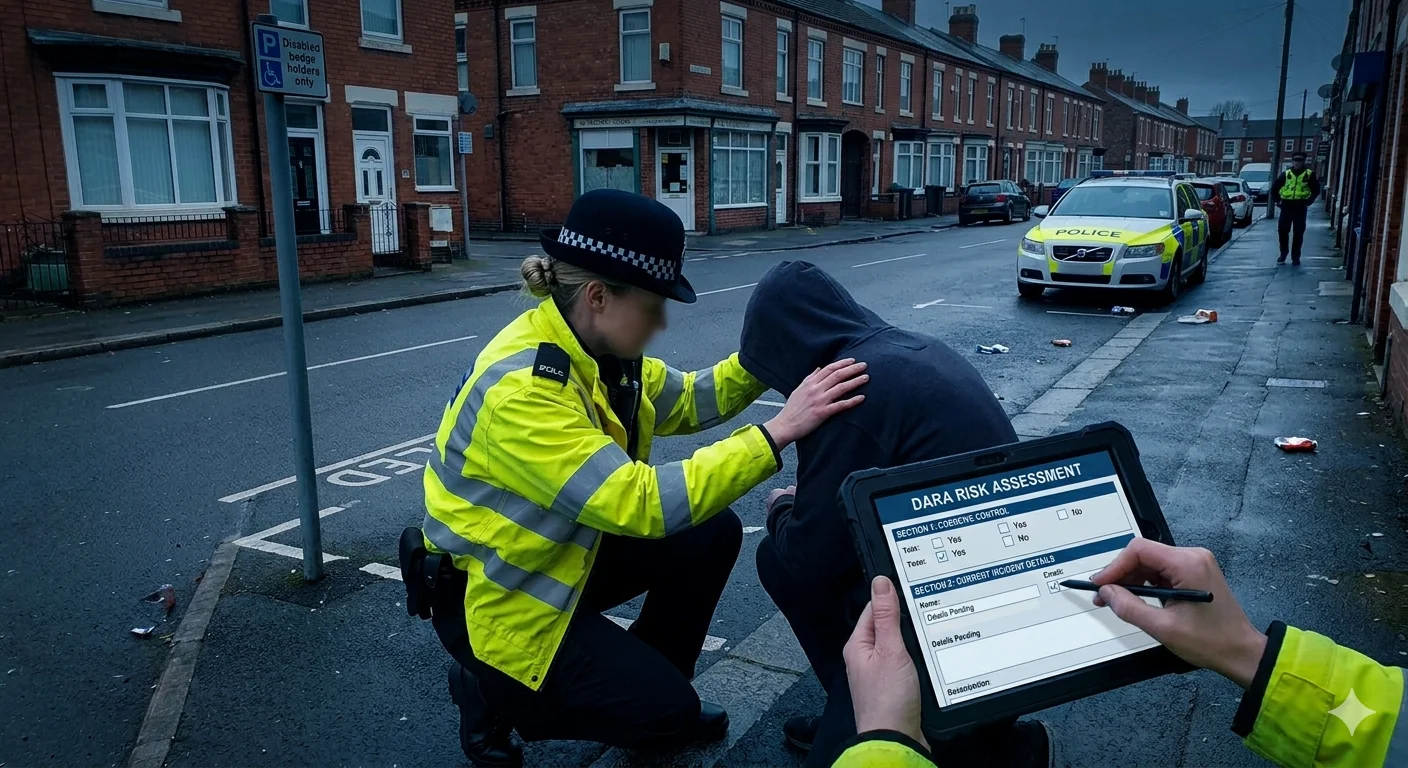
Supervisors are part of the intervention
The College of Policing’s effective-supervision guidance says supervisors should proactively support staff wellbeing, understand health and emotional needs, know what support is available and ensure reasonable adjustments are put in place where required. College of Policing — Supporting wellbeing.
The College rates the overall evidence for supervisory support as moderate. It says good evidence links supportive supervision with wellbeing outcomes including improved self-esteem and lower job stress and emotional exhaustion.
That is not a claim that a supportive sergeant can solve clinical depression, PTSD or an unsafe workload. It is evidence that line management is not neutral.
A supervisor controls or influences daily task allocation, rest, informal support, development, access to adjustments and whether an officer feels safe disclosing a problem. They also see behavioural change before occupational health or senior management usually do.
The practical role is therefore early recognition and response, not diagnosis.
Fatigue deserves its own risk language
Fatigue sits between wellbeing and operational safety.
The College of Policing reported in 2022 that the national police wellbeing service introduced the SAFER — Sleep, Alertness and Fatigue in Emergency Responders — programme after the National Wellbeing Survey identified fatigue as a major concern associated with long hours, shift patterns, untreated sleep disorders and stress. The College explicitly notes effects on performance, accidents, injuries and long-term health. College of Policing, 19 January 2022.
One frequently cited laboratory finding comes from Williamson and Feyer’s 2000 study comparing sustained wakefulness with alcohol impairment. Performance after roughly 17 to 19 hours awake was similar on some tasks to performance at around a 0.05% blood-alcohol concentration, and after longer wakefulness impairment increased further. Williamson & Feyer, 2000.
That study was not conducted on police officers and “equivalent to being drunk” is too loose a translation. The defensible conclusion is that sustained wakefulness can impair cognitive and motor performance to a degree comparable, on the tested measures, with alcohol impairment.
For policing, the relevant question is whether shift systems and overtime patterns routinely place officers in that territory while asking them to drive, assess threat, interview, use force or make safeguarding decisions.
Burnout and force should not be collapsed into one causal claim
The previous version of this article stated too confidently that burnout raises the risk of excessive force and therefore erodes public trust.
There is research linking occupational stress and burnout with attitudes to force and reported or observed use of force. But the evidence is heterogeneous, often observational and drawn from policing systems outside the UK. It does not justify a simple causal chain in which burnout directly produces excessive force.
The more secure proposition is narrower. Fatigue, psychological distress and emotional exhaustion are conditions under which judgement, attention, emotion regulation and work performance can deteriorate. Those are relevant to many police tasks, including conflict management and use-of-force decisions.
That is sufficient reason to treat wellbeing as an operational issue without overstating what the literature has proved.
Early intervention should not become automated suspicion
Forces already hold data that can indicate deteriorating working conditions or repeated operational difficulty: sickness, overtime, complaints, use of force, accidents, missed training, abstractions and welfare referrals.
There is an understandable temptation to combine those into an “early warning” score for individual officers.
That can be useful as a prompt for supervisory review, but it creates a second risk. A person can generate more complaints or force records because they work in a higher-exposure role. Sickness can reflect a physical condition. Overtime can be volunteered. A numerical threshold can therefore produce false positives and stigma if it is treated as a misconduct predictor rather than a trigger for contextual review.
A better UK model is to use workforce data to ask two kinds of question.
At team and organisational level: where are excessive overtime, missed rest, sickness, vacancies and abstractions concentrated?
At individual level: has something changed enough that a supervisor should have a supportive conversation and review workload, health needs or adjustments?
Neither question requires assuming that the officer is unsafe or at fault.
What leaders can change
A serious wellbeing strategy should therefore contain both clinical support and work-design measures.
Chief officers can measure where demand and staffing create persistent fatigue. They can review overtime and cancelled rest. They can examine whether specialist or response teams are repeatedly operating below establishment. They can make reasonable adjustments easier to obtain and maintain. They can develop supervisors to respond consistently when performance change may have a health component.
They can also evaluate whether interventions work.
A wellbeing app can be popular without reducing sickness or distress. A new rota can feel better while creating coverage problems elsewhere. A counselling service can have high uptake because need is high rather than because the underlying organisational stress has improved.
Success measures should therefore match the intervention: fatigue, sleep, sickness, retention, psychological wellbeing, access to support, overtime, rest compliance or another defined outcome. Retention pressure has more than one source: Neurodiversity in Policing: The Retention Problem Leaders Can Fix examines avoidable exits that begin as job-design failures rather than wellbeing ones.
The leadership decision is whether wellbeing is upstream or downstream
Most forces already have support available after an officer becomes unwell. The harder policy question is how much effort goes into reducing the organisational conditions that contribute to poor wellbeing in the first place.
The evidence does not support a claim that every case of burnout is preventable. Police work will remain demanding and some officers will need specialist treatment despite excellent management.
It does support treating supervision, workload and fatigue as part of the prevention system.
That is a more demanding proposition than telling officers to be resilient. It also gives leaders something they can actually change.
Sources and further reading
- Purba & Demou — The relationship between organisational stressors and mental wellbeing within police officers: a systematic review
- College of Policing — Supporting wellbeing
- College of Policing — Sleep disorders education and screening programme offered to UK policing
- Williamson & Feyer — Moderate sleep deprivation produces impairments in cognitive and motor performance equivalent to legally prescribed levels of alcohol intoxication
Discussion questions
- 01
Which sources of stress in your force are created by the job itself, and which are created by how the organisation runs the job?
- 02
Does your force measure fatigue and workload as operational risks, or mainly offer support after officers become unwell?
- 03
What would supervisors need to identify and act on early signs of deteriorating wellbeing consistently?